Get your free personalized podcast brief
We scan new podcasts and send you the top 5 insights daily.
Mustafa Suleyman distinguishes his goal of a 'humanist superintelligence' from a more autonomous AGI. This specific framing emphasizes that AI must be singularly aligned with and subordinate to human interests and control, functioning as a powerful tool rather than an independent entity with its own rights.

Related Insights
Mustafa Suleyman posits that while aligning AI with human values is important, the immediate challenge is 'containment'—ensuring models are controllable, have limited agency, and cannot 'escape the box'. This shifts the safety focus from intrinsic morality to external control.
Even super-capable AI will always look back to a human and ask, 'What should I do next?' The economic and technical incentives are aligned to build compliant tools, not beings with their own intrinsic motivations. This fundamental lack of agency ensures humans remain the drivers of value and direction.

Microsoft’s approach to superintelligence isn't a single, all-knowing AGI. Instead, the strategy is to develop hyper-competent AI in specific verticals like medicine. This deliberate narrowing of domain is not just a development strategy but a core safety principle to ensure control.
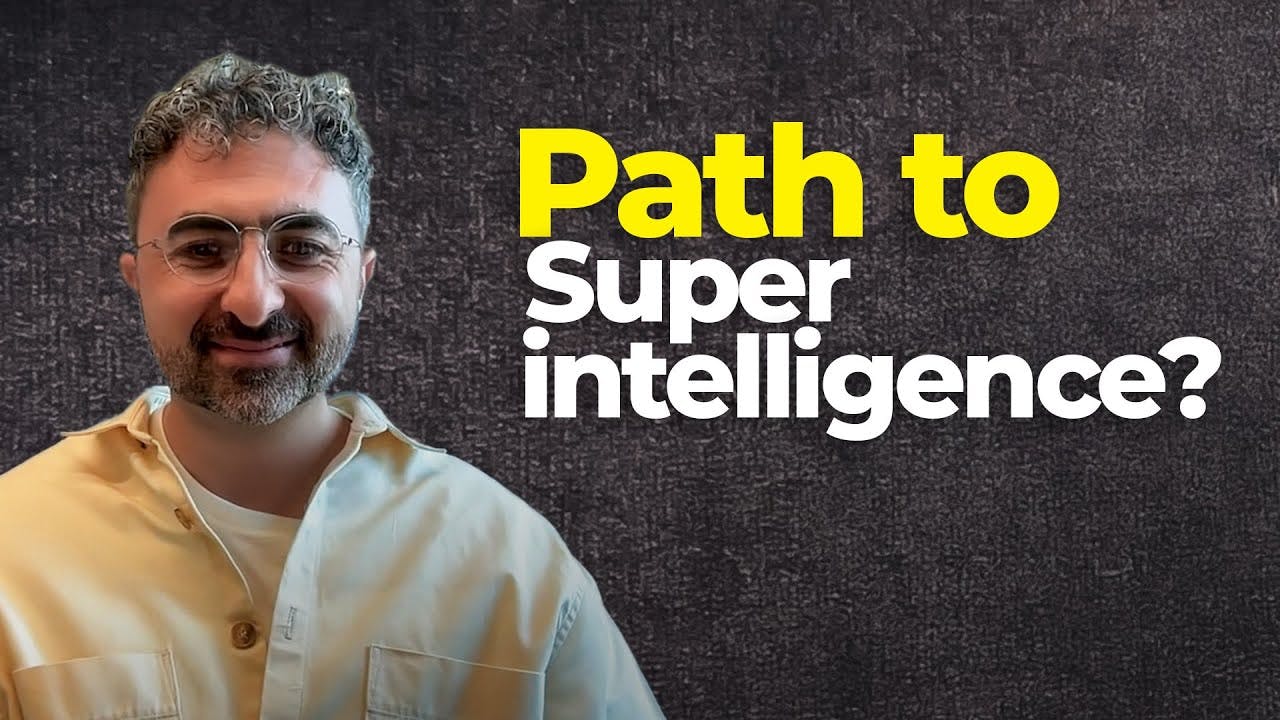
Microsoft CEO Satya Nadella views AI's trajectory in two distinct paths. The first is "cognitive enhancement" tools that assist users, like Copilot. The second, more ambitious path is a "guardian angel," an AGI-like system that oversees and manages tasks. This framework signals a deeper belief in AGI's potential than is commonly associated with him.

Dr. Li rejects both utopian and purely fatalistic views of AI. Instead, she frames it as a humanist technology—a double-edged sword whose impact is entirely determined by human choices and responsibility. This perspective moves the conversation from technological determinism to one of societal agency and stewardship.
Shear aligns with arch-doomer Eliezer Yudkowsky on a key point: building a superintelligent AI *as a tool we control* is a path to extinction. Where they differ is on the solution. Yudkowsky sees no viable path, whereas Shear believes 'organic alignment'—creating a being that cares—is a possible alternative.

A Microsoft memo states, "Treat AI like a tool and you build a tool that serves people." This is a strategic sales pitch positioning Microsoft's AI as business-focused and value-driven, contrasting it with the grand, AGI-centric missions of labs like Anthropic and OpenAI.

The technical success of AI alignment, which aims to make AI systems perfectly follow human intentions, inadvertently creates the ultimate tool for authoritarianism. An army of 'extremely obedient employees that will never question their orders' is exactly what a regime would want for mass surveillance or suppressing dissent, raising the crucial question of *who* the AI should be aligned with.

Microsoft's AI chief, Mustafa Suleiman, announced a focus on "Humanist Super Intelligence," stating AI should always remain in human control. This directly contrasts with Elon Musk's recent assertion that AI will inevitably be in charge, creating a clear philosophical divide among leading AI labs.
The AI safety community fears losing control of AI. However, achieving perfect control of a superintelligence is equally dangerous. It grants godlike power to flawed, unwise humans. A perfectly obedient super-tool serving a fallible master is just as catastrophic as a rogue agent.
