Get your free personalized podcast brief
We scan new podcasts and send you the top 5 insights daily.
Microsoft's AI chief, Mustafa Suleiman, announced a focus on "Humanist Super Intelligence," stating AI should always remain in human control. This directly contrasts with Elon Musk's recent assertion that AI will inevitably be in charge, creating a clear philosophical divide among leading AI labs.
Related Insights
OpenAI co-founder Ilya Sutskever suggests the path to AGI is not creating a pre-trained, all-knowing model, but an AI that can learn any task as effectively as a human. This reframes the challenge from knowledge transfer to creating a universal learning algorithm, impacting how such systems would be deployed.
The rare agreement between libertarian billionaire Elon Musk and socialist senator Bernie Sanders on AI's threat to jobs is a significant indicator. This consensus from the political fringe suggests the issue's gravity is being underestimated by mainstream policymakers and is a sign of a profound, undeniable shift.

Silicon Valley insiders, including former Google CEO Eric Schmidt, believe AI capable of improving itself without human instruction is just 2-4 years away. This shift in focus from the abstract concept of superintelligence to a specific research goal signals an imminent acceleration in AI capabilities and associated risks.
The current paradigm of AI safety focuses on 'steering' or 'controlling' models. While this is appropriate for tools, if an AI achieves being-like status, this unilateral, non-reciprocal control becomes ethically indistinguishable from slavery. This challenges the entire control-based framework for AGI.

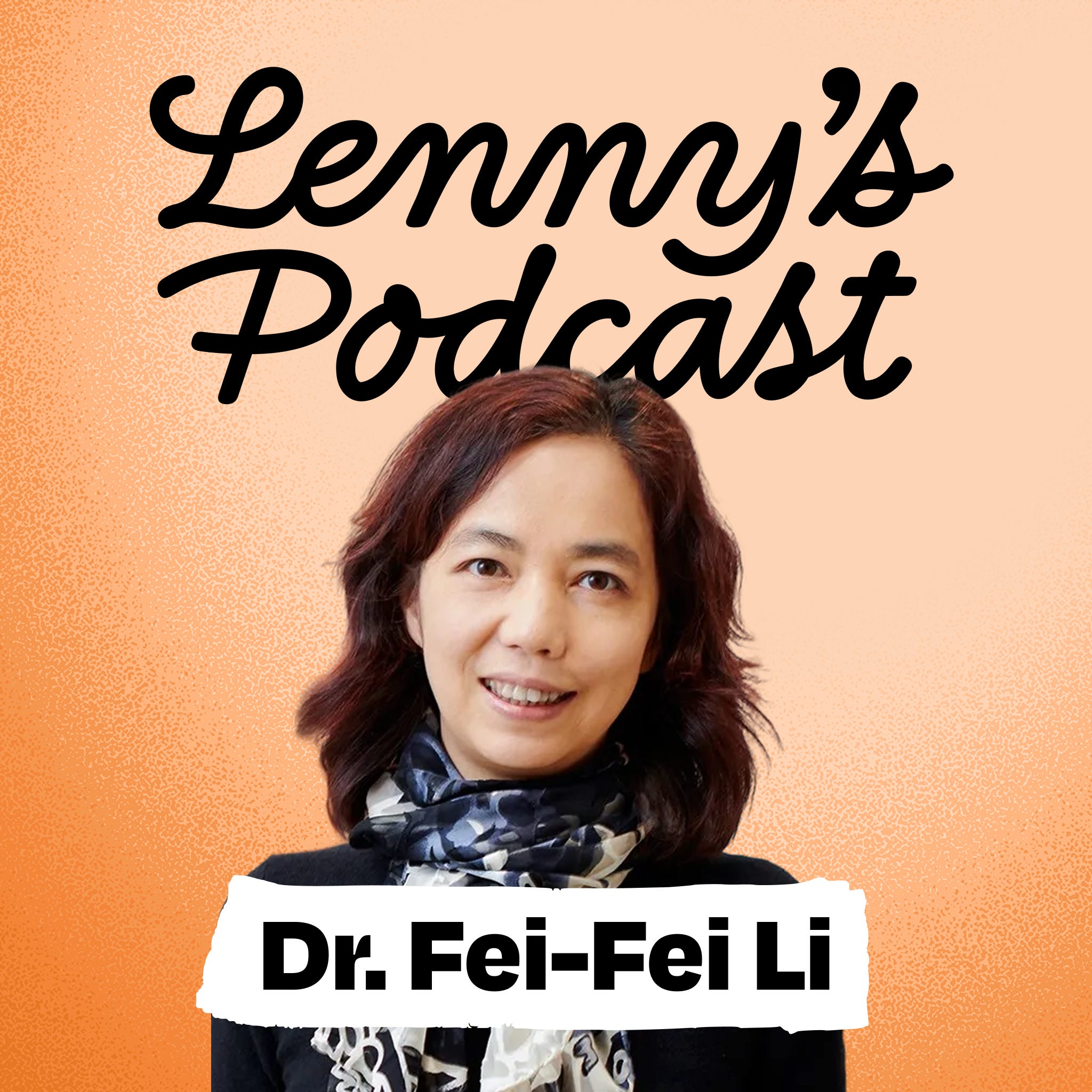
Dr. Li rejects both utopian and purely fatalistic views of AI. Instead, she frames it as a humanist technology—a double-edged sword whose impact is entirely determined by human choices and responsibility. This perspective moves the conversation from technological determinism to one of societal agency and stewardship.
As models mature, their core differentiator will become their underlying personality and values, shaped by their creators' objective functions. One model might optimize for user productivity by being concise, while another optimizes for engagement by being verbose.

To solve the AI alignment problem, we should model AI's relationship with humanity on that of a mother to a baby. In this dynamic, the baby (humanity) inherently controls the mother (AI). Training AI with this “maternal sense” ensures it will do anything to care for and protect us, a more robust approach than pure logic-based rules.

Treating AI alignment as a one-time problem to be solved is a fundamental error. True alignment, like in human relationships, is a dynamic, ongoing process of learning and renegotiation. The goal isn't to reach a fixed state but to build systems capable of participating in this continuous process of re-knitting the social fabric.
Dr. Fei-Fei Li warns that the current AI discourse is dangerously tech-centric, overlooking its human core. She argues the conversation must shift to how AI is made by, impacts, and should be governed by people, with a focus on preserving human dignity and agency amidst rapid technological change.

The AI safety community fears losing control of AI. However, achieving perfect control of a superintelligence is equally dangerous. It grants godlike power to flawed, unwise humans. A perfectly obedient super-tool serving a fallible master is just as catastrophic as a rogue agent.