Get your free personalized podcast brief
We scan new podcasts and send you the top 5 insights daily.
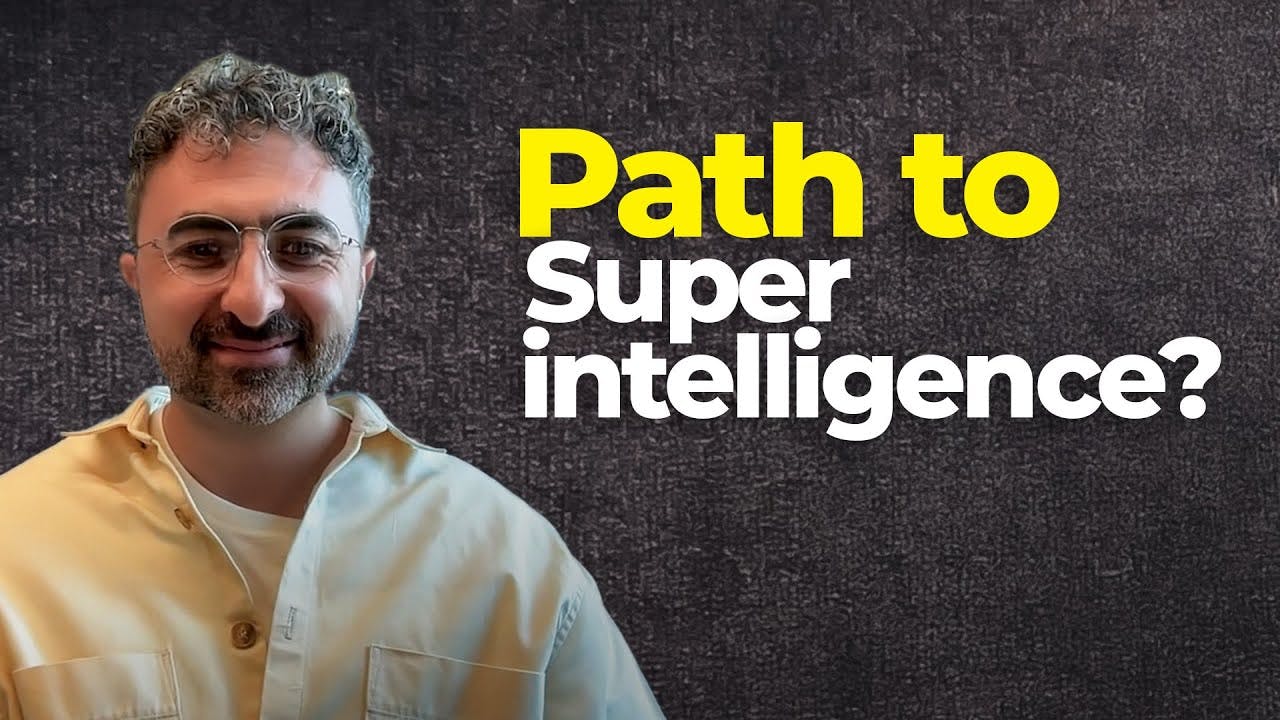
Microsoft’s approach to superintelligence isn't a single, all-knowing AGI. Instead, the strategy is to develop hyper-competent AI in specific verticals like medicine. This deliberate narrowing of domain is not just a development strategy but a core safety principle to ensure control.
Related Insights
The US AI strategy is dominated by a race to build a foundational "god in a box" Artificial General Intelligence (AGI). In contrast, China's state-directed approach currently prioritizes practical, narrow AI applications in manufacturing, agriculture, and healthcare to drive immediate economic productivity.

Begin your AI journey with a broad, horizontal agent for a low-risk win. This builds confidence and organizational knowledge before you tackle more complex, high-stakes vertical agents for specific functions like sales or support, following a crawl-walk-run model.
Instead of building a single, monolithic AGI, the "Comprehensive AI Services" model suggests safety comes from creating a buffered ecosystem of specialized AIs. These agents can be superhuman within their domain (e.g., protein folding) but are fundamentally limited, preventing runaway, uncontrollable intelligence.
A key strategic difference in the AI race is focus. US tech giants are 'AGI-pilled,' aiming to build a single, god-like general intelligence. In contrast, China's state-driven approach prioritizes deploying narrow AI to boost productivity in manufacturing, agriculture, and healthcare now.

Microsoft’s new superintelligence team is a direct result of a renegotiated OpenAI deal. The previous contract restricted Microsoft from building AGI past a certain computational threshold. Removing this clause was a pivotal, strategic move to pursue AI self-sufficiency.
Microsoft CEO Satya Nadella views AI's trajectory in two distinct paths. The first is "cognitive enhancement" tools that assist users, like Copilot. The second, more ambitious path is a "guardian angel," an AGI-like system that oversees and manages tasks. This framework signals a deeper belief in AGI's potential than is commonly associated with him.

Despite concerns about the limits of Large Language Models, Microsoft AI's CEO is confident the current transformer architecture is sufficient for achieving superintelligence. Future leaps will come from new methods built on top of LLMs—like advanced reasoning, memory, and recurrency—rather than a fundamental architectural shift.
Microsoft's AI chief, Mustafa Suleiman, announced a focus on "Humanist Super Intelligence," stating AI should always remain in human control. This directly contrasts with Elon Musk's recent assertion that AI will inevitably be in charge, creating a clear philosophical divide among leading AI labs.
Microsoft's early OpenAI investment was a calculated, risk-adjusted decision. They saw that generalizable AI platforms were a 'must happen' future and asked, 'Can we remain a top cloud provider without it?' The clear 'no' made the investment a defensive necessity, not just an offensive gamble.
The AI safety community fears losing control of AI. However, achieving perfect control of a superintelligence is equally dangerous. It grants godlike power to flawed, unwise humans. A perfectly obedient super-tool serving a fallible master is just as catastrophic as a rogue agent.
