Get your free personalized podcast brief
We scan new podcasts and send you the top 5 insights daily.
A common mistake is using AI-generated content directly. To get valuable results, marketers must provide deep, ruthless context (ICP, market, problems) *before* the prompt and be ruthless with editing and refinement *after* receiving the output from the AI.

Related Insights
The low-quality output many associate with AI marketing is a symptom of skipping the research phase. Before generating any assets, spend significant time using tools like Perplexity to deeply understand the market, competitors, and customer pain points.

To get high-quality, on-brand output from AI, teams must invest more time in the initial strategic phase. This means creating highly precise creative briefs with clear insights and target audience definitions. AI scales execution, but human strategy must guide it to avoid generic, off-brand results.

Avoid using AI to create sales outreach from scratch ('black pen'). Instead, use it as an editor ('red pen'). Apply the 10-80-10 rule: 10% human-led prompting, 80% AI-driven task execution, and a final 10% human refinement. This maintains quality while boosting efficiency.

Avoid using AI to generate your initial draft, which can produce generic results. Instead, write the first version yourself to ensure your unique thoughts and voice are present. Then, use AI tools as a partner to refine, massage, and improve upon your original work.

To get high-quality output, prompt AI as if it has zero prior knowledge. This means providing comprehensive context including target personas, business challenges, strategic goals, and even raw data like ad performance reports. More input yields better output.

AI's best use in content creation is refinement, not initial generation. Use it as a 'thought partner' with prompts like 'remove sentences that don't move the story forward' or 'grade my post on its ability to retain a reader.' This sharpens your message without sacrificing authenticity.

Marketers often approach AI with inflated expectations, wanting a perfectly finished product. The correct mindset is to view AI as a tool to overcome the "zero to one" hurdle. It's a powerful assistant for creating a solid first draft or getting 50% of the way there, which a human then refines.

AI's strength in copywriting is not generating final text, which often lacks a human touch. Instead, use it as a research assistant to find unique concepts, analogies, or data (like the 'Michelangelo effect') that can serve as the core, attention-grabbing idea for your campaign.

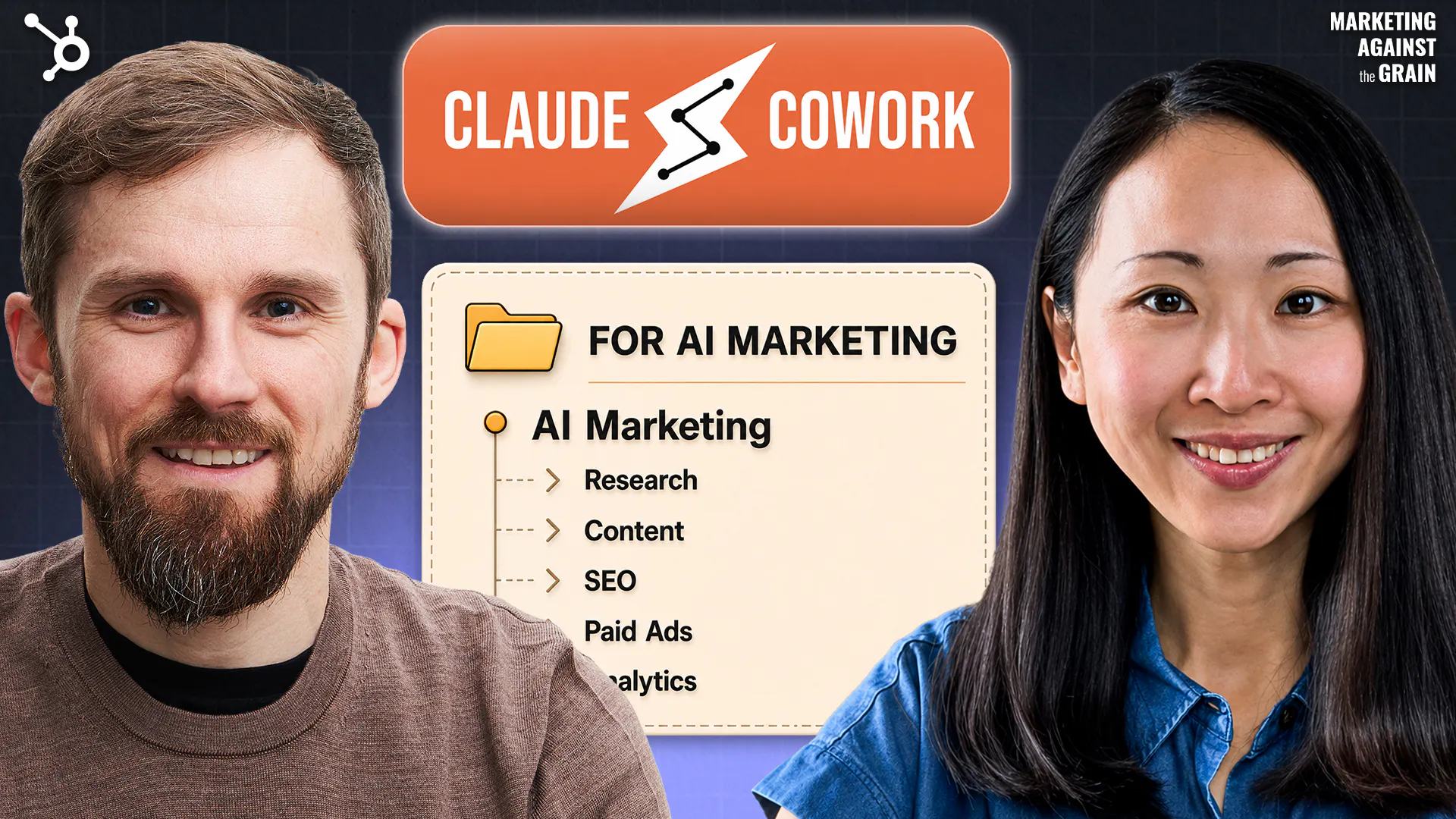
Effective AI marketing requires first building a structured system of folders and context files (brand voice, ICPs). This foundational work enables consistent, high-quality outputs and is more effective than ad-hoc prompting. It's about working slow first to eventually work fast.
AI tools are best used as collaborators for brainstorming or refining ideas. Relying on AI for final output without a "human in the loop" results in obviously robotic content that hurts the brand. A marketer's taste and judgment remain the most critical components.
