Get your free personalized podcast brief
We scan new podcasts and send you the top 5 insights daily.
The key differentiator in AI is moving beyond model power to how seamlessly it's integrated into daily workflows. Tools like Claude Tag, which embeds AI into Slack, lower the barrier for non-technical users and prove that user experience and contextual integration are becoming primary drivers of value.

Related Insights
Users rarely seek out separate AI functionality. Adoption becomes natural when AI assistance appears contextually within existing workflows, addressing friction points directly where the user is already working. This embedded approach is far more effective than adding AI as a separate, layered-on tool.
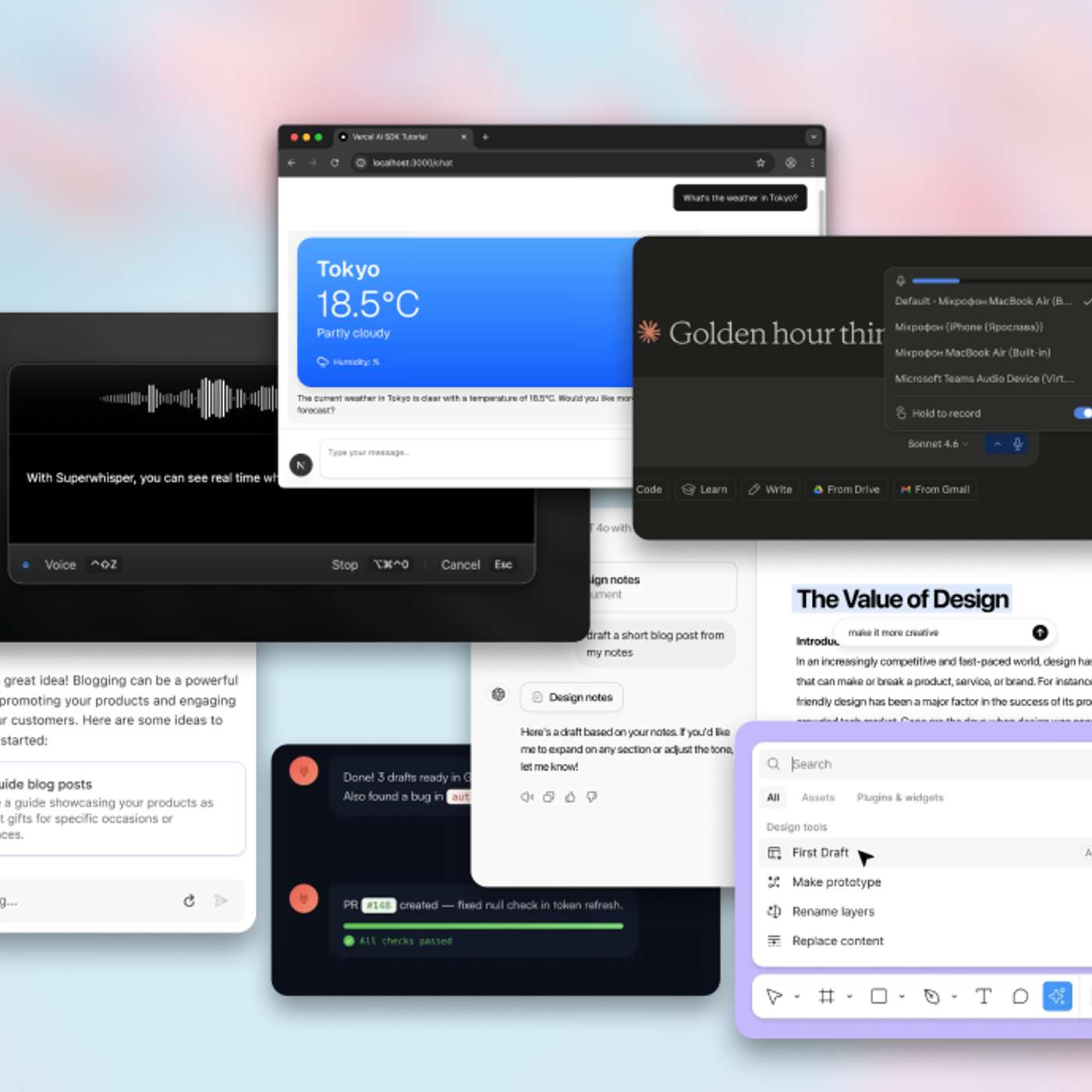
Long-term success in the AI race will be determined by superior user experience (UX) and seamless integration into daily workflows, not just raw model performance on technical benchmarks. The most valuable AI will be the one people use every day, making UX the key competitive differentiator.

The primary bottleneck for many users isn't a model's raw intelligence but the user's ability to provide sufficient context. The next paradigm shift will be AIs that can autonomously enter a new environment (like a Slack channel), gather context, and figure out how to be useful, dramatically lowering the barrier to value.

Simply offering the latest model is no longer a competitive advantage. True value is created in the system built around the model—the system prompts, tools, and overall scaffolding. This 'harness' is what optimizes a model's performance for specific tasks and delivers a superior user experience.

The competitive battleground for AI is shifting from raw model capability to the quality of the application layer, or 'harness.' A superior user experience, like that of OpenAI's Codex, can make a slightly weaker model more effective for daily use than a stronger model with a clunky interface. The product experience is becoming the key differentiator.
Using AI as a separate, copy-paste tool is inefficient. The real breakthrough comes when AI is integrated directly into your work environment, providing full context and eliminating friction, as seen with AI-native IDEs for developers.

The specific AI model used is becoming as irrelevant as the specific variety of corn in a gourmet dish. The true value and differentiation lie not in the commodity model itself, but in the entire system—the agentic harnesses, workflows, and user experience—that prepares and presents the final product.

Tools like Descript excel by integrating AI into every step of the user's core workflow—from transcription and filler word removal to clip generation. This "baked-in" approach is more powerful than simply adding a standalone "AI" button, as it fundamentally enhances the entire job-to-be-done.
As foundational AI models become commoditized, the key differentiator is shifting from marginal improvements in model capability to superior user experience and productization. Companies that focus on polish, ease of use, and thoughtful integration will win, making product managers the new heroes of the AI race.

New AI model releases are becoming like incremental iPhone updates. The real breakthroughs now happen in the application layer—the "harnesses" like Claude Code. These platforms, with features like dynamic workflows, are what truly unlock new capabilities, shifting market focus from raw model power to user experience and practical tooling.