Get your free personalized podcast brief
We scan new podcasts and send you the top 5 insights daily.
Instead of quietly fixing a slow 3-day settlement period, Robinhood bundled the fix with other improvements and marketed it as a major new product called "Robinhood Instant." This strategy of "productizing" a feature meant to catch up to competitors successfully tripled their trading volume.

Related Insights
Robinhood did a major press launch for its app, which was gated by a waitlist. A few months later, when they removed the waitlist, they did another full launch. The takeaway is that if a launch doesn't stick, you can just do it again because the market has a short memory.
While Coinbase's stock is tied to volatile crypto prices, Robinhood's shares tripled by diversifying and aggressively launching new products. Its prediction markets, launched in late 2024, capitalized on a favorable regulatory environment and became the company's fastest-growing business line in its history.

Robinhood CEO Vlad Tenev revealed prediction markets were a distant "2026 plan" until a Supreme Court decision legalized presidential betting. This single regulatory catalyst prompted Robinhood to rush the product to market, where it became a massive success, showing how external events can dramatically accelerate product adoption.

Robinhood amassed nearly a million users before launch without a marketing team. Their key tactic was a gamified waitlist where users could see their position in line and jump ahead by referring friends, creating a powerful and cost-free viral acquisition loop.

Robinhood users spend two hours a month in the app—5-10x more than users of banking or payment apps like Venmo. This high engagement creates a powerful, low-cost funnel for cross-selling new banking products like credit cards and savings accounts, giving it a key advantage over other fintechs attempting to expand their services.
![Robinhood: Mobile First, Margins Later - [Business Breakdowns, EP.233] thumbnail](https://megaphone.imgix.net/podcasts/943e2e96-b60b-11f0-9176-5bf614c23973/image/074f062475dc76689adfc59319a4e04d.jpg?ixlib=rails-4.3.1&max-w=3000&max-h=3000&fit=crop&auto=format,compress)
By reimagining dull earnings calls as engaging media events with live video and retail investor Q&A, Robinhood increased its audience from hundreds to over 100,000. CEO Vlad Tenev borrowed from the entertaining, unscripted format of NBA post-game interviews to better connect with all shareholders.
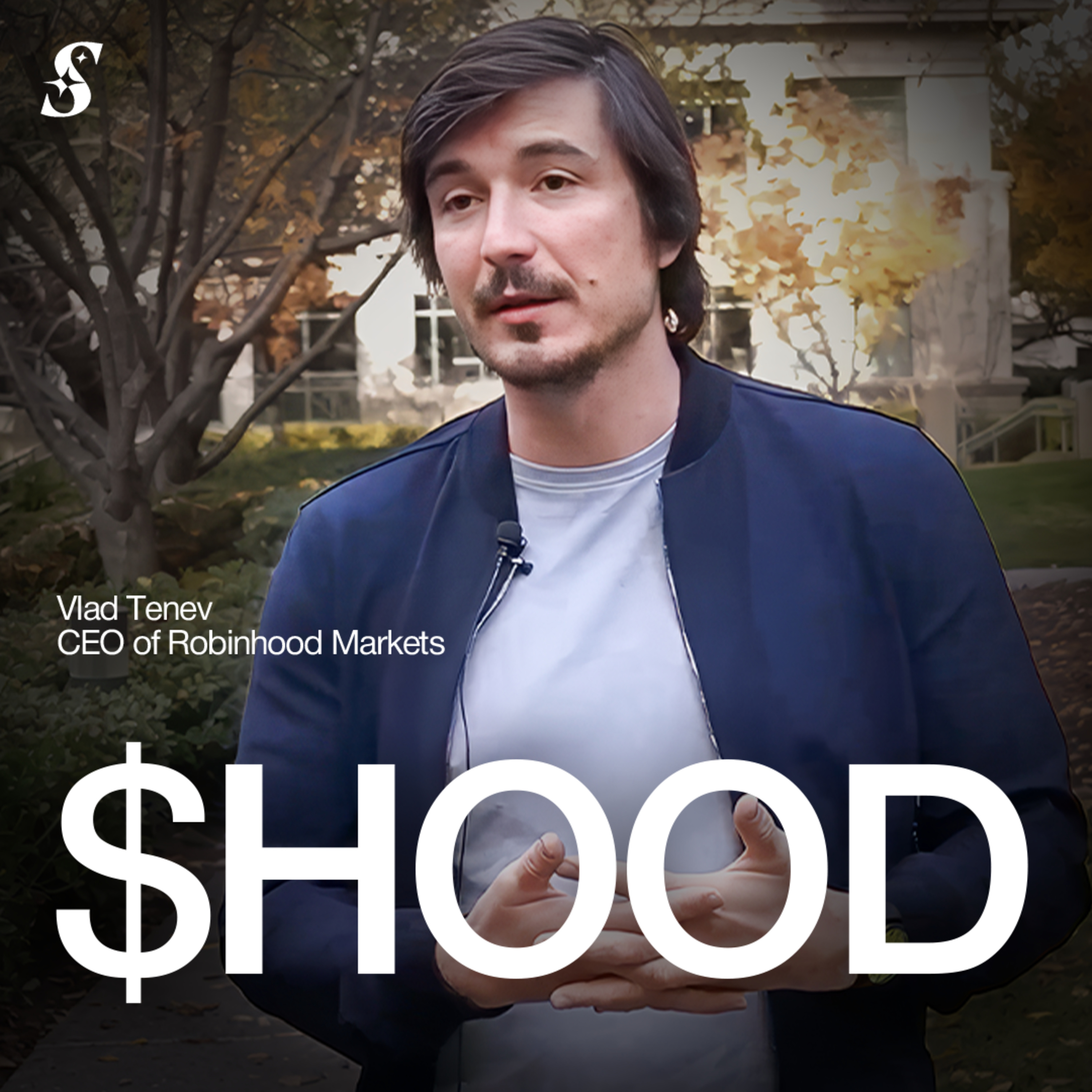
Robinhood's product expansion into retirement, banking, and prediction markets is driven by a 'financial super app' strategy. The goal isn't just to win in one vertical like trading, but to become the single platform where customers manage their entire financial life, from spending to long-term investing.

When rising interest rates became a headwind for its trading business, Robinhood didn't just cut costs and wait. Instead, it proactively launched products like Robinhood Gold and Retirement which were designed to thrive in a high-interest environment, actively adapting to the new market reality.

Marketing for the IPO Access product succeeded by addressing a specific customer pain point. The tagline 'get in at the IPO price' directly spoke to the frustration retail investors feel seeing a stock jump on day one, making the value proposition instantly clear and compelling.
CEO Vlad Tenev considers 2022 the "refounding" of Robinhood. The business model strategically shifted from catering primarily to first-time investors to focusing on more sophisticated, resilient active traders. This pivot drove a 5x increase in product velocity (from one to five major new products per year) and built a more cycle-agnostic business.