Get your free personalized podcast brief
We scan new podcasts and send you the top 5 insights daily.
Contrary to its traditionalist image, the Klan actively recruited women, with about half a million joining. It supported women's right to vote and work, viewing female voters as key to advancing its white Protestant agenda. Women became crucial organizers, planners, and activists for the movement.

Related Insights
In 1921, a New York World series exposing Klan violence, intended to discredit the group, backfired. The publicity made the organization seem exciting and powerful, leading to a massive surge in membership applications and confirming the "any press is good press" maxim for extremist movements.
The KKK's massive growth was driven by a sophisticated sales operation where recruiters (Cleagles) earned large commissions on new members' fees. This financial incentive, structured like a modern pyramid scheme, was a primary driver of its national expansion.
In an attempt to enter mainstream politics, the KKK propaganda machine adopted an unlikely hero: former Democratic President Grover Cleveland. They admired his Protestant background and perhaps his reputation for personal scandals, holding him up as an aspirational figure for their members to follow.
The Klan's explosive growth was not organic. PR professionals Edward Young Clark and Elizabeth Tyler treated the organization as a product, designing an aggressive sales operation and marketing message that resonated with public anxieties, transforming a failing club into a national force.
The KKK's success was not just about violence but about creating a social movement. It hosted picnics, parades, and even circuses, embedding its hateful ideology into ordinary, taken-for-granted community life for millions of white Protestants, making it seem normal and even wholesome.
The Klan's terror campaign was a holistic effort to restore pre-war racial hierarchy. Beyond suppressing votes, they targeted Black churches, schools, landowners, and even women who displayed self-respect. This reveals a broader goal: to crush any sign of Black autonomy and re-establish total white supremacy in every aspect of Southern life.
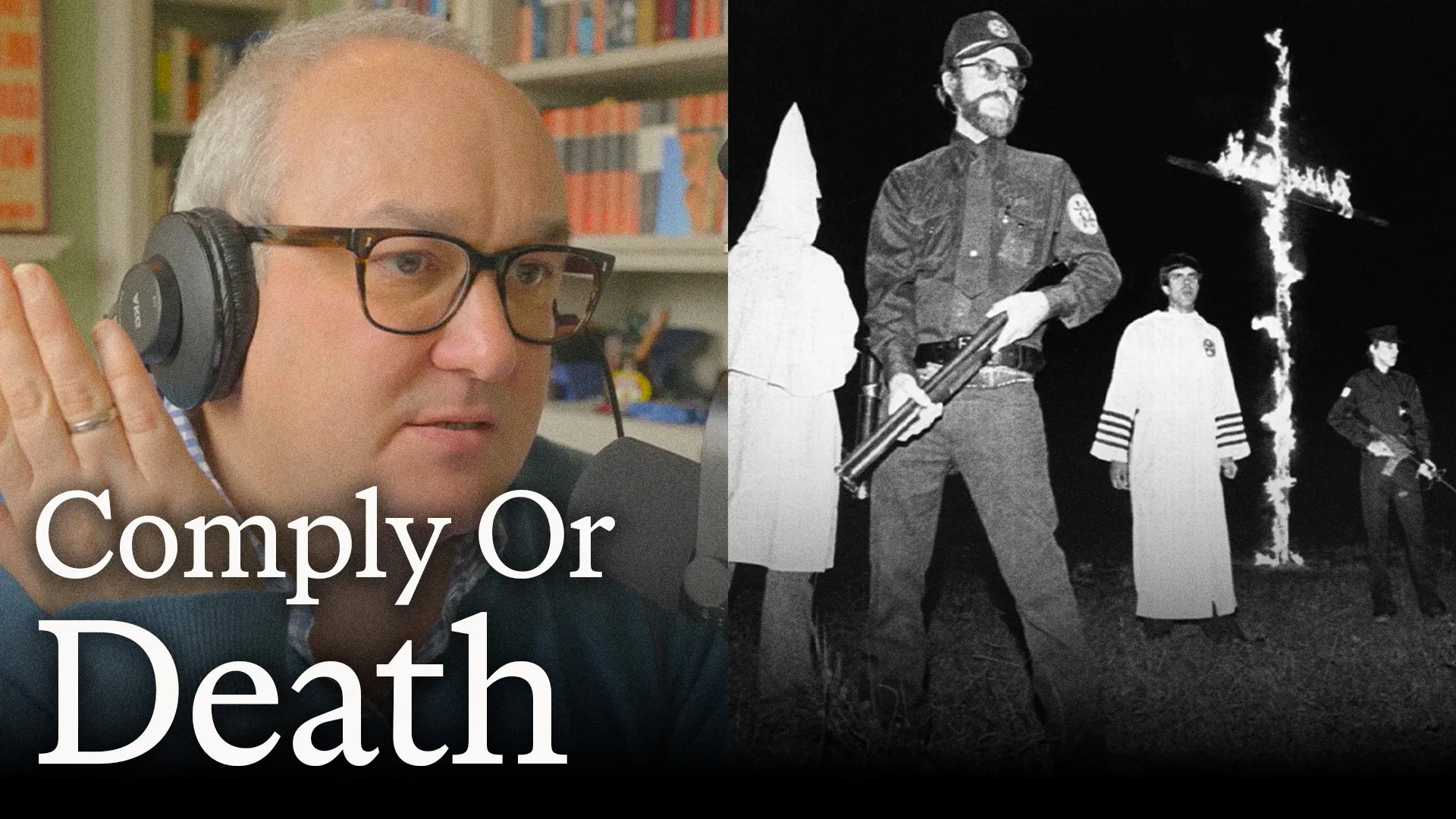
The Indiana Klan operated a highly effective political organization. It compiled detailed data on all political candidates, published approved slates in church newsletters, and organized massive get-out-the-vote efforts, successfully installing a governor and dominating the state legislature.
Rather than building from scratch, the KKK tapped into pre-existing social networks, particularly the Freemasons. Recruiters specifically targeted Masonic lodges, leveraging their membership lists and offering a familiar structure of ritual, networking, and community.
Contrary to the image of a fringe movement, the Klan was composed of and led by the Southern elite. Eyewitness accounts consistently identified lawyers, doctors, planters, and sheriffs as perpetrators of the violence. This highlights how extremist movements can be driven by the most powerful and 'respectable' members of a society.
While not a perfect match for European fascism—it lacked a single charismatic leader and expansionist war goals—the 1920s KKK shared key traits: a cult of victimhood, paramilitary violence, mass rituals, and a demographic base of anxious, middle-class Protestants and small businessmen.