Get your free personalized podcast brief
We scan new podcasts and send you the top 5 insights daily.
The KKK's success was not just about violence but about creating a social movement. It hosted picnics, parades, and even circuses, embedding its hateful ideology into ordinary, taken-for-granted community life for millions of white Protestants, making it seem normal and even wholesome.

Related Insights
The Klan used a repeatable playbook to infiltrate local churches. Organizers would march into a service, give a donation to the minister (often a secret member), and receive a public endorsement, effectively converting entire congregations and gaining crucial social proof.
In 1921, a New York World series exposing Klan violence, intended to discredit the group, backfired. The publicity made the organization seem exciting and powerful, leading to a massive surge in membership applications and confirming the "any press is good press" maxim for extremist movements.
The KKK's massive growth was driven by a sophisticated sales operation where recruiters (Cleagles) earned large commissions on new members' fees. This financial incentive, structured like a modern pyramid scheme, was a primary driver of its national expansion.
The first Ku Klux Klan was not founded as a paramilitary force but as a fraternity-style social club in Pulaski, Tennessee. Its founders were young, well-educated veterans seeking amusement through secret rituals and costumes, only later evolving into a violent political entity.
In an attempt to enter mainstream politics, the KKK propaganda machine adopted an unlikely hero: former Democratic President Grover Cleveland. They admired his Protestant background and perhaps his reputation for personal scandals, holding him up as an aspirational figure for their members to follow.
The Klan's explosive growth was not organic. PR professionals Edward Young Clark and Elizabeth Tyler treated the organization as a product, designing an aggressive sales operation and marketing message that resonated with public anxieties, transforming a failing club into a national force.
The second KKK's rituals, particularly cross-burning, were not historical practices. They were invented for Thomas Dixon's novel "The Klansman" and popularized by D.W. Griffith's blockbuster film "The Birth of a Nation," demonstrating how mass media can create and legitimize radical aesthetics.
Following its demise, the KKK's violent legacy was completely sanitized by the 'Lost Cause' mythology. Academic historians and popular culture, most notably D.W. Griffith's 1915 film 'The Birth of a Nation', recast the Klan not as racist terrorists but as swashbuckling defenders of civilization, a narrative that enabled its eventual rebirth.
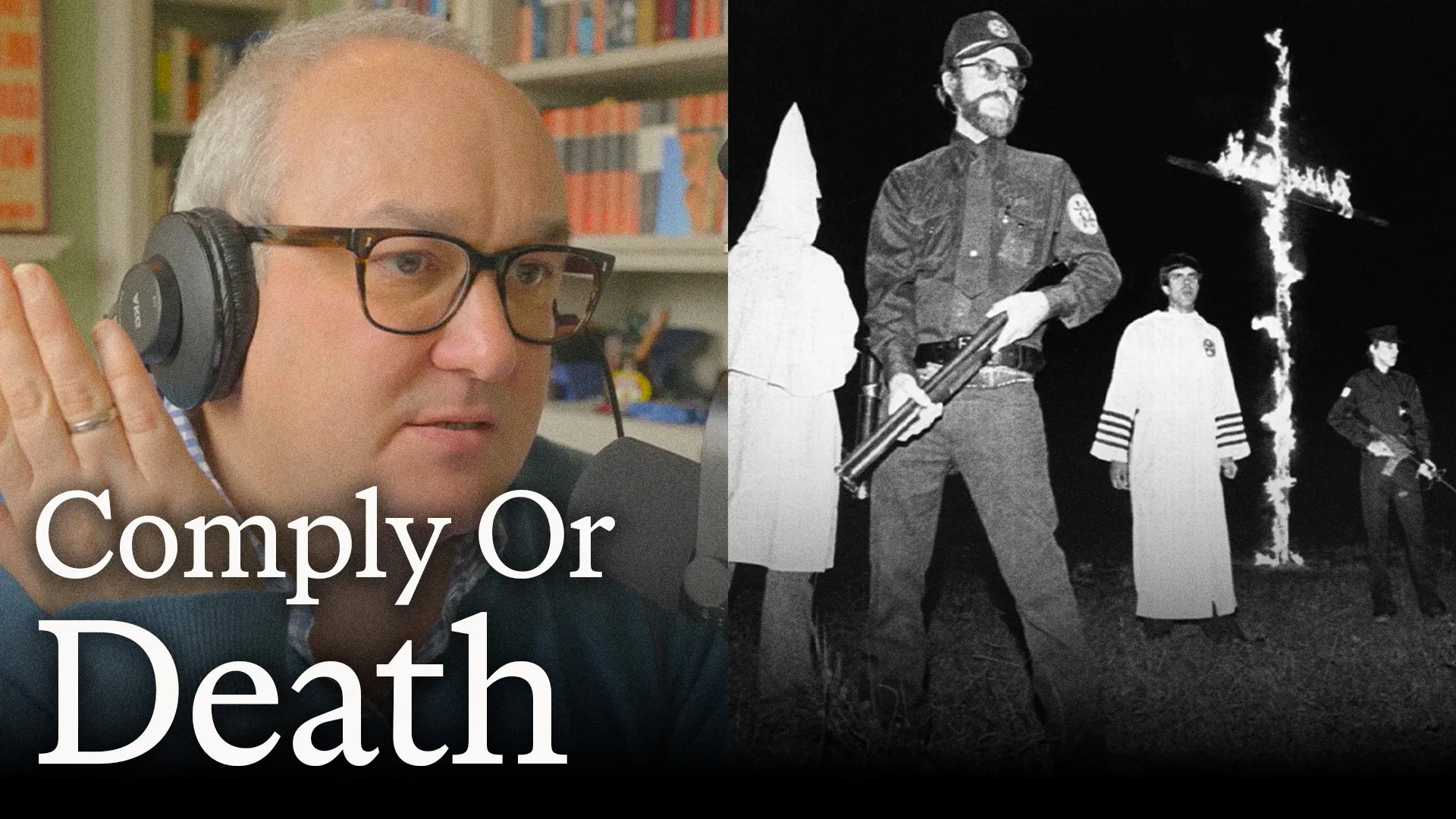
The Klan used a bizarre, fantasy-like hierarchy with titles like "Grand Goblin" and "Exalted Cyclops." This gamified structure provided status and escapism for men in ordinary towns, making a sinister organization feel like an exciting and exclusive club.
While not a perfect match for European fascism—it lacked a single charismatic leader and expansionist war goals—the 1920s KKK shared key traits: a cult of victimhood, paramilitary violence, mass rituals, and a demographic base of anxious, middle-class Protestants and small businessmen.