Get your free personalized podcast brief
We scan new podcasts and send you the top 5 insights daily.
Rather than building from scratch, the KKK tapped into pre-existing social networks, particularly the Freemasons. Recruiters specifically targeted Masonic lodges, leveraging their membership lists and offering a familiar structure of ritual, networking, and community.

Related Insights
The Klan used a repeatable playbook to infiltrate local churches. Organizers would march into a service, give a donation to the minister (often a secret member), and receive a public endorsement, effectively converting entire congregations and gaining crucial social proof.
In 1921, a New York World series exposing Klan violence, intended to discredit the group, backfired. The publicity made the organization seem exciting and powerful, leading to a massive surge in membership applications and confirming the "any press is good press" maxim for extremist movements.
The KKK's massive growth was driven by a sophisticated sales operation where recruiters (Cleagles) earned large commissions on new members' fees. This financial incentive, structured like a modern pyramid scheme, was a primary driver of its national expansion.
The first Ku Klux Klan was not founded as a paramilitary force but as a fraternity-style social club in Pulaski, Tennessee. Its founders were young, well-educated veterans seeking amusement through secret rituals and costumes, only later evolving into a violent political entity.
Although the first iteration of the Ku Klux Klan was ultimately suppressed by 1872, it had already achieved its primary long-term goals. It successfully destroyed the Republican Party's infrastructure in the South and, crucially, exhausted the North's political will to continue Reconstruction, paving the way for generations of white supremacist rule.
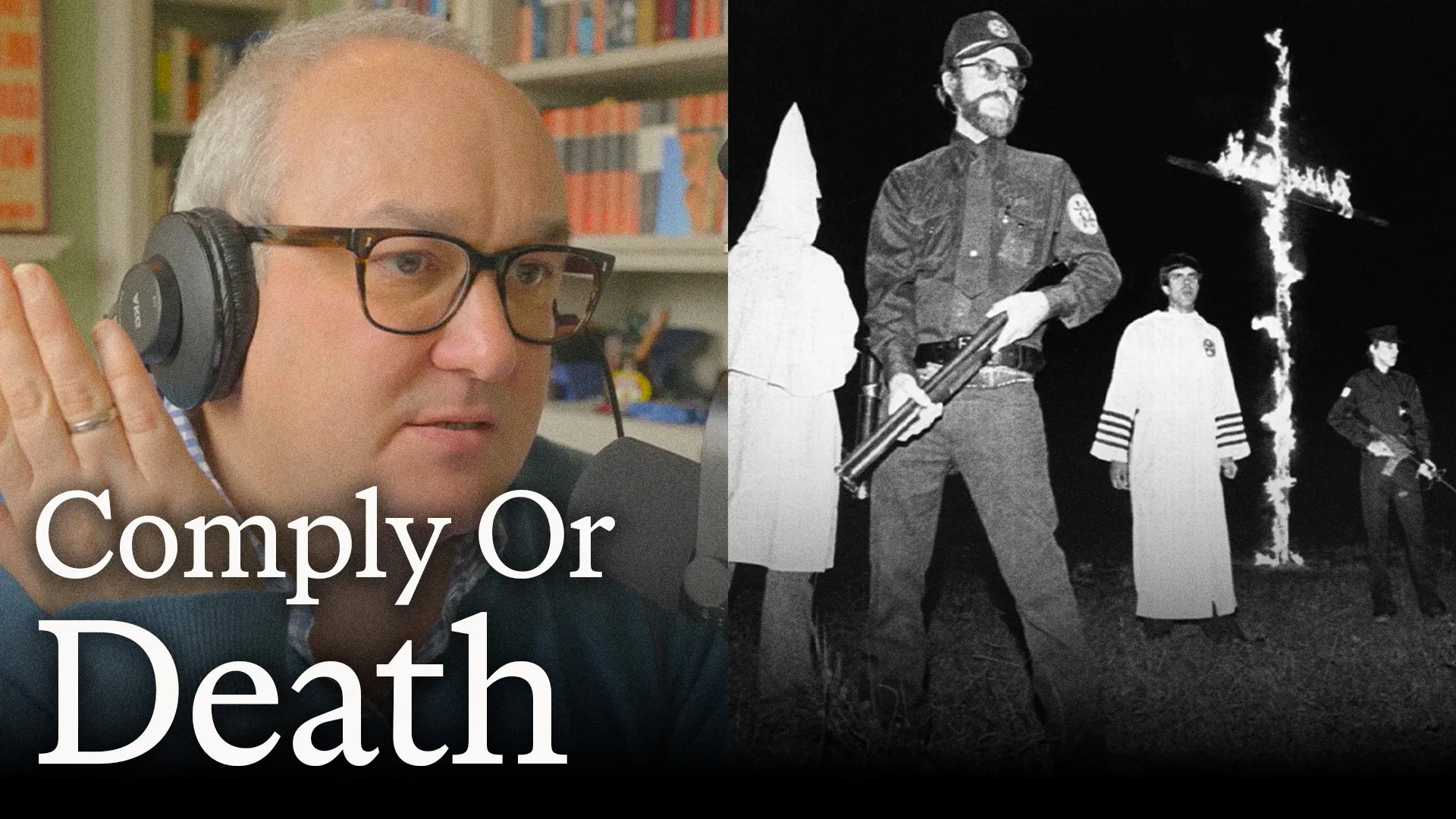
The Klan adopted a bizarre, elaborate hierarchy with fantastical titles. This included a "Grand Wizard" of the Empire, "Grand Dragons" for each state, and ordinary members called "Ghouls." This structure reflected a blend of fraternal ritual, theatricality, and pseudo-chivalric nonsense.
The second Klan, founded in 1915, was by far the largest, with up to five million members. Its power base was not the South but the industrial North and Midwest. While white supremacist, its primary focus was nativist, anti-Semitic, and especially anti-Catholic.
The Klan's explosive growth was not organic. PR professionals Edward Young Clark and Elizabeth Tyler treated the organization as a product, designing an aggressive sales operation and marketing message that resonated with public anxieties, transforming a failing club into a national force.
The Klan used a bizarre, fantasy-like hierarchy with titles like "Grand Goblin" and "Exalted Cyclops." This gamified structure provided status and escapism for men in ordinary towns, making a sinister organization feel like an exciting and exclusive club.
Contrary to the image of a fringe movement, the Klan was composed of and led by the Southern elite. Eyewitness accounts consistently identified lawyers, doctors, planters, and sheriffs as perpetrators of the violence. This highlights how extremist movements can be driven by the most powerful and 'respectable' members of a society.