Get your free personalized podcast brief
We scan new podcasts and send you the top 5 insights daily.
For its "Change the Compliment" campaign, Dove's team used AI to test and iterate through various scenarios to find the execution with the highest emotional impact. The core human insight came first; the machine was a tool to perfect the final delivery.

Related Insights
The true power of AI in marketing is not generating more content, but improving its quality and effectiveness. Marketers should focus on using AI—trained on their own historical performance data—to create content that better persuades consumers and builds the brand, rather than simply adding to the noise.
Marketers should use AI-driven insights at the beginning of the creative process to inform campaign strategy, rather than solely at the end for performance analysis. This approach combines human creativity with data to create more resonant campaigns and avoid generic AI-generated content.
AI can now analyze video ads frame by frame, identifying the most compelling moments and justifying its choices with sophisticated creative principles like color theory and narrative juxtaposition. This allows for deep qualitative analysis of creative effectiveness at scale, surpassing simple A/B testing.

AI in creative doesn't have to dilute a brand. Coca-Cola's successful holiday ad used AI, but its high brand recall (83%) was driven by focusing on iconic assets like Santa. The AI execution was effective because it was largely invisible, proving the creative idea still drives the ad, not the tech.
AI's power is not in creating successful strategies from scratch, but in scaling your existing best practices. An AI agent cannot make a broken process work. First, identify what messaging and campaigns are effective, then use AI to execute them at a near-infinite scale, 24/7.
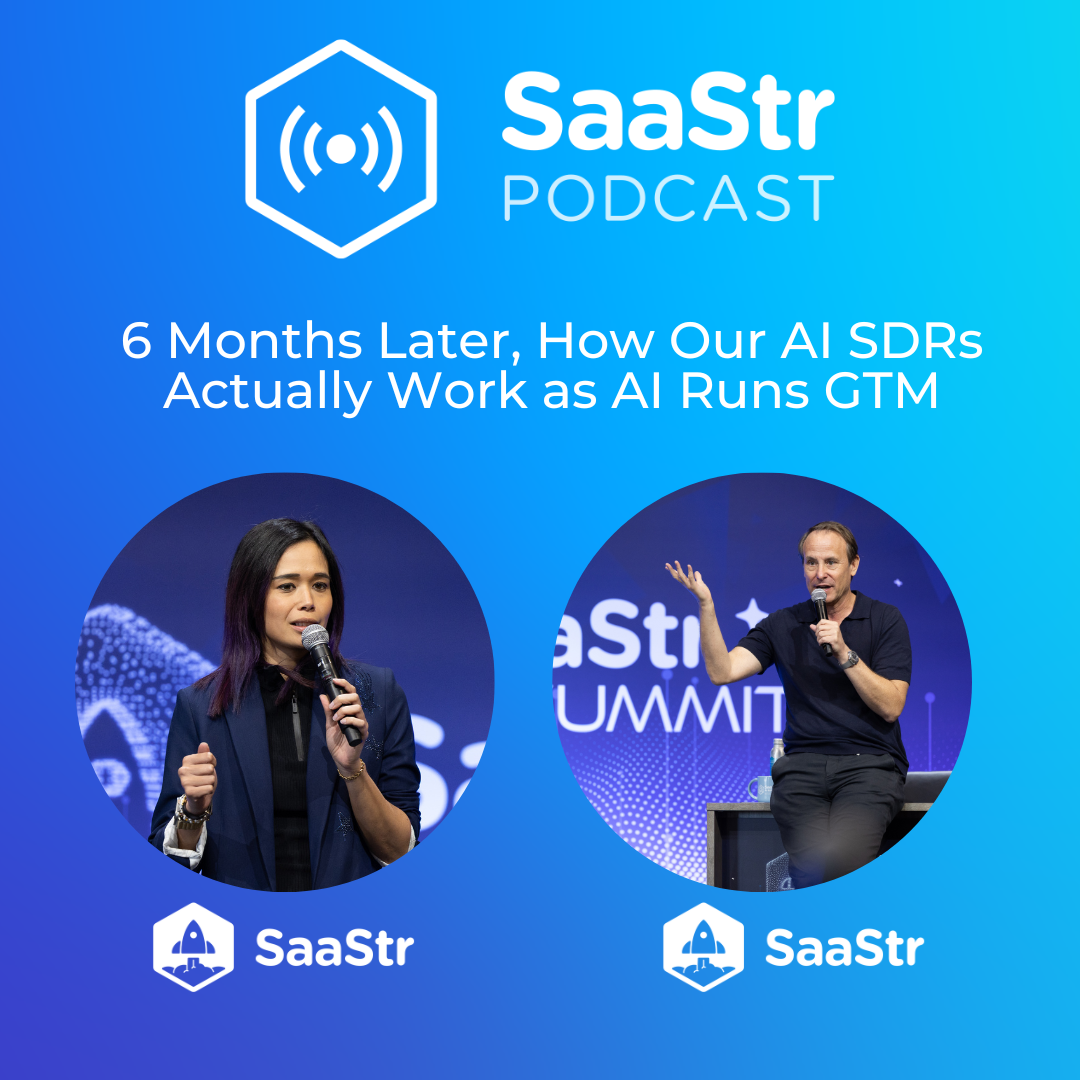
Instead of asking an AI tool for creative ideas, instruct it to predict how 100,000 people would respond to your copy. This shifts the AI from a creative to a statistical mode, leveraging deeper analysis and resulting in marketing assets (like subject lines and CTAs) that perform significantly better in A/B tests.

While AI offers efficiency gains, its true marketing potential is as a collaborative partner. This "designed intelligence" approach uses AI for scale and data processing, freeing humans for creativity, connection, and building empathetic customer experiences, thus amplifying human imagination rather than just automating tasks.
Traditional ad testing relies on surveys, which are unreliable as respondents may not be truthful or self-aware. A more predictive method is to measure actual consumer behaviors like attention and emotional response using neuroscience and AI. These are more direct indicators of an ad's potential sales impact.
AI tools can drastically increase the volume of initial creative explorations, moving from 3 directions to 10 or more. The designer's role then shifts from pure creation to expert curation, using their taste to edit AI outputs into winning concepts.

AI should not be the starting point for creation, as that leads to generic, spam-like output. Instead, begin with a distinct human point of view and strategy. Then, leverage AI to scale that unique perspective, personalize it with data, and amplify its distribution.