Get your free personalized podcast brief
We scan new podcasts and send you the top 5 insights daily.
OpenAI's charter included a provision requiring it to merge with any entity that developed AGI first. This created a powerful incentive to preemptively self-declare victory in the AGI race, as they reportedly did, effectively nullifying a clause that posed an existential threat to the company.

Related Insights
Unlike typical corporate structures, OpenAI's governing documents were designed with the unusual ability for the board to destroy and dismantle itself. This was a built-in failsafe, acknowledging that their AI creation could become so powerful that self-destruction might be the safest option for humanity.

The logical endgame for OpenAI, if it truly believes it will achieve AGI, is not to sell intelligence via APIs. Instead, it would be to hoard its most powerful models, make them exclusive to its own proprietary products (e.g., OpenAI CRM), and cut off competitors, thereby capturing all the economic value.

OpenAI's previous structure allowed it to potentially end Microsoft's IP rights by declaring AGI. By removing this clause in the new deal, OpenAI has given up its most powerful negotiating lever, signaling that AGI is not a near-term reality or that the partnership was more critical than the threat.

The updated partnership eliminates a key provision that would have ended Microsoft's license upon OpenAI reaching AGI. This move grants Microsoft non-exclusive IP rights through 2032, even for post-AGI models, fundamentally altering their long-term strategic alignment.
Microsoft’s new superintelligence team is a direct result of a renegotiated OpenAI deal. The previous contract restricted Microsoft from building AGI past a certain computational threshold. Removing this clause was a pivotal, strategic move to pursue AI self-sufficiency.
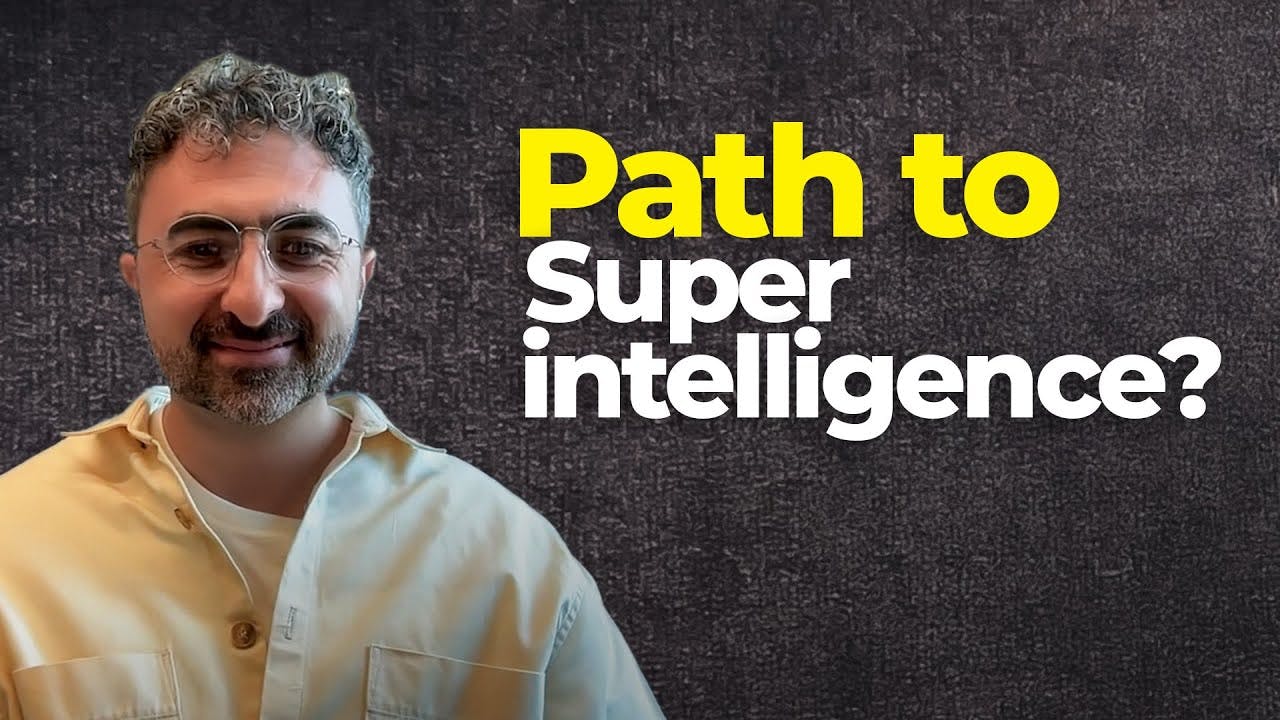
Top AI CEOs are driven by a mutual fear that if a competitor achieves AGI first, that person could become a dictator. This "race to be first" is less about commercial success and more about a paranoid, high-stakes power grab to prevent a rival from seizing ultimate control.

Despite its early dominance, OpenAI's internal "Code Red" in response to competitors like Google's Gemini and Anthropic demonstrates a critical business lesson. An early market lead is not a guarantee of long-term success, especially in a rapidly evolving field like artificial intelligence.

Even the most safety-focused AI labs, like Anthropic, are accelerating their research due to a competitive fear that rivals like OpenAI will achieve AGI first. This dynamic ensures the race continues, potentially at the expense of comprehensive safety protocols.

An insider's view reveals OpenAI's founding narrative of "handling risk responsibly" became a rationalization. The company's true guiding principle shifted to a power-seeking incentive, prioritizing the race to AGI over its original safety-first mission, leading to the guest's resignation.
Dan Siroker argues AGI has already been achieved, but we're reluctant to admit it. He claims major AI labs have 'perverse incentives' to keep moving the goalposts, such as avoiding contractual triggers (like OpenAI with Microsoft) or to continue the lucrative AI funding race.
