Get your free personalized podcast brief
We scan new podcasts and send you the top 5 insights daily.
The updated partnership eliminates a key provision that would have ended Microsoft's license upon OpenAI reaching AGI. This move grants Microsoft non-exclusive IP rights through 2032, even for post-AGI models, fundamentally altering their long-term strategic alignment.
Related Insights
Lawsuit filings reveal a previously unreported $2 billion Microsoft investment in OpenAI in 2021. This deal featured a lower 6x return multiple but granted Microsoft broader commercialization rights to any OpenAI model developed (except AGI), showing a much deeper strategic commitment before ChatGPT's public success.
OpenAI's previous structure allowed it to potentially end Microsoft's IP rights by declaring AGI. By removing this clause in the new deal, OpenAI has given up its most powerful negotiating lever, signaling that AGI is not a near-term reality or that the partnership was more critical than the threat.

While Microsoft now allows OpenAI to partner with rivals like AWS, it secretly retained a powerful advantage. A new clause mandates that all OpenAI products must launch first on Azure, unless Microsoft is unable or unwilling to support them. This gives Microsoft an exclusive 'theatrical release window' for the most advanced AI models.
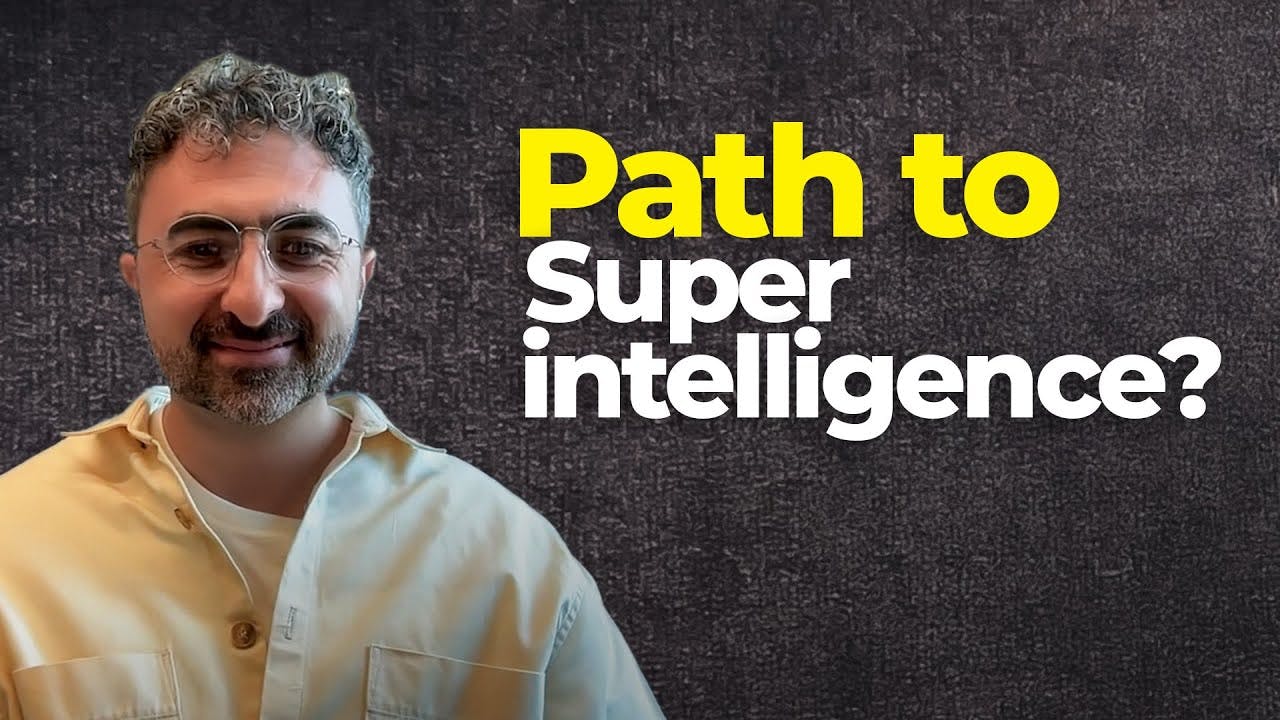
Microsoft’s new superintelligence team is a direct result of a renegotiated OpenAI deal. The previous contract restricted Microsoft from building AGI past a certain computational threshold. Removing this clause was a pivotal, strategic move to pursue AI self-sufficiency.
A critical sticking point in the revised Microsoft-OpenAI partnership is that Microsoft retains rights to all IP from OpenAI's acquisitions. This isn't theoretical; this clause previously caused OpenAI's attempted acquisition of AI coding startup Windsurf to fail, revealing a major constraint on its M&A strategy.

Microsoft solidified its 27% stake, secured exclusive IP rights until 2032, and locked in a $250B Azure commitment. This captures near-term value while de-risking Microsoft from having to solely fund OpenAI's massive future build-out, positioning Azure as a platform for all AI models, not just OpenAI's.
Microsoft faces a strategic dilemma with OpenAI. Losing model exclusivity hurts the Azure sales team's competitive edge against rivals like AWS. However, OpenAI's broader availability boosts Microsoft's equity stake, creating conflict between operational sales incentives and long-term investment returns.
The updated partnership removes exclusivity, allowing OpenAI to use other clouds like AWS. In return, Microsoft solidifies its 20% revenue share and eliminates the risky 'AGI clause' that could have voided the deal. This strategic shift enables both companies to scale and avoid potential legal conflicts as OpenAI outgrows a single cloud provider.

The partnership goes far beyond a customer relationship. Microsoft receives the intellectual property for OpenAI's system designs and innovations, which it can then use to build infrastructure for OpenAI and extend for its own purposes, a critical and little-known aspect of their deal.
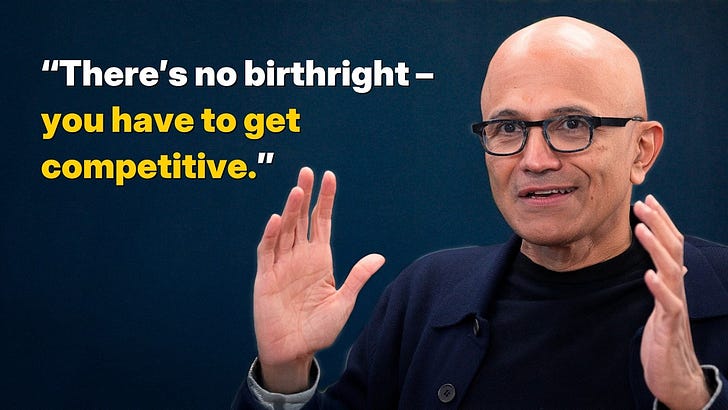
Beyond the equity stake and Azure revenue, Satya Nadella highlights a core strategic benefit: royalty-free access to OpenAI's IP. For Microsoft, this is equivalent to having a "frontier model for free" to deeply integrate across its entire product suite, providing a massive competitive advantage without incremental licensing costs.
