Get your free personalized podcast brief
We scan new podcasts and send you the top 5 insights daily.
Increased efficiency from AI should not automatically be filled with more tasks. Instead, this newfound capacity should be intentionally allocated to "thinking time"—marinating on hard problems. This slow, System 2 thinking is crucial for leadership and judgment.

Related Insights
Users who treat AI as a collaborator—debating with it, challenging its outputs, and engaging in back-and-forth dialogue—see superior outcomes. This mindset shift produces not just efficiency gains, but also higher quality, more innovative results compared to simply delegating discrete tasks to the AI.
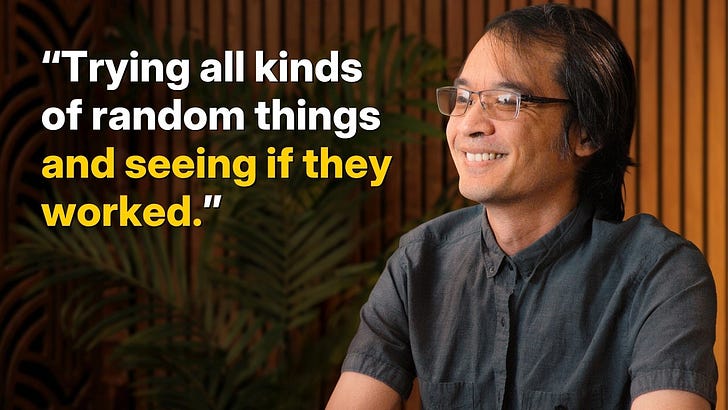
Mathematician Terence Tao finds AI doesn't speed up his core problem-solving but makes his papers "richer" by adding complex plots and deeper literature searches. Tasks that were previously infeasible are now easy. AI expands the scope and quality of work rather than just shortening the timeline for existing tasks.
As AI agents eliminate the time and skill needed for technical execution, the primary constraint on output is no longer the ability to build, but the quality of ideas. Human value shifts entirely from execution to creative ideation, making it the key driver of progress.

AI's true productivity leverage is not just speed but enabling more attempts. A human might get one shot at a complex task, whereas an AI-assisted workflow allows for three or more "turns at the wheel." The critical human skill shifts from initial creation to rapid review and refinement of these iterations.

Most view AI for efficiency, but its true power lies in handling routine tasks to free up human talent. This unlocks capacity for strategic, creative, and relationship-driven work that fuels innovation and growth, shifting the question from cost savings to new capabilities.

As AI and technology automate repetitive, high-quantity tasks, the measure of human efficiency shifts. The new benchmark is not how much a person produces, but the quality of their ideas, insights, and complex problem-solving. Human value now lies in quality over quantity.
Time saved from AI-driven efficiencies must be consciously reallocated to strategic tasks that AI can't do, like deeper customer research or improving sales enablement. This compounds the value of the initial time saving, but only if that time is actively protected and reinvested.

The true ROI of AI isn't just efficiency; it's the opportunity to reallocate time from low-value tasks to uniquely human activities. Use the bandwidth gained to build deeper client relationships, foster community, and engage in creative work.

The true power of AI for leaders isn't just automating tasks for productivity gains. It's about clearing cognitive clutter from back-to-back meetings and administrative work. This creates invaluable 'space' for strategic thinking, creativity, and higher-impact leadership activities that were previously squeezed out.

AI creates a gift of time, and leaders face a choice: use it to demand more work, or intentionally give time back to their teams. This could mean fewer meetings, creating "deep work" blocks, or enabling community volunteer time, rather than defaulting to a cycle of never-ending productivity gains.
