Get your free personalized podcast brief
We scan new podcasts and send you the top 5 insights daily.
As AI and technology automate repetitive, high-quantity tasks, the measure of human efficiency shifts. The new benchmark is not how much a person produces, but the quality of their ideas, insights, and complex problem-solving. Human value now lies in quality over quantity.
Related Insights
AI makes generating high volumes of content easy, but this introduces "work slop" where quantity overwhelms quality. The new organizational challenge isn't production but sifting through excessive, low-value output. This shifts the most important work from creation to curation and judgment.

As AI handles more routine tasks, uniquely human skills like creativity, strategic thinking, clear communication, and collaboration are becoming table stakes. These former "soft skills" are now mandatory for career growth and resilience.

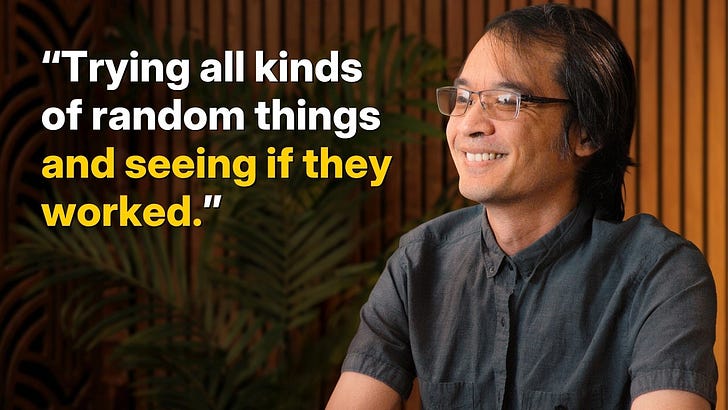
Mathematician Terence Tao finds AI doesn't speed up his core problem-solving but makes his papers "richer" by adding complex plots and deeper literature searches. Tasks that were previously infeasible are now easy. AI expands the scope and quality of work rather than just shortening the timeline for existing tasks.
As AI handles more routine tasks, traditional productivity metrics like 'tasks completed' become obsolete. The focus must shift from output to outcomes. It no longer matters what was done on a given day, but rather how tools were used to achieve a specific business goal.

As AI commoditizes execution and intellectual labor, the only remaining scarce human skill will be judgment: the wisdom to know what to build, why, and for whom. This shifts economic value from effort and hard work to discernment and taste.

As AI agents eliminate the time and skill needed for technical execution, the primary constraint on output is no longer the ability to build, but the quality of ideas. Human value shifts entirely from execution to creative ideation, making it the key driver of progress.

As AI agents increasingly automate tasks, the cost of 'doing' work plummets. Greg Brockman argues the most valuable and scarce resource becomes human attention for oversight, judgment, and ensuring AI actions align with high-level goals and values. The core of future work will be deciding 'what' and 'why', not 'how'.
AI's true productivity leverage is not just speed but enabling more attempts. A human might get one shot at a complex task, whereas an AI-assisted workflow allows for three or more "turns at the wheel." The critical human skill shifts from initial creation to rapid review and refinement of these iterations.

Since AI can generate output rapidly, the differentiator is no longer speed but the quality of your judgment and clarity. AI acts as an amplifier; if your input lacks taste or direction, you'll simply produce "garbage faster." The most valuable skills become decision-making and refinement.

With AI handling execution, the differentiating skills for knowledge workers are no longer technical. Instead, value comes from having a distinct vision (taste), the initiative to pursue it (agency), and the ability to organize complex projects (structure).
