Get your free personalized podcast brief
We scan new podcasts and send you the top 5 insights daily.
Jassy predicts fewer humans will do today's work and teams will be smaller and more cross-functional. He says companies will need to rewrite almost all code so agents can update it, especially for security, because patching will need to happen in minutes. That favors agent-native startups over slow incumbents.

Related Insights
Enterprises will move slowly on deploying AI agents due to massive security and integration risks with legacy systems. Startups, with less to lose and cleaner stacks, will adopt agent-based workflows rapidly, creating a significant competitive advantage and widening the gap between incumbents and challengers.
The theoretical discussion about AI and job loss is becoming reality. One startup founder plans to replace 70% of his team (50 people) with "agent swarms"—interconnected AI agents that handle specific functions managed by a master agent. This indicates job displacement may be more rapid and widespread than anticipated.

Future-proofing is no longer just about scalable code. It's about creating systems with primitives and abstractions that AI agents can understand and reason about. This applies to both technical infrastructure and operational documents like SOPs, which must be made machine-legible.

Garry Tan predicts a massive turnover in software. New AI-native startups, free from the "bad habits of the ZIRP era," can operate with hyper-efficiency. A team of 20 people leveraging agentic systems can achieve the output of a 2,000-person engineering organization, enabling them to displace large SaaS incumbents.

The number of AI agents will soon vastly exceed human employees. This requires a fundamental shift in software development, prioritizing API-first design, reliability, and machine-to-machine interaction over traditional human-centric user interfaces.
Unlike previous technologies that integrated into existing workflows, AI agents require us to fundamentally re-engineer our work processes to make them effective. Early adopters who adapt their operations to how agents "think" will gain compounding advantages over competitors.
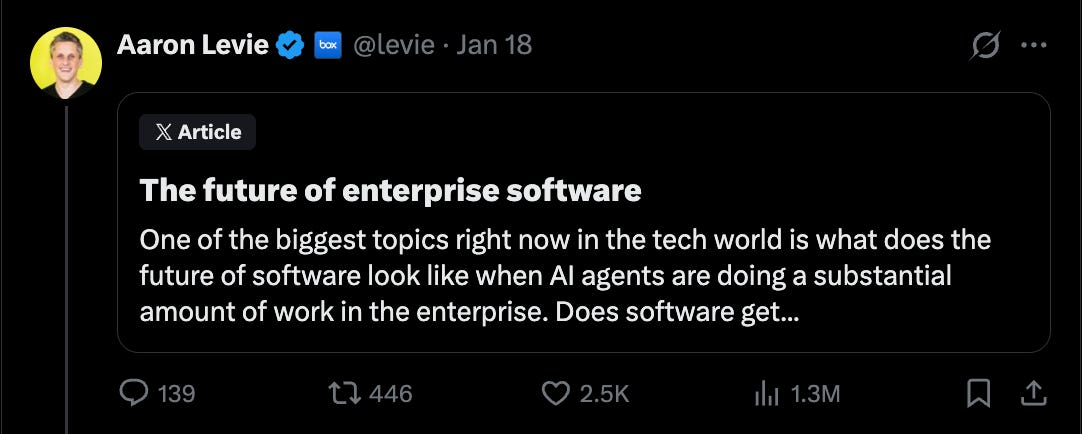
The future of software isn't just AI-powered features. It's a fundamental shift from tools that assist humans to autonomous agents that perform tasks. Human roles will evolve from *doing* the work to *orchestrating* thousands of these agents.

The role of a software engineer is evolving. Instead of manually writing all code, they are increasingly becoming managers of specialized AI agents that write, test, refactor, and deploy code. This moves their focus to a higher level of system design and orchestration.

As agents and AI automate code creation and review, the bottleneck of software shifts entirely to determining what is worth building and validating customer value. Because execution speed is dramatically higher, Lopitaux predicts that development team sizes will shrink, the developer-to-PM ratio will decrease, and the traditional 'two-pizza team' standard will disappear in favor of smaller, agile units.

Historically, developer tools adapted to a company's codebase. The productivity gains from AI agents are so significant that the dynamic has flipped: for the first time, companies are proactively changing their code, logging, and tooling to be more 'agent-friendly,' rather than the other way around.
