Get your free personalized podcast brief
We scan new podcasts and send you the top 5 insights daily.
Future-proofing is no longer just about scalable code. It's about creating systems with primitives and abstractions that AI agents can understand and reason about. This applies to both technical infrastructure and operational documents like SOPs, which must be made machine-legible.

Related Insights
The core needs of AI agents—version control, testing, observability—mirror those of human developers. However, the sheer scale and speed of agentic workflows mean existing tools like Kubernetes are insufficient, requiring a fundamental reimagining of the entire infrastructure stack.

As AI agents handle the mechanics of code generation, the primary role of a developer is elevated. The new bottlenecks are not typing speed or syntax, but higher-level cognitive tasks: deciding what to build, designing system architecture, and curating the AI's work.

The endgame for software development isn't just code completion, but an "AI factory." A chain of specialized agents will handle design, coding, review, and security. This requires an interoperable platform where different models can check each other's work, with humans as "agent managers."

The number of AI agents will soon vastly exceed human employees. This requires a fundamental shift in software development, prioritizing API-first design, reliability, and machine-to-machine interaction over traditional human-centric user interfaces.

Unlike previous technologies that integrated into existing workflows, AI agents require us to fundamentally re-engineer our work processes to make them effective. Early adopters who adapt their operations to how agents "think" will gain compounding advantages over competitors.
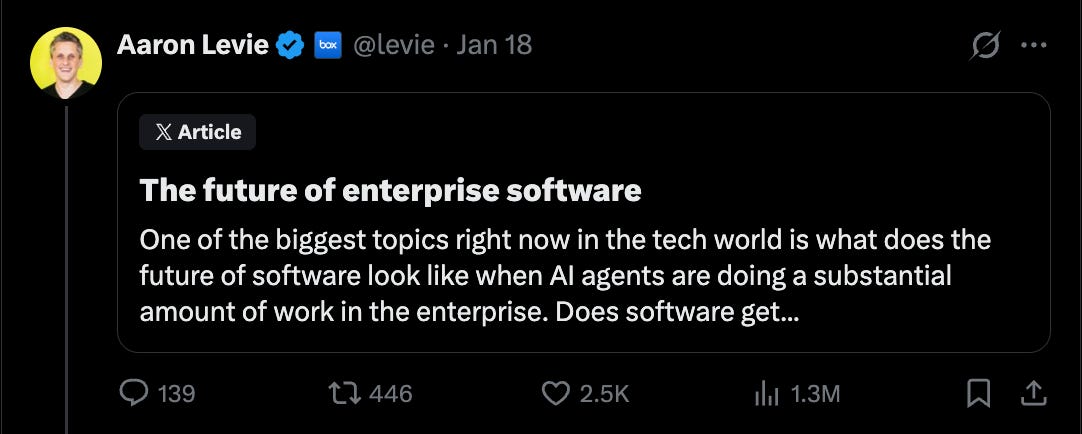
The rise of autonomous agents like OpenClaw dictates that the future of software is API-first. This architecture is necessary for agents to perform tasks programmatically. Crucially, it must also support human interaction for verification, collaboration, and oversight, creating a hybrid workflow between people and AI agents.

The rapid pace of AI paradigm shifts—from simple token-in/token-out models to complex agentic systems—forces a complete infrastructure rewrite every 12 to 18 months. Google's lesson for large organizations is to invest in standardized platforms to avoid having every team reinvent the wheel and fall behind.

The debate isn't between manual coding and blindly trusting AI ("vibe coding"). A new discipline, "agentic engineering," is emerging. This involves creating new best practices, security controls, and governance for using AI agents to build software. This structured approach will replace the current era of unchecked individual developer experimentation.

Documentation is no longer just for humans. AI agents now read it directly as operational input, making its accuracy critical for system function. Outdated docs, once a nuisance, now cause system failures, elevating documentation to the level of essential infrastructure.
A major architectural shift is underway: instead of embedding AI features into a product, companies should treat AI as an external agent that uses the product via a CLI or API. This simplifies integration and better aligns with AI's capabilities.