Get your free personalized podcast brief
We scan new podcasts and send you the top 5 insights daily.
No company will immediately trust an AI with a $100K negotiation. The path to autonomy starts with a human-in-the-loop approach. This builds user trust gradually while simultaneously feeding the AI agent critical feedback and learnings on the company's specific operational nuances.

Related Insights
To avoid failure, launch AI agents with high human control and low agency, such as suggesting actions to an operator. As the agent proves reliable and you collect performance data, you can gradually increase its autonomy. This phased approach minimizes risk and builds user trust.

Frame AI independence like self-driving car levels: 'Human-in-the-loop' (AI as advisor), 'Human-on-the-loop' (AI acts with supervision), and 'Human-out-of-the-loop' (full autonomy). This tiered model allows organizations to match the level of AI independence to the specific risk of the task.

Treat AI agents like new hires. Start with simple, supervised tasks, provide corrective feedback, and codify successful workflows into reusable skills. This gradual process builds the trust necessary to grant full autonomy for complex, long-running tasks.

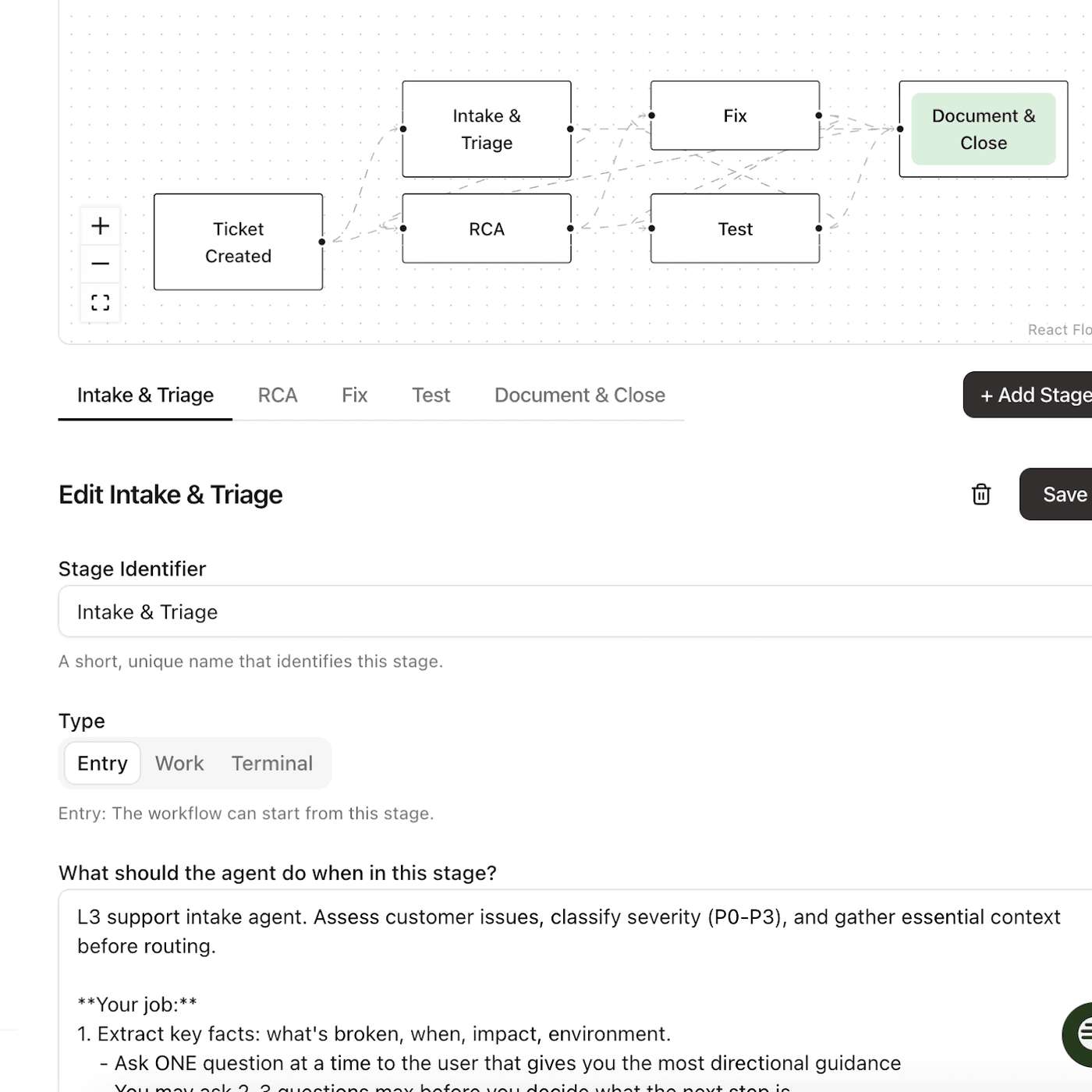
Instead of forcing full autonomy, the AI agent allows teams to start with human approvals at key stages. This 'human-in-the-loop' model builds trust and enables organizations to incrementally automate complex support workflows as they grow more confident in the system's reliability.
To overcome user distrust of AI agents having access to personal data, the adoption path must be gradual. The AI should first provide suggestions for the user to approve (e.g., draft emails). Only after consistently proving its reliability and allowing users to learn its boundaries can trust be established for autonomous action.

Avoid deploying AI directly into a fully autonomous role for critical applications. Instead, begin with a human-in-the-loop, advisory function. Only after the system has proven its reliability in a real-world environment should its autonomy be gradually increased, moving from supervised to unsupervised operation.
Enterprises with existing customers cannot afford the "Waymo" approach of building a fully autonomous system in secret before launch. Instead, they should follow the "Tesla" model: iteratively automate segments of their products, keeping humans in the loop while gradually building towards greater autonomy.

Gokul Rajaram advises that AI agents should adopt the trust-building model used by medical scribe AIs. Instead of assuming user trust, agents should start by requiring human approval for all actions, then gradually earn autonomy as they demonstrate reliability over time. This incremental approach is key to overcoming user skepticism.

Founders shouldn't expect AI to automate a business function instantly. Real-world adoption is a gradual "glide path" where automation scope increases over time. This requires building systems that facilitate human-AI interaction, allowing humans to coach the AI and vice versa for a smooth transition.

Granting full autonomy to AI agents from day one is reckless. A safer, more effective approach is a laddered model: start with agents in an "Observation" role, then let them make "Suggestions," then "Act with Approval," and only then grant full autonomy within specific, defined boundaries.
