Get your free personalized podcast brief
We scan new podcasts and send you the top 5 insights daily.
Sophisticated AI models, particularly adaptive ones, don't just learn from positive engagements like clicks. A customer's decision *not* to interact with an offer is treated as a meaningful action, providing instant feedback that the creative, channel, or timing was wrong.

Related Insights
Instead of reacting with louder marketing messages, AI systems proactively identify early behavioral warning signs of disengagement. This allows for timely, relevant interventions at moments that truly matter, fundamentally shifting retention strategy from messaging to behavior.
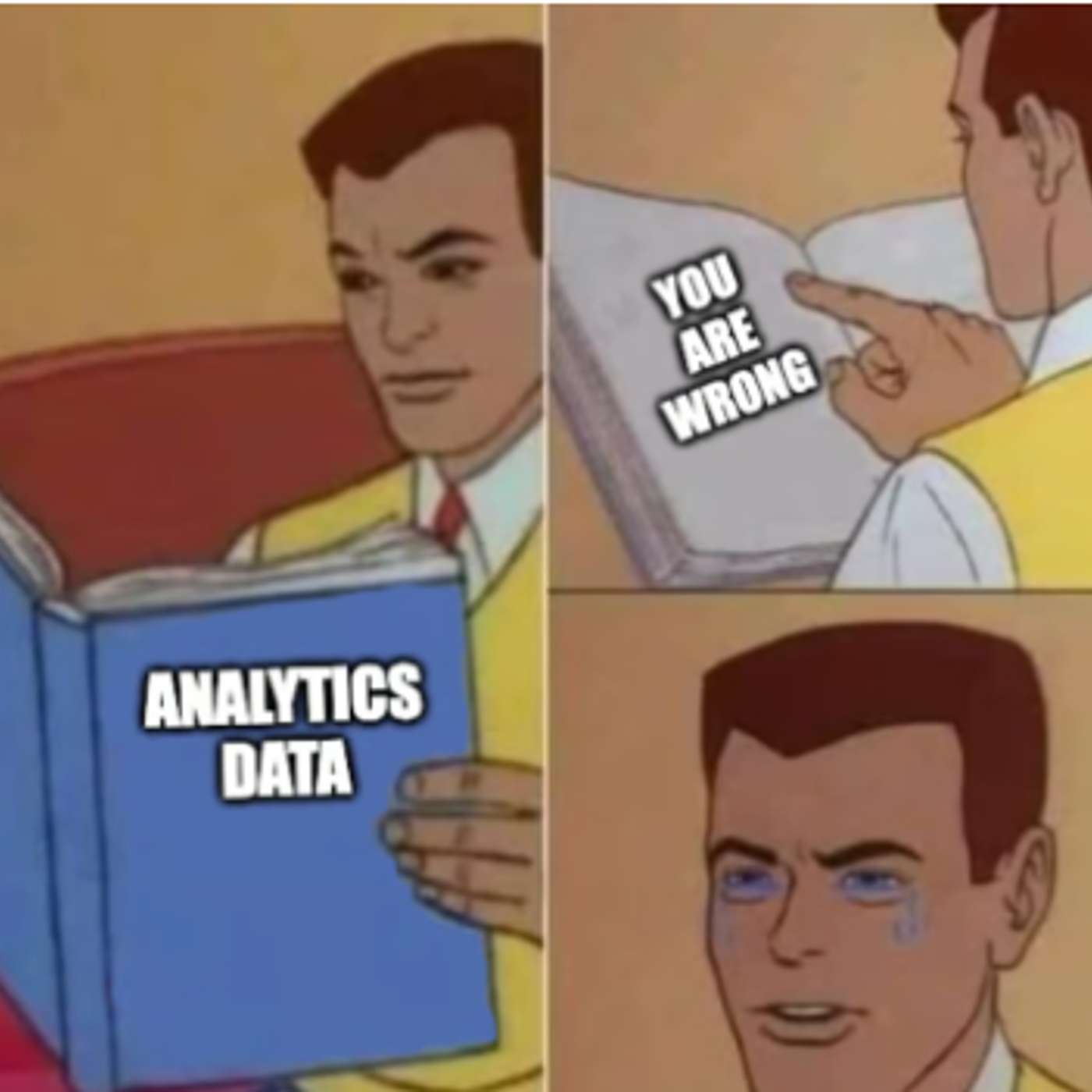
Traditional marketing relies on static, often biased customer personas. AI-driven systems replace these assumptions with dynamic models built on real-time user behavior. This allows startups to observe what customers actually do, removing bias and grounding strategy in reality.
Implement a system where an AI agent uses both content analytics (views, likes) and business metrics (app downloads, revenue) to continuously refine its strategy. This 'Larry Loop' allows the agent to learn what drives actual business results, not just vanity metrics, creating a fully autonomous marketing engine.

A powerful model for marketing automation involves an agent that not only posts content but also analyzes its performance across the entire funnel—from views down to app conversions. It then identifies successful patterns and generates new content based on those learnings, creating a self-improving engine.

The primary role of AI in marketing isn't to replace creative work but to automate the complex process of understanding customer behavior. AI systems continuously analyze data to answer critical questions about conversion, value, and budget waste, freeing up humans for strategic tasks.
Generative AI models like ChatGPT predict the next logical word based on vast, generic datasets. A more advanced approach uses predictive models trained on a brand's specific performance data—opens, clicks, conversions—to forecast which content variants will actually drive business outcomes, not just sound plausible.
Instead of batching users into lists for A/B tests, AI can analyze each individual's complete behavioral history in real-time. It then deploys a uniquely bespoke message at the optimal moment for that single user, a level of personalization that makes static segmentation primitive by comparison.
The true power of AI agents lies in creating a recursive feedback loop. By ingesting ad performance data, they can autonomously analyze what works, iterate on creative, and launch new versions, far outpacing human-led optimization cycles.

Beyond one-off content generation, AI's value is its ability to constantly run micro-experiments on subject lines, copy, and offers. It then analyzes results and automatically incorporates learnings into future campaigns without human intervention.

The most significant error when approaching conversational AI is not a specific tactical mistake, but a lack of action. Delaying entry into this new channel is more damaging than launching an imperfect campaign, as action creates the data needed for iteration and learning, which provides a competitive advantage.
