Get your free personalized podcast brief
We scan new podcasts and send you the top 5 insights daily.
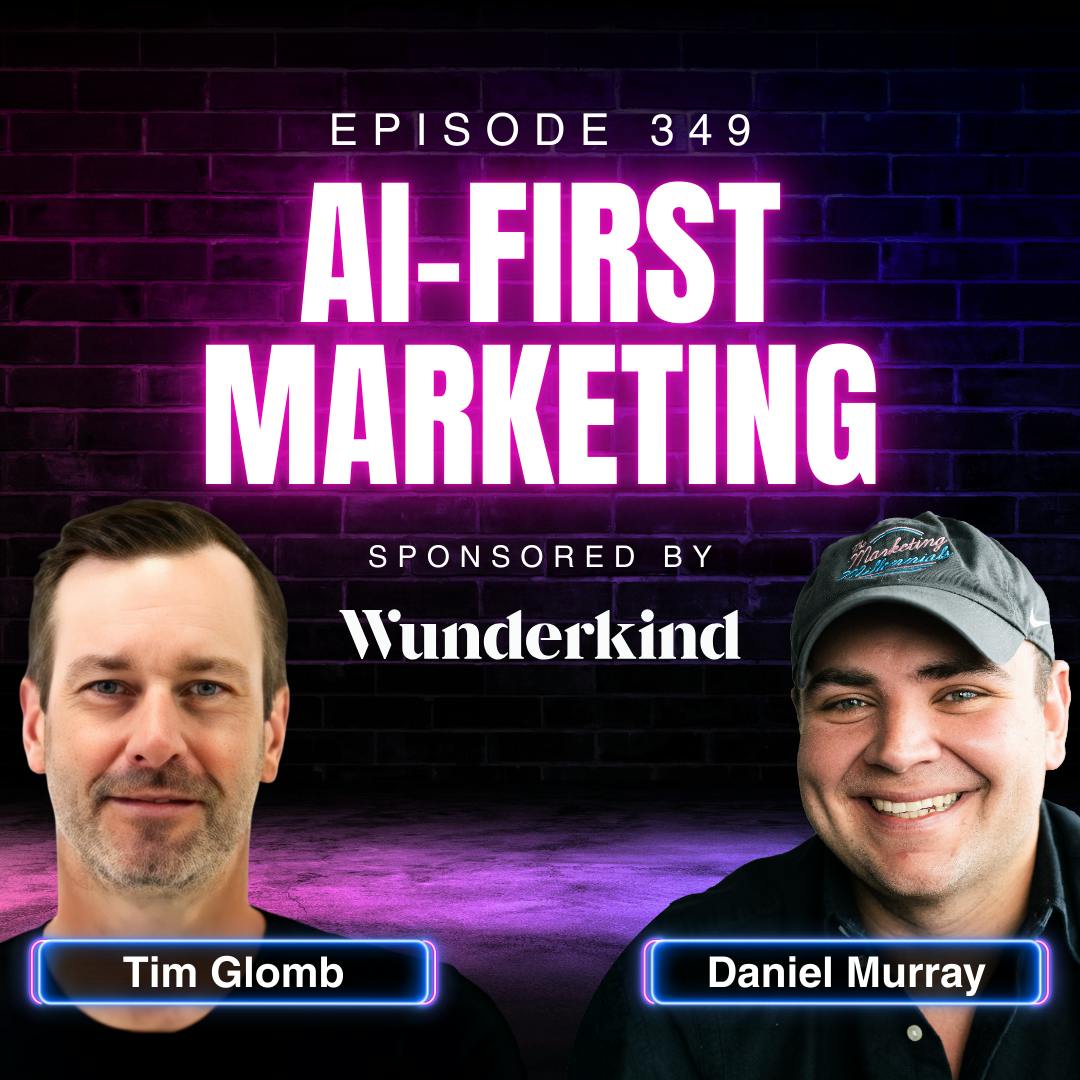
Instead of batching users into lists for A/B tests, AI can analyze each individual's complete behavioral history in real-time. It then deploys a uniquely bespoke message at the optimal moment for that single user, a level of personalization that makes static segmentation primitive by comparison.
Related Insights
GenAI transforms advertising's core pillars. It enables hyper-personalized creatives at scale, democratizes ad production for smaller businesses, and fundamentally enhances the two most critical functions of any ad platform: predicting user behavior and measuring campaign outcomes.

Don't unleash a generic AI agent on your entire database. To get high response rates, segment contacts into specific sub-personas based on role, behavior, or status (e.g., churn risk). Then, train dedicated sub-agents or campaigns for each persona, allowing for true personalization at scale in batches of around 1,000 contacts.
As consumers delegate purchasing to personal AI agents, marketing's emotional appeals will fail. Brands must prepare for a "Business-to-Machine" (B2M) world where algorithms evaluate products on function and data, rendering decades of psychological tactics obsolete.

As AI takes over campaign execution, the marketer's job shifts from micro-management to macro-strategy. They define the business rules—such as discount ranges, offer types, and creative assets—and the AI then makes millions of optimized micro-decisions for individual customers within those human-set boundaries.
Companies can use AI to generate unique, 'ephemeral software' experiences for marketing campaigns. Instead of a generic Spotify Wrapped-style review, businesses can now affordably create a custom, interactive 'unwrapped' summary for each user based on their specific product usage data, costing just cents in tokens.

Beyond just generating creative, the future of AI in CRM is using "agentic AI" to build better strategies. This involves agents that help define audience segments, determine the next best product or action, and accelerate the implementation of complex campaigns, enhancing human strategy rather than replacing it.

Expensive user research often sits unused in documents. By ingesting this static data, you can create interactive AI chatbot personas. This allows product and marketing teams to "talk to" their customers in real-time to test ad copy, features, and messaging, making research continuously actionable.

Instead of asking an AI tool for creative ideas, instruct it to predict how 100,000 people would respond to your copy. This shifts the AI from a creative to a statistical mode, leveraging deeper analysis and resulting in marketing assets (like subject lines and CTAs) that perform significantly better in A/B tests.

Modern marketing relevance requires moving beyond traditional demographic segments. The focus should be on real-time signals of customer intent, like clicks and searches. This reframes the customer from a static identity to a dynamic one, enabling more timely and relevant engagement.
AI's future impact will transcend mere workflow efficiency. It will act as a strategic 'equalizer,' enabling smaller, leaner marketing teams to operate with the sophistication of larger enterprises. This means gaining access to advanced personalization, audience management, and performance optimization that directly impacts the bottom line.
