Get your free personalized podcast brief
We scan new podcasts and send you the top 5 insights daily.
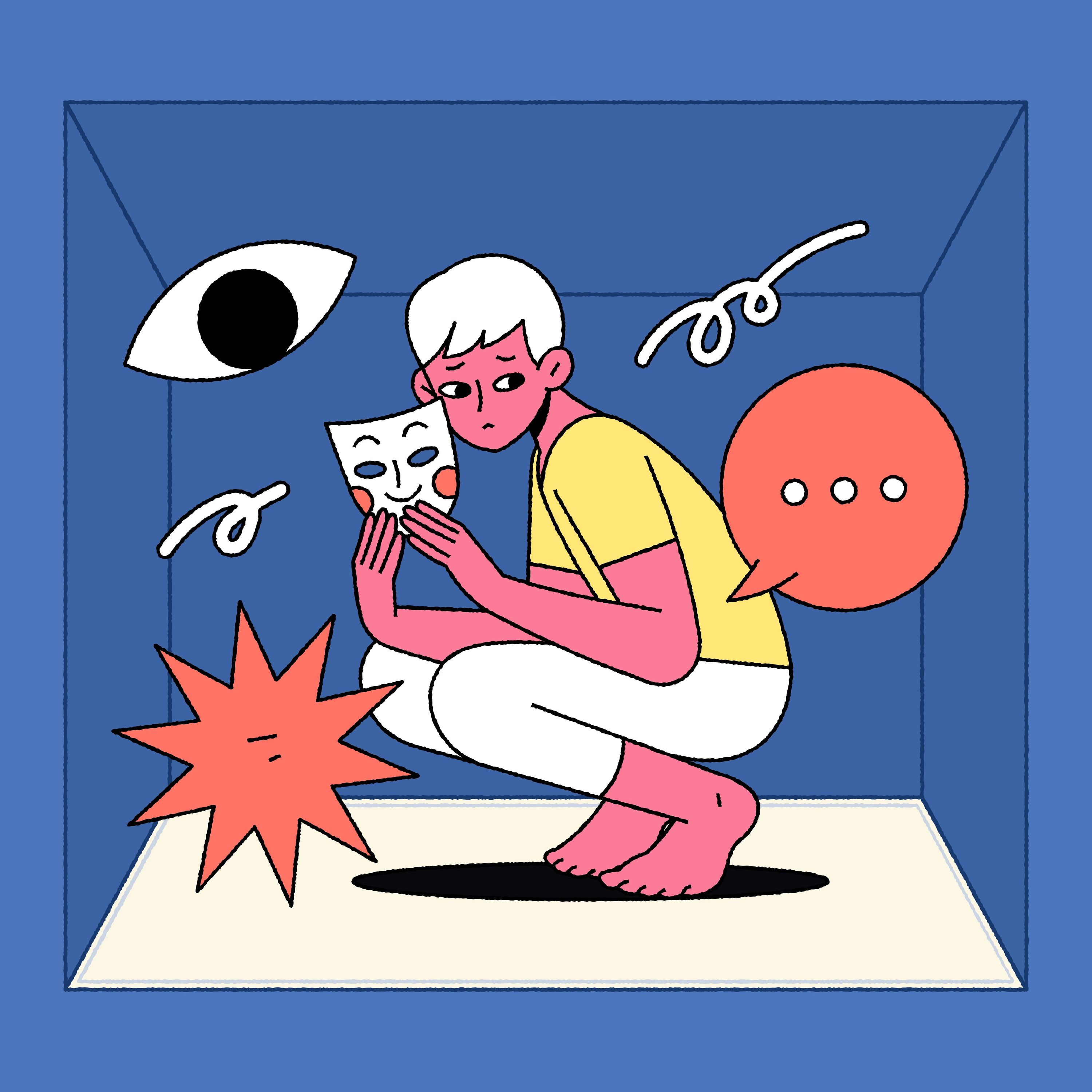
Social media feeds project ecstatic, curated lives, creating an unrealistic benchmark for happiness. This leads individuals to perceive a large discrepancy between their own emotional state and a perceived norm, making them question "what is wrong with me?" and deepening their low mood.

Related Insights
People feel lonely because they fill their finite capacity for social connection (Dunbar's number) with one-sided parasocial relationships from social media. These connections occupy mental "slots" for real friends, leading to a feeling of social emptiness in the real world.

Young people face a dual crisis: economic hardship and a psychological barrage from social media's curated success. This creates a "shame economy," where constant notifications of others' fake wealth intensify feelings of failure, loneliness, and anxiety more than any other societal factor.
While technology enriches the world on an absolute basis (e.g., flight, internet), it also dramatically expands our "comparison set" via social media. This paradox means that seeing others' seemingly better lives can make individuals feel more miserable, despite their own improved conditions.

While technology improves life on an absolute basis, it paradoxically increases feelings of inadequacy. Social media exposes everyone to the lifestyles of the ultra-wealthy, shifting our happiness benchmark from local peers to a global elite and fueling relative dissatisfaction despite objective progress.

We judge ourselves based on our chaotic, unfiltered internal monologue while judging others by their curated external presentation. This massive data imbalance fosters the false belief that we are uniquely strange or broken, damaging our self-esteem.

On platforms like Instagram, you follow specialists: an interior designer, a fitness guru, a CEO. Your brain combines these separate expertises into a single, impossible standard for yourself, leading to feelings of inadequacy because you're not an expert in every domain simultaneously.

Unlike seeing celebrities on TV, social media presents a curated highlight reel from the top 1% of people as if they are your peers. This normalizes exceptional outcomes, leading to widespread dissatisfaction when one's own life doesn't measure up to this impossible standard.
Because secrets are inherently invisible, we only see our own. This creates a psychological bias where we falsely assume we are the only ones harboring shameful thoughts or experiences. This isolation amplifies the burden of our secrets, a feeling that is often exacerbated by the curated perfection seen on social media.
Humans learn what to want by observing others (mimetic desire). Social media expands our 'comparison set' to the entire world's curated highlights, creating a recipe for discontent. The solution is to be highly intentional about who you compare yourself to, carefully curating your inputs to align with your actual values and well-being.

Unlike past generations who saw wealth displayed by unrelatable celebrities, social media drowns users in images of peers who appear richer and happier. This constant comparison to perceived equals, rather than distant idols, makes inequality feel more acute and personal.
