Get your free personalized podcast brief
We scan new podcasts and send you the top 5 insights daily.
Instead of seeing Washington D.C. as a disadvantage for a finance firm, David Rubenstein pitched it as a unique strength. He claimed Carlyle had superior insight into government-regulated industries, creating a compelling narrative that attracted early investors.

Related Insights
In heavily regulated or legally ambiguous industries, a founder's most valuable asset can be political connections. One startup literally used a pitch deck slide showing its co-founder with prominent politicians to signal their ability to influence future legislation in their favor. This represents a stark, real-world "crony capitalism" business strategy.
Instead of competing in saturated New York, David Rubenstein founded Carlyle in Washington D.C. He leveraged the location by specializing in government-affected industries like aerospace, creating a unique expertise that Wall Street couldn't easily replicate. This strategy turned a perceived geographic disadvantage into a powerful, defensible market niche.
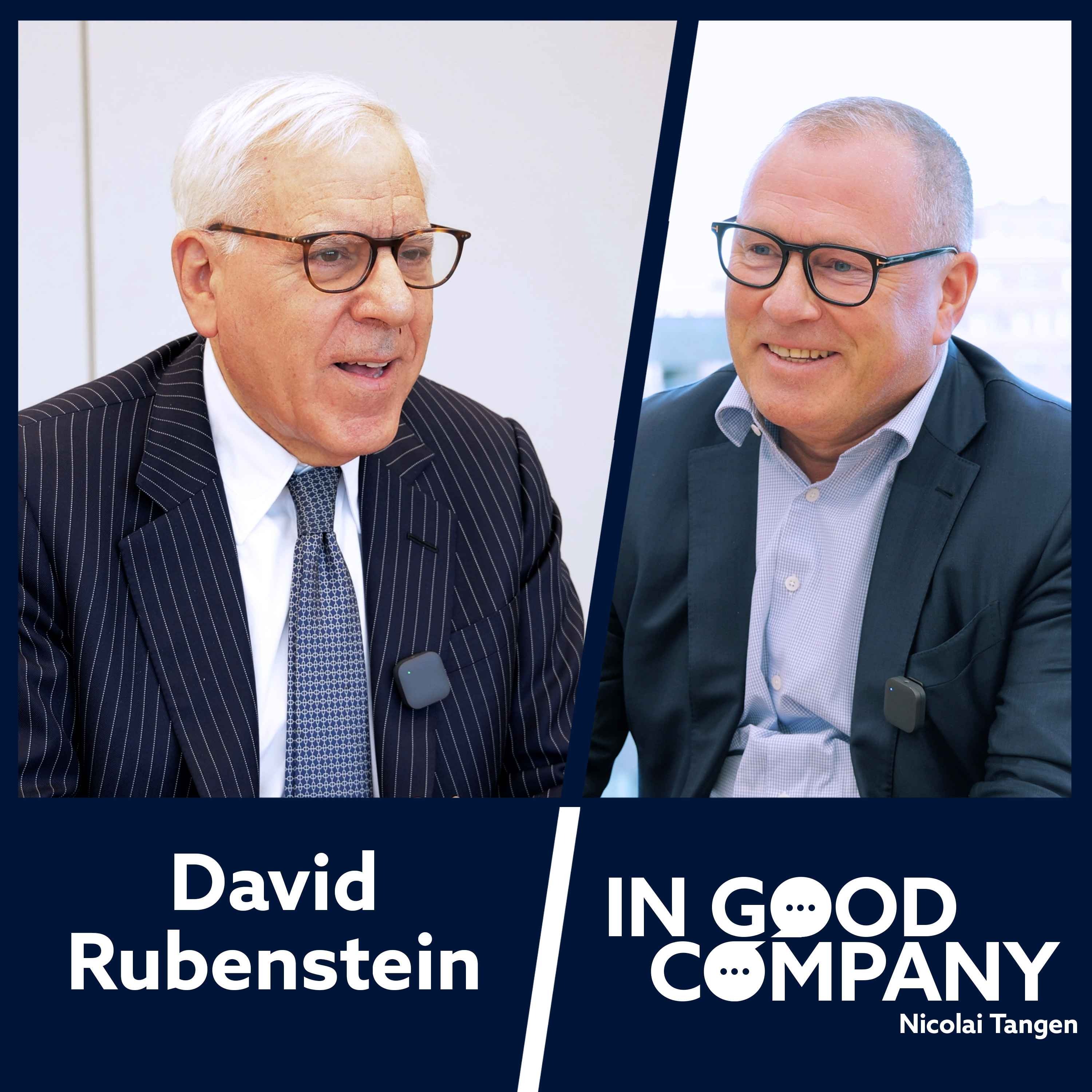
Before Carlyle Group was a private equity giant, founder David Rubenstein built his network in D.C. by hosting off-the-record, non-partisan educational sessions for politicians. He brought in experts simply to help them make better-informed decisions, establishing himself as a trusted, neutral convener.
Instead of competing in New York, David Rubenstein embraced Carlyle's D.C. location. He framed it as a unique advantage, claiming superior understanding of government-regulated industries like aerospace. This created a compelling narrative that differentiated Carlyle from established Wall Street firms.

To overcome its newcomer status, Carlyle hired famous political figures like George H.W. Bush. They weren't making investment decisions but served as a draw for annual meetings. This tactic filled rooms with potential LPs who would then stay for the actual investment pitch.
Iterion CEO Rahul Aras argues that being outside a major biotech hub is a real fundraising hurdle. The issue isn't overt investor bias, but rather the loss of natural networking opportunities—like bumping into investors at a local coffee shop—that are common in dense ecosystems and must be overcome with proactive outreach.

When raising capital, the ability to articulate a clear and compelling narrative is as crucial as the underlying financial model. An operator with exceptional storytelling skills can successfully secure funding, potentially even winning out over a competitor with a marginally better deal but weaker communication.
Being based in San Francisco is a core part of Farallon's identity. The physical distance from the New York financial hub is an intentional strategic choice, allowing the firm to develop contrarian investment approaches and make decisions without being swayed by prevailing groupthink.

A common misperception is that large firms build extensive fundraising teams because their scale allows them to afford it. The reality is the inverse: these firms achieved scale precisely because they invested in professionalizing their investor relations and capital-raising capabilities early on, creating a flywheel for growth.

As an unknown firm, Carlyle recruited famous political figures like Frank Carlucci and Jim Baker. These 'big shots' provided instant credibility and access to global networks that the founders couldn't reach on their own, accelerating their fundraising efforts.