Get your free personalized podcast brief
We scan new podcasts and send you the top 5 insights daily.
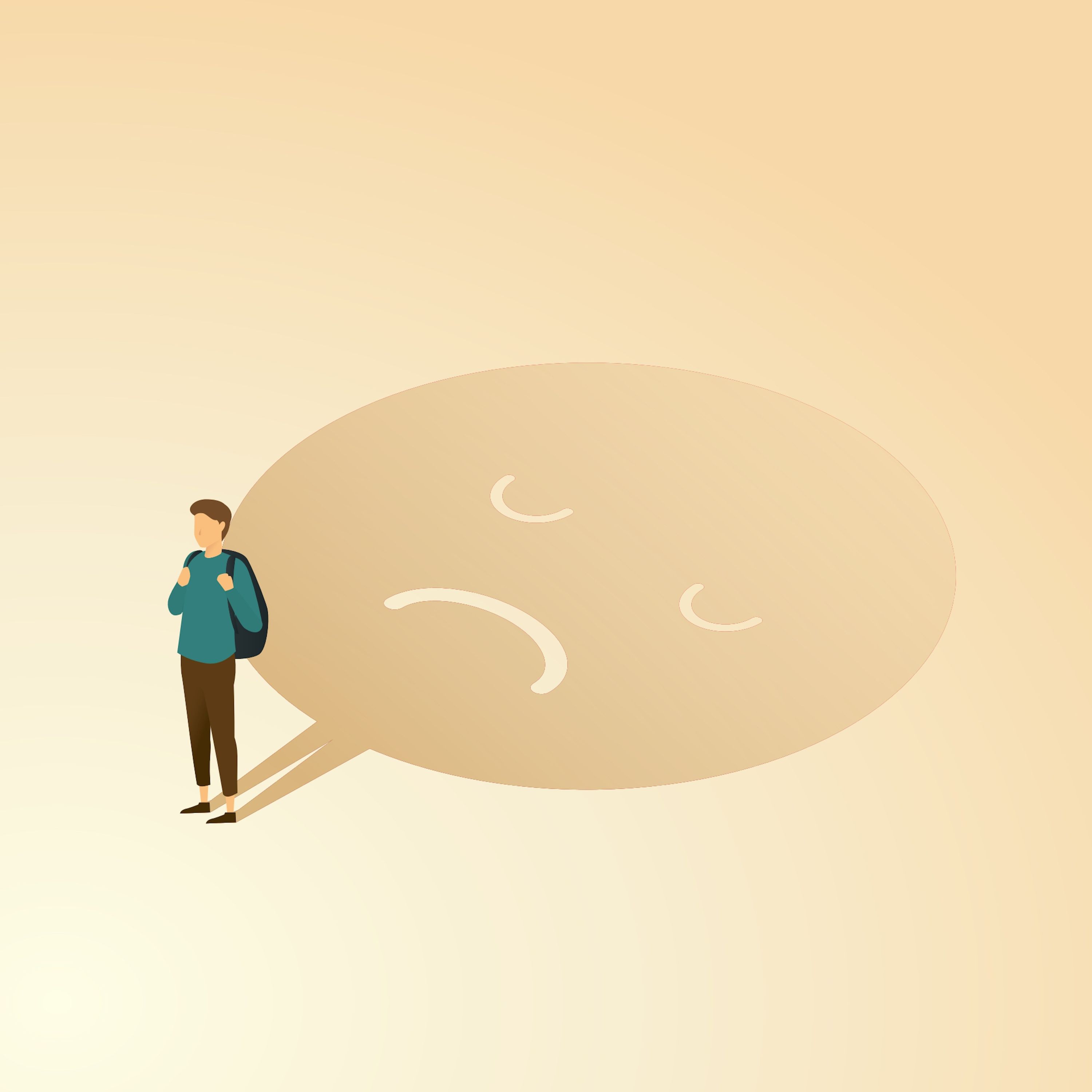
The negativity bias causes our brains to fixate on criticism, even when it's vastly outnumbered by praise. A professor describes how one negative student evaluation can emotionally devastate them, despite receiving 199 glowing reviews for the same class.
Related Insights
Neuroscience shows the brain's self-relevance and value systems are intertwined. Criticism of something "me-related" (like loading a dishwasher) activates the same pathways as something objectively "bad," triggering defensiveness by challenging this core neurological link.

It's a misconception that we inherently have more negative than positive thoughts. Negative thoughts simply command more of our attention because they are perceived by our brains as threats to survival. Your mind is wired to focus on and resolve these disruptive signals, making them feel more powerful and prevalent.

Your brain becomes what you repeat. By constantly focusing on negative experiences like injustice or personal slights, you strengthen those neural pathways. This makes it easier to feel resentment and anger, creating a self-perpetuating cycle of negativity.

Our brains are hardwired with a negativity bias. Media business models exploit this by amplifying bad news, inducing a state of hypervigilance. This constant threat-detection mode cognitively impairs performance by narrowing attention, reducing working memory, and wrecking creative problem-solving capabilities.

It's easy for our minds to switch from a positive frame (e.g., 70% survival rate) to a negative one (30% mortality rate). However, the reverse shift is cognitively difficult and slower, revealing an inherent neurological bias that makes negative framing 'stickier'.
Fear of negative feedback stems directly from an over-reliance on positive validation. The more you depend on praise for self-worth, the more power you give to criticism. This vulnerability paralyzes action and prevents you from taking the risks necessary for growth.

Having a large online following can force a narcissistic defense. The brain's threat-detection circuits are wired to ignore thousands of positive comments and fixate on the one negative one. To protect against this constant perceived attack, individuals must develop a narcissistic shield.

Overcome the fear of negative feedback by reframing it. A person leaving a hateful comment is likely deeply unhappy. Instead of feeling attacked, feel pity for their state of mind. This psychological shift neutralizes the comment's emotional power over you.
Contrary to the idea that only criticisms we believe are true can hurt us, the most painful ones are those we know are false but fear others will accept as truth. This trifecta of indignation at the lie, the pain of misrepresentation, and fear of public perception is what truly stings.

Defensiveness arises because our brain's self-relevance and value systems are intertwined. Feedback threatening a specific action (e.g., "you're a risky driver") is often interpreted as a threat to our core identity ("I'm a bad person"), triggering a strong protective response.