Get your free personalized podcast brief
We scan new podcasts and send you the top 5 insights daily.
AI-generated images originate from code, like a JSON prompt. By storing this 'source code' with a unique ID in a database, you can connect it to ad performance data. This allows an agent to systematically analyze which creative inputs drive results, enabling true data-driven creative optimization.

Related Insights
Unlike general-purpose image models, Meta's can be trained on proprietary ad performance data (ROAS). This allows it to generate creative optimized for conversions, not just aesthetics. The model learns from what sells, generates more of it, and gets smarter in a cycle no competitor can replicate.

Instead of guessing prompts, take a screenshot of a viral ad. Feed the image into an AI tool like Gemini and ask it to write a detailed prompt to create a similar person or scene. This allows you to recreate the style and vibe of high-performing creative without illegally copying someone's likeness.

The true power of AI agents lies in full-cycle automation. An agent can be built to scrape customer pain points for ad ideas, generate creative, publish campaigns via API, analyze live performance data, and then automatically reallocate budget by disabling underperformers and scaling winners.
![Claude Code marketing masterclass [from idea to making $$] thumbnail](https://assets.flightcast.com/workspaces/vde7jbg9rfhsyiw9o46f9sj8/podcasts/ordbkg8yojpehffas7vr7qpc/t8c97hs8oy7a2xnobsfu5p42.jpg)
The ideal creative workflow balances human strategy with machine execution. Humans should focus on the 'soul'—the core emotional hook and brand story. AI should then handle the 'scale' by generating thousands of variations, running A/B tests, and automating optimization based on performance data.
An AI-generated image is no longer a final product. It's the starting point that can be branched into countless other formats: videos, 3D assets, GIFs, text descriptions, or even code. This 'infinite branching' approach transforms a single creative idea into a full-fledged, multi-format campaign.
As AI democratizes ad creation, the key differentiator is no longer production capability. Instead, marketers who excel at creative prompting and use AI to maximize the speed of testing and learning will gain a significant competitive edge.
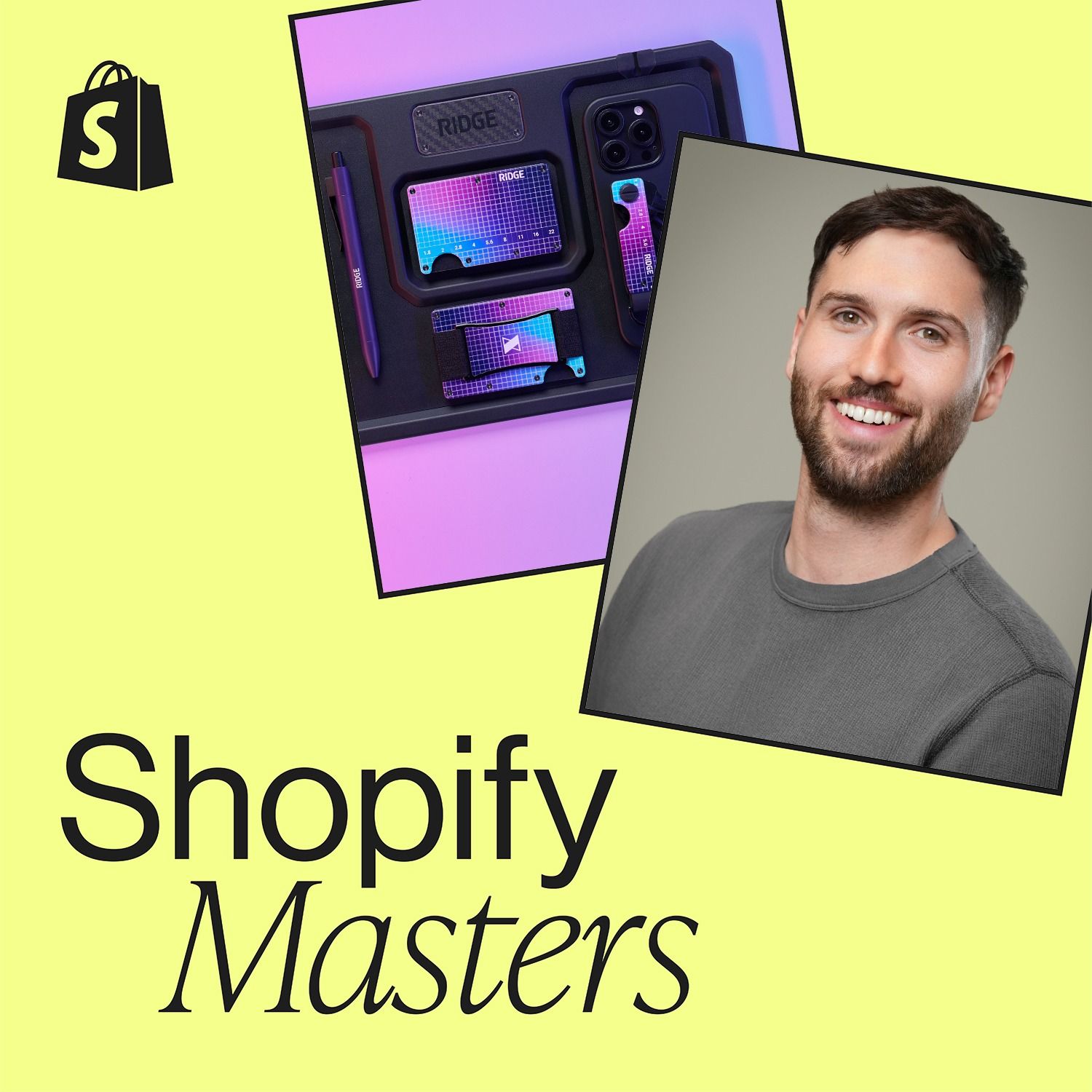
Ridge automates ad creation using a custom GPT and N8N, producing 500 static ads daily. Even if 90% are unusable, the remaining 50 ads provide a constant stream of testable creative, increasing the chances of finding winning variants for personalized campaigns at scale.
While AI image models create high-fidelity ads, generating variations is costly. A cheaper, faster approach is building ad templates as code (e.g., React components). This allows for creating thousands of text and layout variations for free, enabling rapid testing of messaging before investing in polished visuals.
The true power of AI agents lies in creating a recursive feedback loop. By ingesting ad performance data, they can autonomously analyze what works, iterate on creative, and launch new versions, far outpacing human-led optimization cycles.
For products where A/B testing lacks signal, Resident uses a robust naming protocol and AI to analyze creative elements in aggregate. They tag attributes like room color, music BPM, and even mattress angle to identify winning trends across all ads, bypassing the need for direct tests.