Get your free personalized podcast brief
We scan new podcasts and send you the top 5 insights daily.
The financial damage in the current cycle has largely already occurred but remains latent. The wave of visible distress is still to come, as it will only surface when borrowers finally exhaust their cash reserves used to subsidize underperforming properties, leading to defaults and forced liquidations.

Related Insights
For three years, defaults have been "soft" (e.g., liability management exercises, PIK interest), masking underlying issues. The market is now entering a second phase of "hard defaults" where losses will be directly felt through restructurings and bankruptcies, changing the nature of the cycle.

While the market has cooled, the most significant financial distress is likely still ahead. Experienced investors are waiting for a major "artery to pop"—a large, overleveraged deal to fail—which will trigger deeper price discovery and create major buying opportunities. This moment is predicted for 2026-2027.
Years of low interest rates encouraged risk-taking, resulting in a large pool of low-rated loans (B3/B-). Now, sustained higher rates are stressing these weak capital structures, creating a boom in distressed debt opportunities even as the broader economy performs well.
The market is not heading for a 2008-style crisis with massive default spikes. Instead, it will experience a sustained period of 3-5% default rates for several years. This cumulative "slow burn" will be painful as many over-leveraged companies, financed in a zero-interest-rate environment, face restructuring.
Headline data suggests a healthy market with tight spreads. However, the percentage of loans trading at distressed levels (below 80 cents on the dollar) is widening. This bifurcation means investors must look past market averages to see the real, concentrated risk in the growing 'have-not' segment.

While lower-income households were hit first by inflation, a subsequent rise in delinquencies among middle and high-income groups signaled a deeper economic issue. It showed that sustained cost pressures were depleting even larger savings buffers, indicating the strain was not temporary or confined to one segment.

Despite concerns over higher rates, the peak in default activity for this cycle likely occurred in late 2024. The market has already flushed out many weaker borrowers through distressed exchanges, and absent a sharp economic downturn, a new, sustained wave of defaults is not expected.
Unlike past recessions where defaults spike and then recede, the current high-rate environment will keep financially weak 'zombie' companies struggling for longer. This leads to a sustained, elevated default rate rather than a sharp, temporary peak, as these firms lack the cash flow to grow or refinance.
The overall economy appears healthy, but this is a "K-shaped" reality. While large caps and the wealthy thrive, delinquency rates for the bottom 40% of earners are at Global Financial Crisis levels, and many small and medium-sized businesses can't afford their cash interest payments.
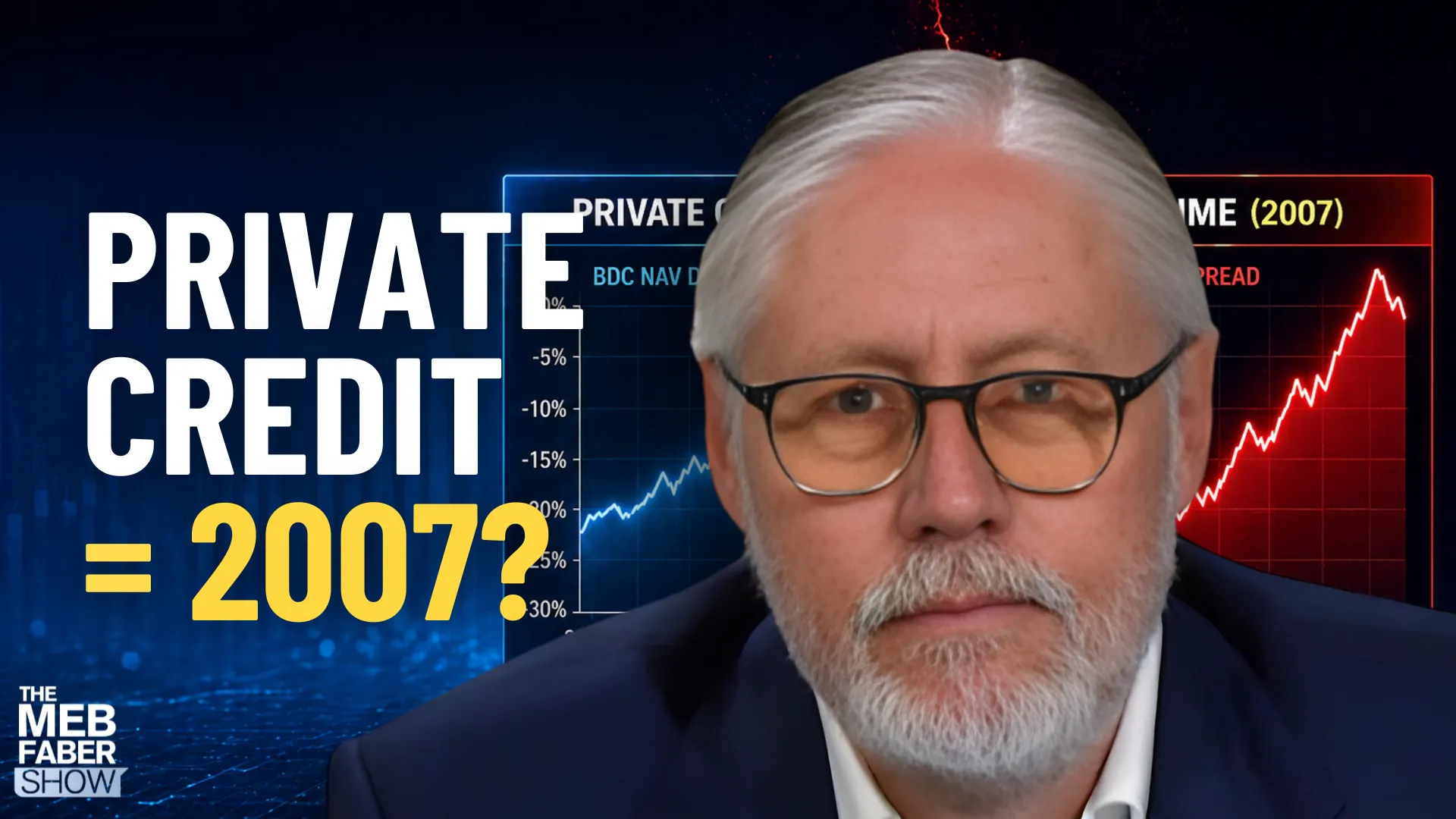
The current rise in private credit stress isn't a sign of a broken market, but a predictable outcome. The massive volume of loans issued 3-5 years ago is now reaching the average time-to-default period, leading to an increase in troubled assets as a simple function of time and volume.