Get your free personalized podcast brief
We scan new podcasts and send you the top 5 insights daily.
Feeling stuck and "stuffy" during a recording session, Dylan's instinct was to escape his environment. He and his wife took a Harley ride with no purpose other than to go. This physical displacement helped clear his mind and allowed him to return with a new perspective.

Related Insights
Realizing his creative process had become too narrow, Dylan sought to change his inner thought patterns. He understood that to evolve, he had to disorient himself from his familiar habits and embrace new possibilities, even slowing down his fast-paced nature.
Creative breakthroughs rarely happen while staring at a screen. Disconnecting and engaging in physical activity like a run is a proven method for generating novel ideas, as the mental space it creates allows solutions and inspiration to surface.

Emma Grede felt she couldn't become her true self while stuck in her home environment with its responsibilities and negative energy. Physically traveling to a different part of the city was a conscious strategy to create the distance needed to embody a new identity.

When at a creative impasse, stepping away from a project (distraction) is a productive strategy that allows your subconscious to find a solution. This is fundamentally different from procrastination, which is the consistent avoidance of work and ultimately undermines your ability to create.
Constant productivity keeps the brain in a high-frequency "beta" state, which stifles creativity. To solve complex problems, you must intentionally shift to a slower "alpha" state by disconnecting. This is achieved through simple, non-distracting activities like walking in nature without your phone.

Top creators don't wait for inspiration; they engineer it through structured rest. Activities like taking multiple showers (Sorkin), aimless boating (Einstein), or problem-solving walks (Darwin) look unproductive but are crucial for high-quality creative output. This contrasts with the modern tendency to brute-force solutions at a desk.

A CMO's award-winning poem wasn't written at her desk under pressure but came to her spontaneously during an ACDC concert. This illustrates that creative breakthroughs often happen when the mind is disengaged from the problem and in a state of relaxation or high energy, rather than through forced effort.
![What is Marketing? Part 2: Marketing is Poetry with Kory Marchisotto [Uncensored Renegades] thumbnail](https://img.transistorcdn.com/VIH3Rn5ET8-eHQxgBGNydnhXL95pc10_Kq7qTpjezuc/rs:fill:0:0:1/w:1400/h:1400/q:60/mb:500000/aHR0cHM6Ly9pbWct/dXBsb2FkLXByb2R1/Y3Rpb24udHJhbnNp/c3Rvci5mbS9zaG93/LzQ3MzEvMTU3MDAz/MjQ3NC1hcnR3b3Jr/LmpwZw.jpg)
Minor physical disruptions to your routine environment, like turning your chair or walking a familiar path differently, can trick your brain out of autopilot. This creates a new perspective and stimulates curiosity with minimal effort, sparking new neural pathways for creativity.

Activities like train rides (J.K. Rowling) or walking are mildly stimulating without demanding full attention. This 'softly fascinating' state occupies the conscious mind just enough to allow the unconscious to wander, make connections, and deliver insights, unlike high-stimulation or deep-focus environments.
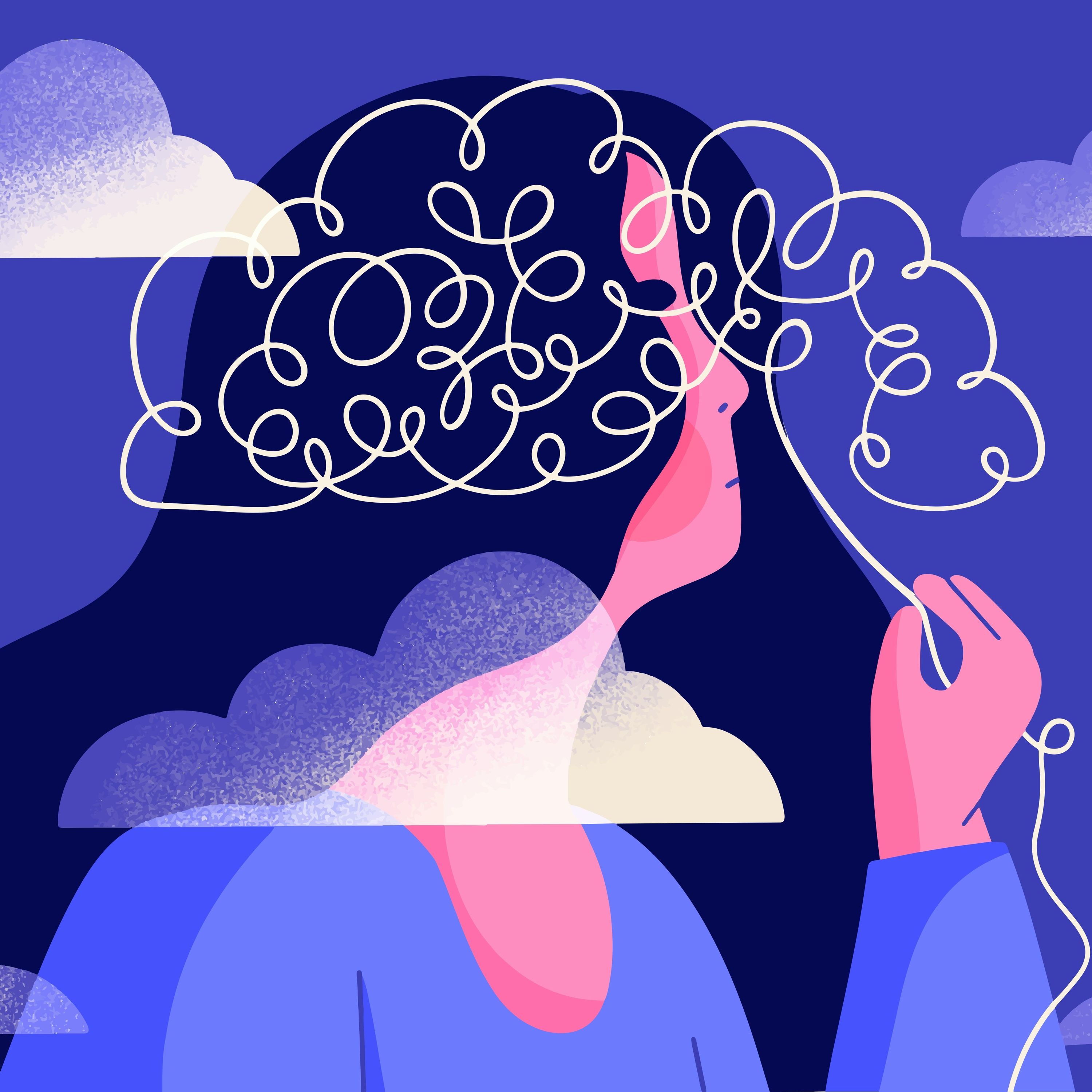
If you're stuck on a problem for over 10 minutes, change your physical state to change your mental state. Taking a walk creates an optimal condition for breakthroughs: it aligns brain and body, allows attention to wander productively without fixating, and prevents rumination.