Get your free personalized podcast brief
We scan new podcasts and send you the top 5 insights daily.
The key 'twist' that attracted CEO Jayshree Ullal to Arista was its unique software. Instead of multiple operating systems for different products, Arista built one state-driven OS. This architecture allows individual processes to fail and recover without crashing the system, a critical feature for mission-critical customers.

Related Insights
Nutanix successfully challenged incumbents like EMC and Cisco by bringing the architecture of consumer giants (e.g., Google's use of commodity hardware) to the enterprise. They combined this with an Apple-like focus on end-to-end quality control by delivering their software in a hardware appliance.

The founders initially feared their data collection hardware would be easily copied. However, they discovered the true challenge and defensible moat lay in scaling the full-stack system—integrating hardware iterations, data pipelines, and training loops. The unexpected difficulty of this process created a powerful competitive advantage.

Nvidia dominates AI because its GPU architecture was perfect for the new, highly parallel workload of AI training. Market leadership isn't just about having the best chip, but about having the right architecture at the moment a new dominant computing task emerges.

Incumbent automakers evolved with 100+ separate computer modules, creating a complex system. Newcomers like Rivian and Tesla start with a centralized, "zonal" architecture. This clean-sheet design dramatically simplifies over-the-air updates, reduces costs, and enables more advanced, integrated AI features.

While known for its GPUs, NVIDIA's true competitive moat is CUDA, a free software platform that made its hardware accessible for diverse applications like research and AI. This created a powerful network effect and stickiness that competitors struggled to replicate, making NVIDIA more of a software company than observers realize.

When asked if AI commoditizes software, Bravo argues that durable moats aren't just code, which can be replicated. They are the deep understanding of customer processes and the ability to service them. This involves re-engineering organizations, not just deploying a product.

Large enterprises don't buy point solutions; they invest in a long-term platform vision. To succeed, build an extensible platform from day one, but lead with a specific, high-value use case as the entry point. This foundational architecture cannot be retrofitted later.
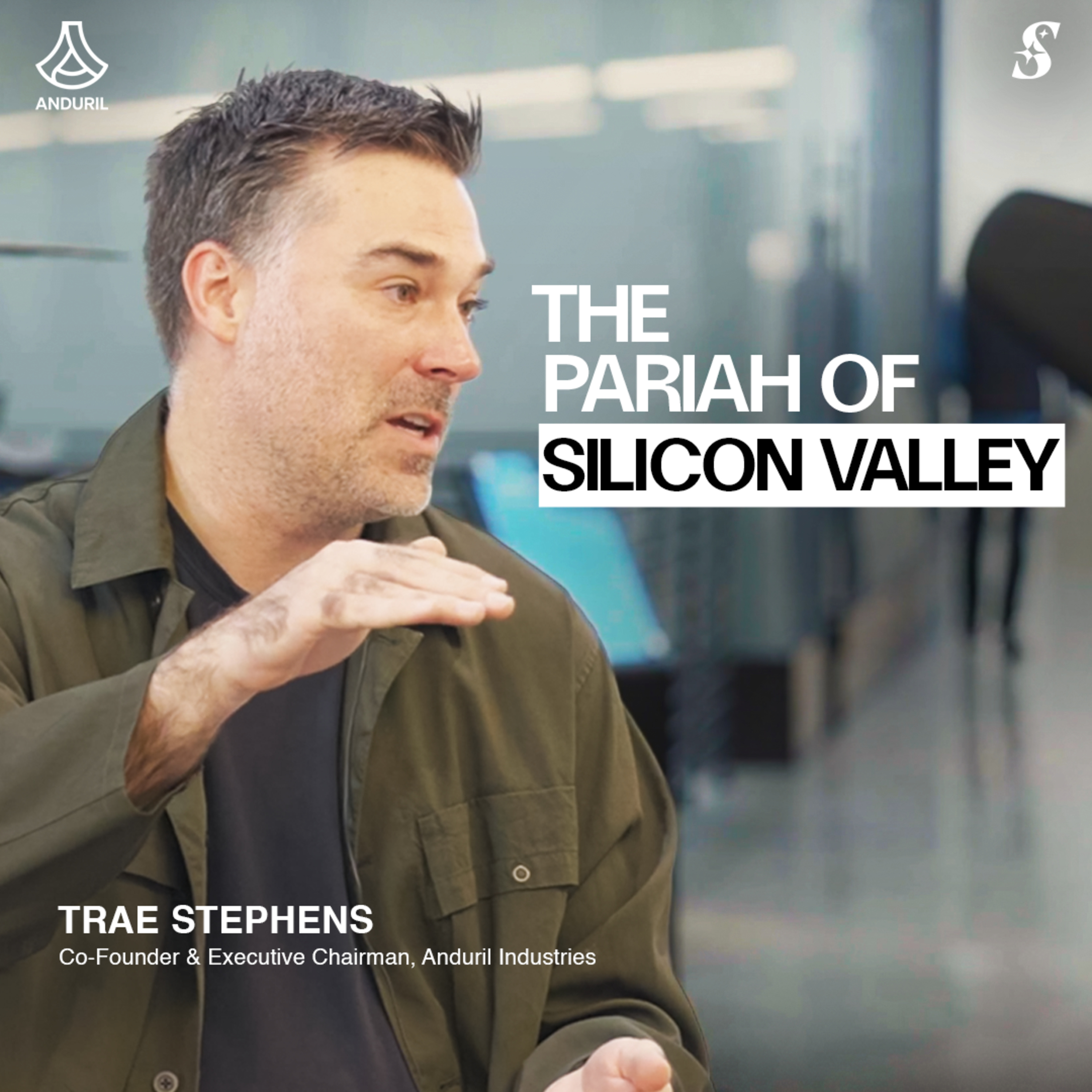
Despite building large physical systems like drones, Anduril's co-founder states their core competency and original vision is software. They are a "software-defined and hardware-enabled" company, which fundamentally differentiates their approach from traditional defense contractors who are the opposite.
A key competitive advantage wasn't just the user network, but the sophisticated internal tools built for the operations team. Investing early in a flexible, 'drag-and-drop' system for creating complex AI training tasks allowed them to pivot quickly and meet diverse client needs, a capability competitors lacked.

Arista successfully challenged the dominant Cisco not by direct confrontation, but by serving specific, high-demand use cases like high-frequency trading and massively scaled cloud data centers. These were 'white spaces' that the incumbent either didn't understand or didn't prioritize, allowing Arista to establish a strong foothold.