Get your free personalized podcast brief
We scan new podcasts and send you the top 5 insights daily.
While known for its GPUs, NVIDIA's true competitive moat is CUDA, a free software platform that made its hardware accessible for diverse applications like research and AI. This created a powerful network effect and stickiness that competitors struggled to replicate, making NVIDIA more of a software company than observers realize.

Related Insights
Jensen Huang's core strategy is to be a market creator, not a competitor. He actively avoids "red ocean" battles for existing market share, focusing instead on developing entirely new technologies and applications, like parallel processing for gaming and then AI, which established entirely new industries.
Seemingly strange deals, like NVIDIA investing in companies that then buy its GPUs, serve a deep strategic purpose. It's not just financial engineering; it's a way to forge co-dependent alliances, secure its central role in the ecosystem, and effectively anoint winners in the AI arms race.

The long-held belief that a complex codebase provides a durable competitive advantage is becoming obsolete due to AI. As software becomes easier to replicate, defensibility shifts away from the technology itself and back toward classic business moats like network effects, brand reputation, and deep industry integration.

The massive demand for GPUs from the crypto market provided a critical revenue stream for companies like NVIDIA during a slow period. This accelerated the development of the powerful parallel processing hardware that now underpins modern AI models.

NVIDIA’s business model relies on planned obsolescence. Its AI chips become obsolete every 2-3 years as new versions are released, forcing Big Tech customers into a constant, multi-billion dollar upgrade cycle for what are effectively "perishable" assets.

The enduring moat in the AI stack lies in what is hardest to replicate. Since building foundation models is significantly more difficult than building applications on top of them, the model layer is inherently more defensible and will naturally capture more value over time.

Instead of competing for market share, Jensen Huang focuses on creating entirely new markets where there are initially "no customers." This "zero-billion-dollar market" strategy ensures there are also no competitors, allowing NVIDIA to build a dominant position from scratch.

A key competitive advantage wasn't just the user network, but the sophisticated internal tools built for the operations team. Investing early in a flexible, 'drag-and-drop' system for creating complex AI training tasks allowed them to pivot quickly and meet diverse client needs, a capability competitors lacked.

NVIDIA's primary business risk isn't competition, but extreme customer concentration. Its top 4-5 customers represent ~80% of revenue. Each has a multi-billion dollar incentive to develop their own chips to reclaim NVIDIA's high gross margins, a threat most businesses don't face.
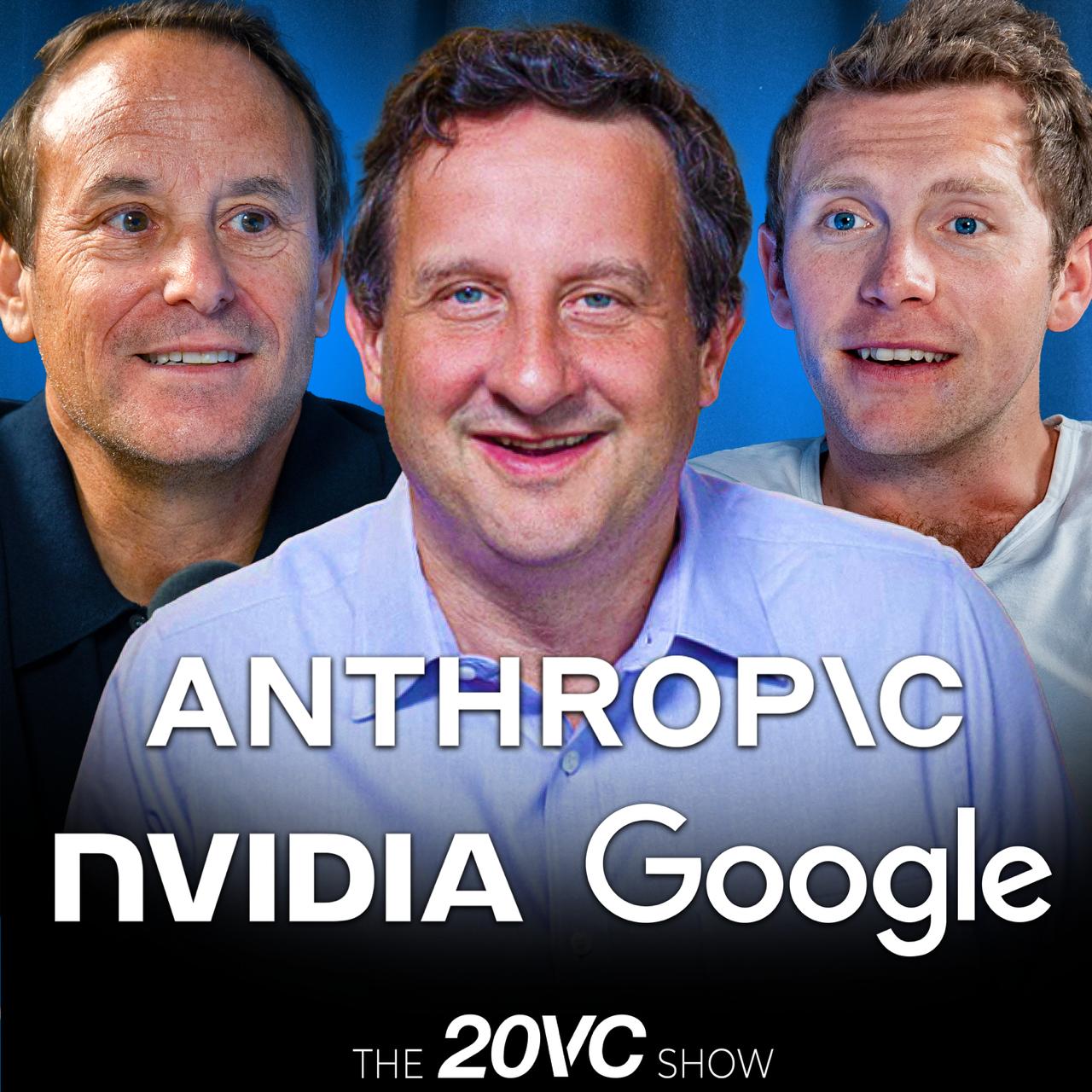
The narrative of endless demand for NVIDIA's high-end GPUs is flawed. It will be cracked by two forces: the shift of AI inference to on-device flash memory, reducing cloud reliance, and Google's ability to give away its increasingly powerful Gemini AI for free, undercutting the revenue models that fuel GPU demand.
