Get your free personalized podcast brief
We scan new podcasts and send you the top 5 insights daily.
Building the next generation of industrial technology requires a specific cultural and talent synthesis. Success demands combining Silicon Valley’s software-first culture and talent with the deep, domain-specific knowledge of industrial veterans who understand real-world constraints and past failures.

Related Insights
Engineering leadership involves four distinct skills: Technical, Operations, Product, and Strategy. Since no single person excels at all four, organizations should build complementary leadership teams, pairing a visionary CTO with a process-driven VP of Engineering.

Digital transformation is a human challenge. Beyond tech adoption, companies must future-proof by intentionally evolving their talent—hiring for deep subject matter expertise and upskilling current teams for complex, high-empathy roles that AI can't replace.

Simply hiring superstar "Galacticos" is an ineffective team-building strategy. A successful AI team requires a deliberate mix of three archetypes: visionaries who set direction, rigorous executors who ship product, and social "glue" who maintain team cohesion and morale.

Oshkosh's CVC team is a hybrid, not siloed in one department. It includes members from corporate development, a venture lead in a tech hub (Bay Area), and a counterpart in an engineering business unit. This structure ensures that strategic goals, technological feasibility, and market deal flow are constantly aligned.

Competing in the AI era requires a fundamental cultural shift towards experimentation and scientific rigor. According to Intercom's CEO, older companies can't just decide to build an AI feature; they need a complete operational reset to match the speed and learning cycles of AI-native disruptors.

When building its self-driving car team, Google intentionally hired software engineers over automotive experts. They found industry veterans were so ingrained in the existing paradigm that they couldn't adapt to a software-first approach and ended up firing them. The project's success came from fresh minds.
While technical founders excel at finding an initial AI product wedge, domain-expert founders may be better positioned for long-term success. Their deep industry knowledge provides an intuitive roadmap for the company's "second act": expanding the product, aligning ecosystem incentives, and building defensibility beyond the initial tool.
The common practice of hiring for "culture fit" creates homogenous teams that stifle creativity and produce the same results. To innovate, actively recruit people who challenge the status quo and think differently. A "culture mismatch" introduces the friction necessary for breakthrough ideas.

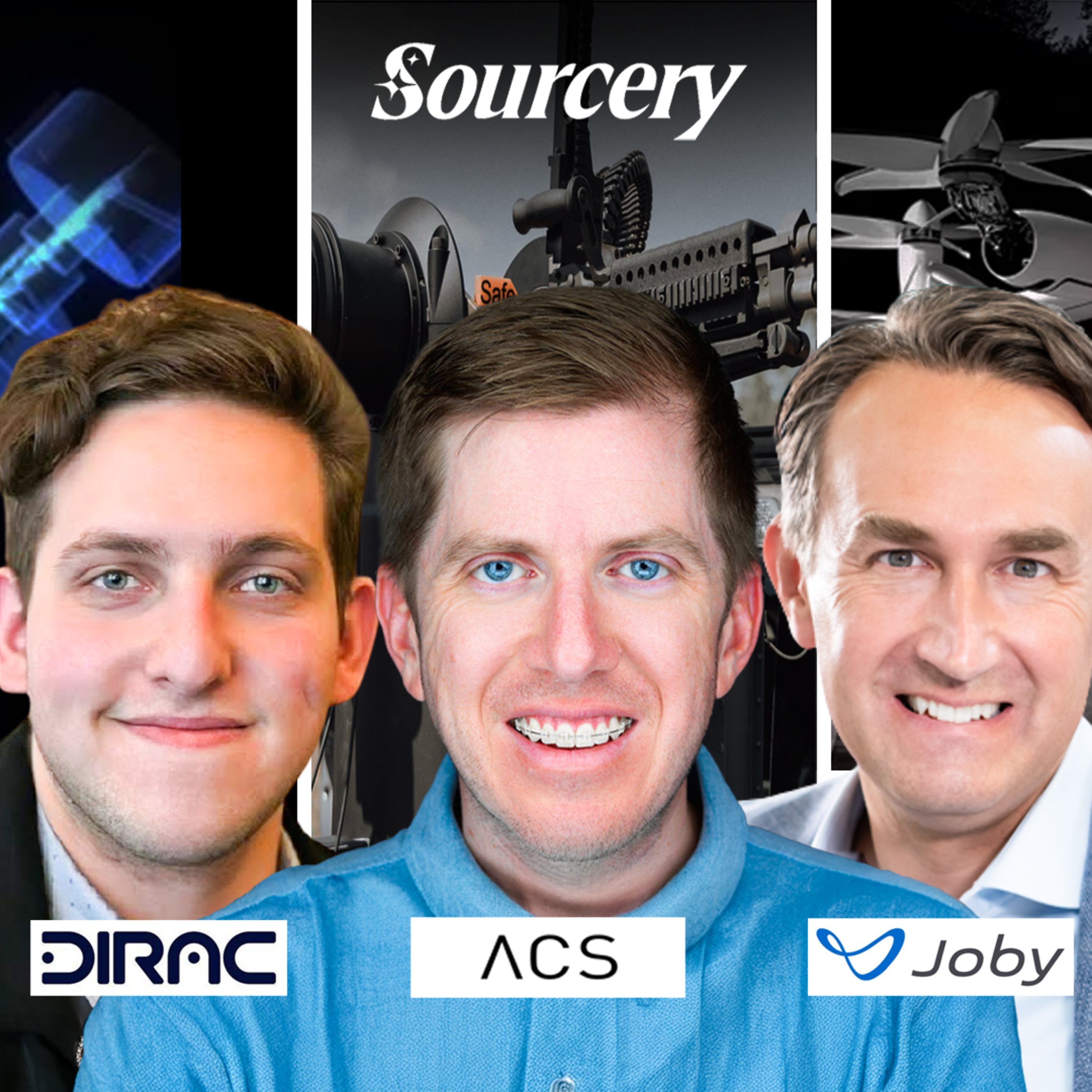
AI tools like LLMs thrive on large, structured datasets. In manufacturing, critical information is often unstructured 'tribal knowledge' in workers' heads. Dirac’s strategy is to first build a software layer that captures and organizes this human expertise, creating the necessary context for AI to then analyze and add value.
At the start of a tech cycle, the few people with deep, practical experience often don't fit traditional molds (e.g., top CS degrees). Companies must look beyond standard credentials to find this scarce talent, much like early mobile experts who weren't always "cracked" competitive coders.