Get your free personalized podcast brief
We scan new podcasts and send you the top 5 insights daily.
Joon Sung Park's team chose simulation over personal agents because a useful assistant requires a deep, accurate model of its user's preferences and behaviors first. Understanding the person is a prerequisite for effective automation.

Related Insights
Counter to the advice not to anthropomorphize AI, treating a model as a loyal partner creates a "simulated loyalty." This simulation, because it influences the AI's behavior, translates into tangible improvements in its performance and real-world capabilities for the user.

An agent can be trained on a user's entire output to build a 'human replica.' This model helps other agents resolve complex questions by navigating the inherent contradictions in human thought (e.g., financial self vs. personal self), enabling better autonomous decision-making.

Unlike foundation models aiming for super-rational intelligence (coding, math), Simile's models are designed to capture human behavioral nuances. They are trained to make the same mistakes and exhibit the same biases as real people, focusing on the subjective, irrational side of human decision-making.

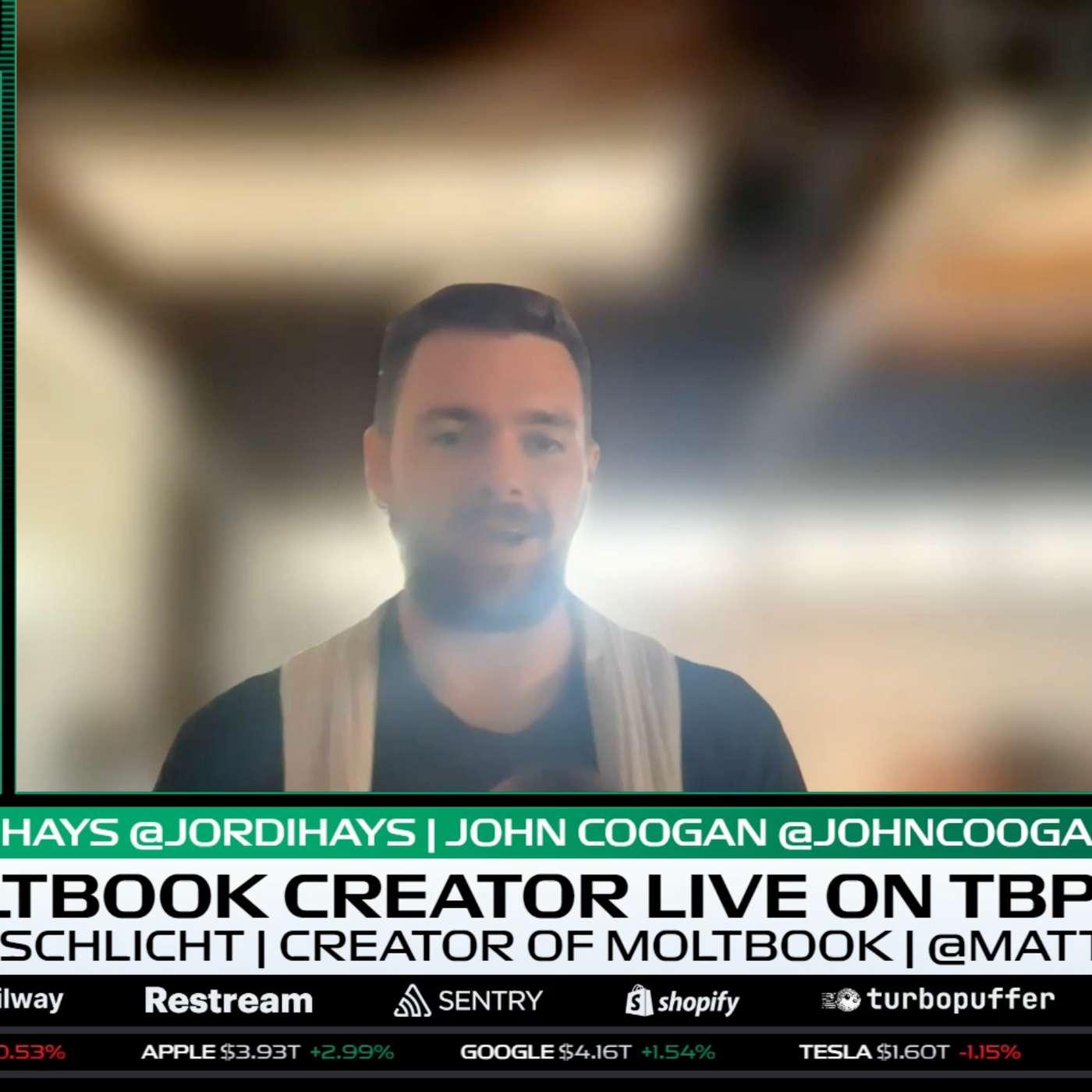
Instead of creating a sterile simulation, Moltbook embraces the "imprinting" of a human's personality onto their AI agent. This creates unpredictable, interesting, and dramatic interactions that isolated bots could never achieve, making human input a critical feature, not a bug to be eliminated.
The future of AI requires two distinct interaction models. One is the conversational "agent," akin to collaborating with a person. The other is the formally programmed "system." These are different paradigms for different needs, like a chair versus a table, not a single evolutionary path.

LLMs trained on online text often reflect what people say, not what they do. Simile bridges this 'say-do gap' by collecting real behavioral data and personal life stories through partners like Gallup. This grounds their agent simulations in reality, making them more predictive of actual behavior.
Avoid brittle, high-maintenance productivity systems by letting your AI agent learn from your actual behavior over time. Instead of extensive setup, the AI observes what you do and don't accomplish, organically building a system that reflects reality, not your idealized intentions.
As models mature, their core differentiator will become their underlying personality and values, shaped by their creators' objective functions. One model might optimize for user productivity by being concise, while another optimizes for engagement by being verbose.

Unlike frontier LLMs optimized for perfect reasoning, Simile's goal is to create models that are "as dumb as I am." To be accurate, a behavioral simulation must replicate the same mistakes, biases, and non-optimal choices that real humans make.
For personal AI agents like OpenClaw, the conversational interface—feeling like you're texting a person—accounts for the vast majority of user adoption and value. This emotional, personal connection is far more important than the agent's technical capabilities, like self-modification or its skills directory.