Get your free personalized podcast brief
We scan new podcasts and send you the top 5 insights daily.
LLMs trained on online text often reflect what people say, not what they do. Simile bridges this 'say-do gap' by collecting real behavioral data and personal life stories through partners like Gallup. This grounds their agent simulations in reality, making them more predictive of actual behavior.
Related Insights
To ensure AI reliability, Salesforce builds environments that mimic enterprise CRM workflows, not game worlds. They use synthetic data and introduce corner cases like background noise, accents, or conflicting user requests to find and fix agent failure points before deployment, closing the "reality gap."

One of Simile's surprising yet common use cases is simulating corporate earnings calls. This multi-agent simulation allows executive teams to test their messaging and anticipate audience and investor reactions, providing a rehearsal space for high-stakes financial communications before they happen.
Training AI agents to execute multi-step business workflows demands a new data paradigm. Companies create reinforcement learning (RL) environments—mini world models of business processes—where agents learn by attempting tasks, a more advanced method than simple prompt-completion training (SFT/RLHF).
A study with Colgate-Palmolive found that large language models can accurately mimic real consumer behavior and purchase intent. This validates the use of "synthetic consumers" for market research, enabling companies to replace costly, slow human surveys with scalable AI personas for faster, richer product feedback.
To build accurate customer simulations, Listen Labs tested various inputs, including credit card spending. They found that in-depth interview transcripts were the most predictive dataset because they capture the "why" behind actions and allow for nuanced, off-tangent insights that behavioral data misses.
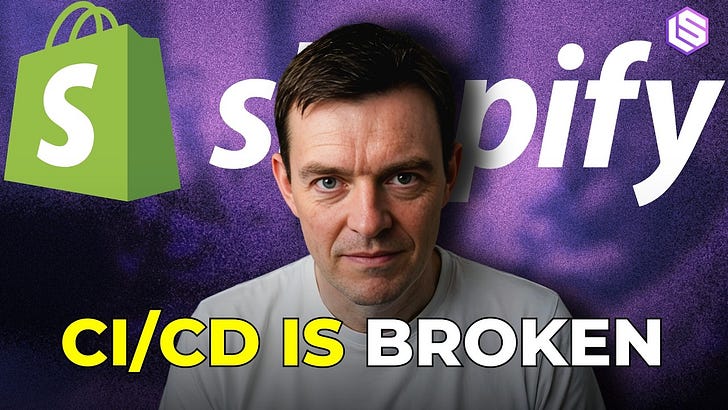
Shopify's SimGym successfully simulates customer behavior because it's trained on a decade of historical data linking store changes to sales outcomes. The CTO emphasizes that without this vast, proprietary dataset, any similar simulation would fail, as the AI agents would merely act out their prompts.
The most reliable customer insights will soon come from interviewing AI models trained on vast customer datasets. This is because AI can synthesize collective knowledge, while individual customers are often poor at articulating their true needs or answering questions effectively.

The primary barrier for useful AI agents is not the underlying model but the complex task of 'data wiring'—connecting to a user's real-world context like emails, local files, and support tickets. Products that solve this difficult integration challenge, where most agents currently fail, will gain a significant competitive advantage.

The trend of buying expensive, simulated Reinforcement Learning (RL) environments is misguided. The most effective and valuable training ground is the live application itself. Companies can achieve better results by using logs and traces from actual users, which provides the most accurate data for agent improvement.
![[Latent Space LIVE @ NeurIPS] State of AI Startups 2025 — with Sarah Catanzaro, Amplify Partners thumbnail](https://assets.flightcast.com/V2Uploads/nvaja2542wefzb8rjg5f519m/01K4D8FB4MNA071BM5ZDSMH34N/square.jpg)
To build robust social intelligence, AIs cannot be trained solely on positive examples of cooperation. Like pre-training an LLM on all of language, social AIs must be trained on the full manifold of game-theoretic situations—cooperation, competition, team formation, betrayal. This builds a foundational, generalizable model of social theory of mind.
