Get your free personalized podcast brief
We scan new podcasts and send you the top 5 insights daily.
Instead of debating AI's creative limits, The New Yorker pragmatically adopted it to solve a production bottleneck. AI-generated voiceovers make written pieces available for listening "well nigh immediately," expanding reach to audio-first consumers without compromising the human-led creative process of the articles themselves.

Related Insights
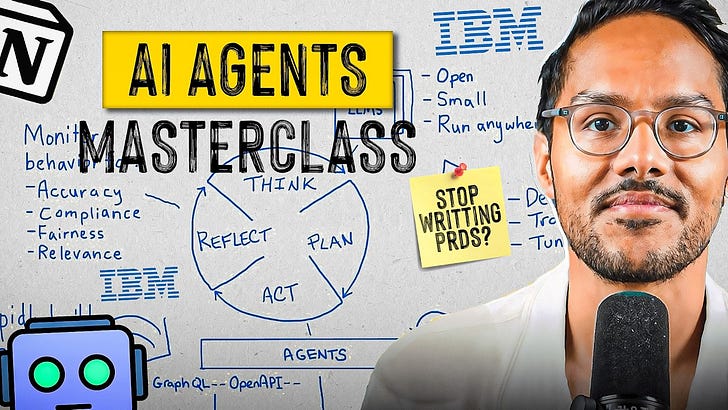
While AI tools once gave creators an edge, they now risk producing democratized, undifferentiated output. IBM's AI VP, who grew to 200k followers, now uses AI less. The new edge is spending more time on unique human thinking and using AI only for initial ideation, not final writing.
Amy Porterfield dictates her personal stories to ChatGPT, then prompts it to extract the key parts into a concise draft. This uses AI as a partner for clarity and structure while preserving her authentic voice, avoiding soulless, AI-generated content.

While generative video gets the hype, producer Tim McLear finds AI's most practical use is automating tedious post-production tasks like data management and metadata logging. This frees up researchers and editors to focus on higher-value creative work, like finding more archival material, rather than being bogged down by manual data entry.
The NYT's audio strategy succeeds by creating intimate, personality-driven shows that feel like a friend explaining the news. This approach makes complex stories accessible, opening up entirely new engagement patterns and audiences beyond traditional readership.

While most focus on human-to-computer interactions, Crisp.ai's founder argues that significant unsolved challenges and opportunities exist in using AI to improve human-to-human communication. This includes real-time enhancements like making a speaker's audio sound studio-quality with a single click, which directly boosts conversation productivity.

The future of media is not just recommended content, but content rendered on-the-fly for each user. AI will analyze micro-behaviors like eye movement and swipe speed to generate the most engaging possible video in that exact moment. The algorithm will become the content itself.

Human communication is returning to its oral and visual roots. Text, a low-dimensional medium, was a temporary necessity for scalable knowledge storage—a 'parenthesis' in history. As AI makes creating rich media as easy as writing, society will default back to more natural, higher-bandwidth formats like audio and video.

A common objection to voice AI is its robotic nature. However, current tools can clone voices, replicate human intonation, cadence, and even use slang. The speaker claims that 97% of people outside the AI industry cannot tell the difference, making it a viable front-line tool for customer interaction.

Tools like Descript excel by integrating AI into every step of the user's core workflow—from transcription and filler word removal to clip generation. This "baked-in" approach is more powerful than simply adding a standalone "AI" button, as it fundamentally enhances the entire job-to-be-done.

Even when consuming podcasts on video platforms, users often treat it as an audio-first experience, listening while multitasking. This behavior reveals the core value remains the audio connection and storytelling, regardless of the visual medium used for delivery.
