Get your free personalized podcast brief
We scan new podcasts and send you the top 5 insights daily.
The initial goal was to sell snowboards online. When existing e-commerce software proved inadequate, Tobias Lütke built his own. The resulting tool was so effective that other entrepreneurs wanted to license it, revealing a much larger business opportunity than the original snowboard shop.

Related Insights
The founders were originally trying to run an online snowboard store and found the available software in 2004, like Yahoo Stores, inadequate. They built their own platform out of necessity, which later became Shopify.

Despite knowing customers would pay far more, Shopify intentionally underpriced its product. This lowered the barrier to entry for entrepreneurs, focusing on massive user acquisition and solving merchant problems first.
Tobias Lütke's inability to secure a work permit as an employee in Canada was a direct catalyst for entrepreneurship. His only legal option to earn money was to start his own company, leading to the creation of what would become Shopify.
Instead of focusing on vanity metrics, Shopify's true north star is an emotional milestone: a merchant's first sale. Tobias Lütke describes this as a profound, identity-changing event. The company's goal is to enable that experience for as many people as possible, as frequently as possible.
Shopify made a deliberate choice not to put its branding on customer storefronts. The philosophy was to operate behind the scenes, ensuring the merchant's brand was the focus. This made customers look good and built trust, even if it meant Shopify itself remained relatively unknown for years.
Before becoming massive platforms, many successful companies started with a narrow focus. Instagram was for bourbon drinkers, Amazon for used books, and Facebook for Harvard students. This strategy built a loyal early user base and refined their product before expanding to a broader market.

Platforms like Shopify have enabled small businesses to have faster, higher-converting, and more technically performant online stores than many large, established brands running on clunky, homegrown legacy systems.
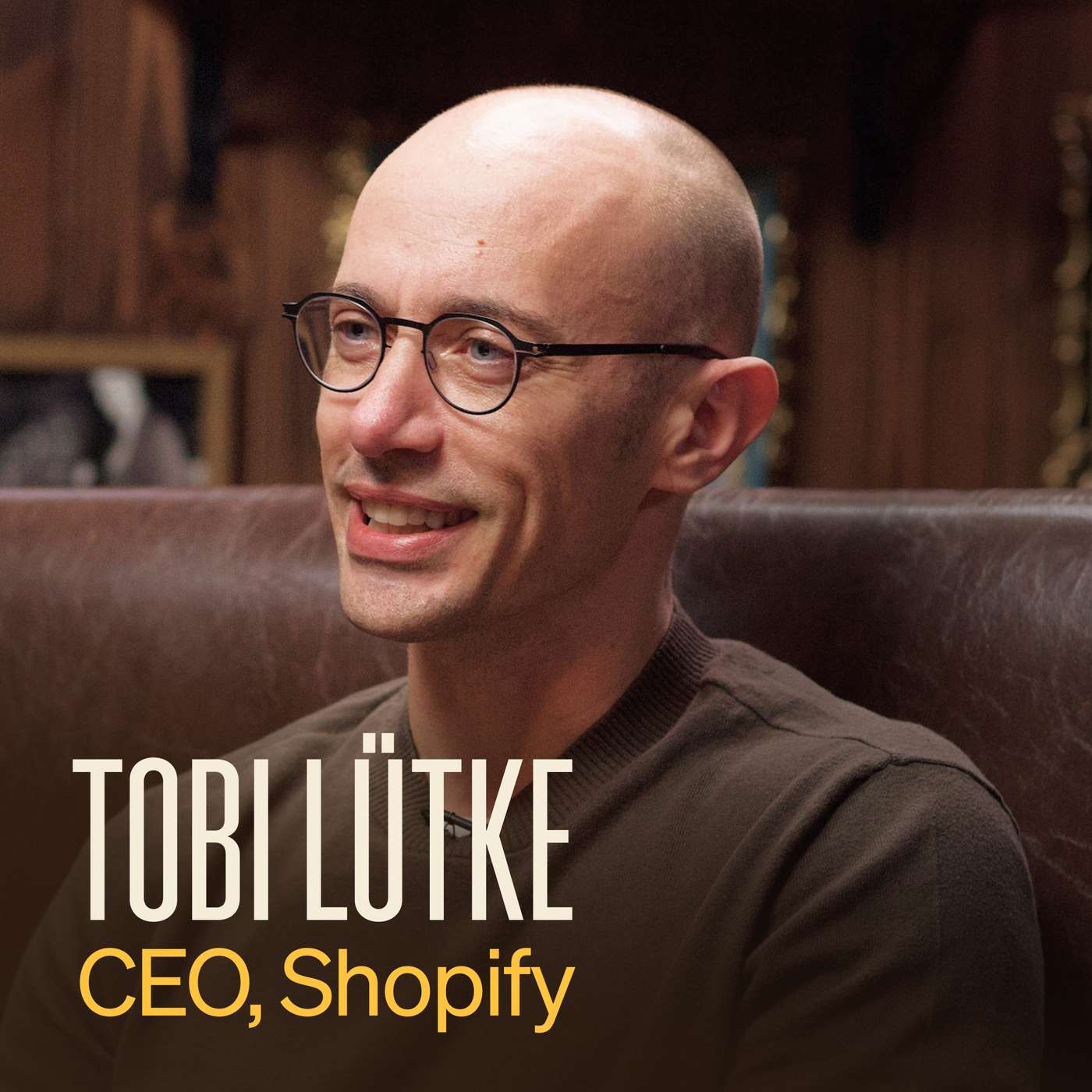
Instead of competing on commodity products, Shopify aimed to create a 'monopoly on all products that are actually interesting.' This strategy focused on empowering creators of unique goods, disintermediating Amazon's dominance.
Contrary to expectations, the 2008 recession was a tailwind for Shopify. As people lost their jobs, many turned to entrepreneurship out of necessity or to pursue long-held ideas. This created a new wave of customers who needed a platform to build their own online businesses.
The best strategy is to capture a large share of a small, specific market and then expand into adjacent ones. Jeff Bezos deliberately started with books for a niche customer base, proving the model before scaling to become 'the everything store.'