Get your free personalized podcast brief
We scan new podcasts and send you the top 5 insights daily.
China is not competing to build the most advanced AI models. Instead, its strategy focuses on building out physical infrastructure (energy, high-speed rail) and diffusing existing technology to improve the lives of its citizens. It stays current on AI by reverse-engineering Western models rather than leading R&D.

Related Insights
Contrary to common Western assumptions, China's official AI blueprint focuses on practical applications like scientific discovery and industrial transformation, with no mention of AGI or superintelligence. This suggests a more grounded, cautious approach aimed at boosting the real economy rather than winning a speculative tech race.

China's AI strategy is less focused on achieving AGI and more on the immediate, practical diffusion of AI technology throughout its economy. The government's "AI+" plan emphasizes embedding AI into existing applications like WeChat and high-impact sectors like healthcare, aiming for broad, pragmatic adoption now.

Joe Tsai reframes the US-China 'AI race' as a marathon won by adoption speed, not model size. He notes China’s focus on open source and smaller, specialized models (e.g., for mobile devices) is designed for faster proliferation and practical application. The goal is to diffuse technology throughout the economy quickly, rather than simply building the single most powerful model.
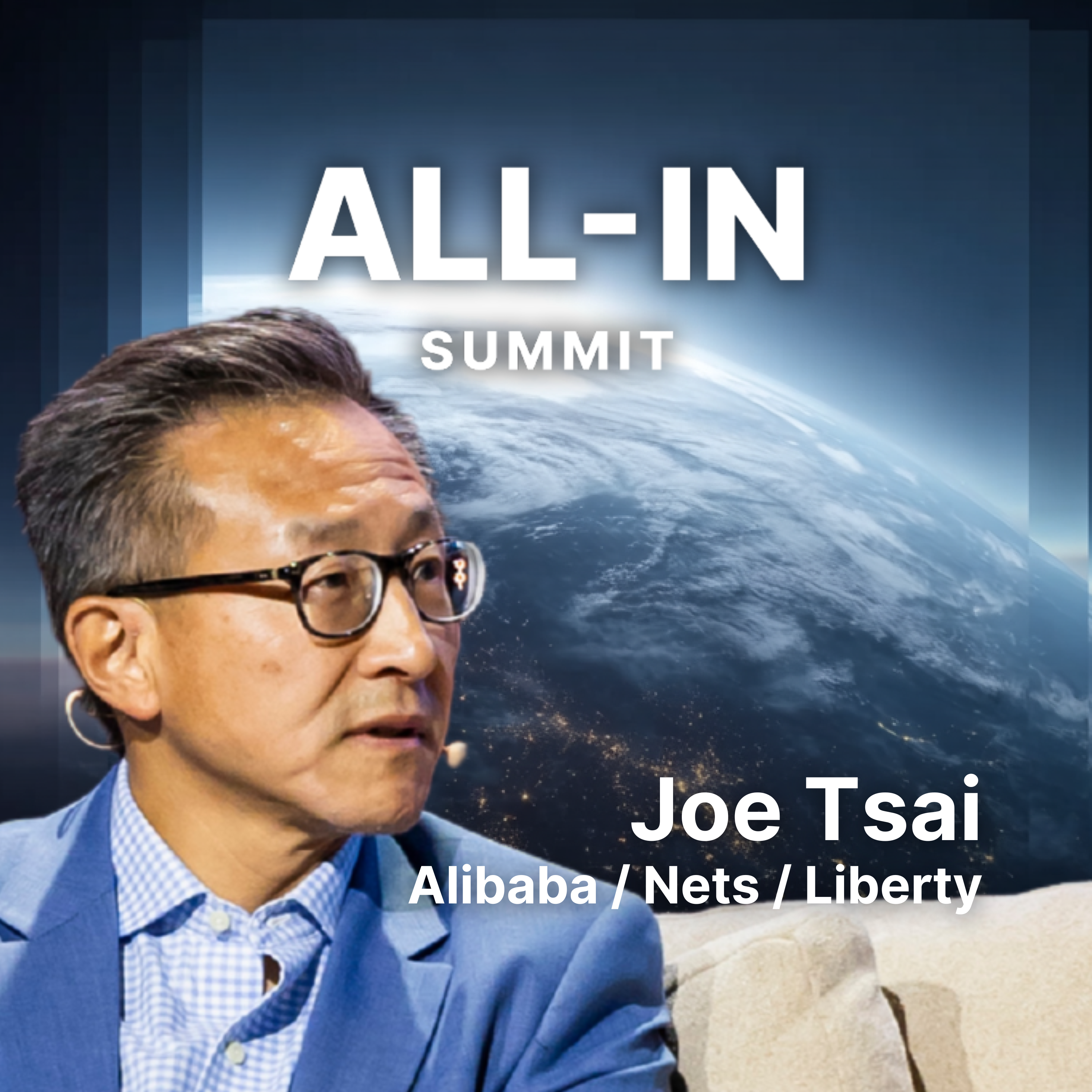
While the US faces power constraints, China can build new energy sources like nuclear power plants in just a few years. This ability to rapidly scale power gives it a fundamental, underappreciated advantage in the energy-intensive AI war, alongside its talent pool and government support.

Beyond algorithms and talent, China's key advantage in the AI race is its massive investment in energy infrastructure. While the U.S. grid struggles, China is adding 10x more solar capacity and building 33 nuclear plants, ensuring it will have the immense power required to train and run future AI models at scale.
![Dan Wang - The US vs China In The 21st Century - [Invest Like the Best, EP.444] thumbnail](https://megaphone.imgix.net/podcasts/e1599a88-a9f6-11f0-b532-e3695bb27d60/image/0f5c07552cef2689e5834d56786ad6f1.jpg?ixlib=rails-4.3.1&max-w=3000&max-h=3000&fit=crop&auto=format,compress)
Facing compute and capital shortages, Chinese AI labs don't pioneer frontier research. They wait for Western labs to publish breakthroughs, likening it to 'knowing the answer to the homework,' then work backwards to replicate them, focusing resources on efficient post-training.

The narrative of a direct US-China AI competition is largely an external viewpoint. According to reporting, Chinese AI developers don't orient their innovation around American benchmarks. Instead, they are driven by pragmatic, internal goals and their own vision for what AI should be, rather than simply trying to outcompete Western models.

The US is betting on winning the AI race by building the smartest models. However, China has strategically mastered the entire "electric stack"—energy generation, batteries, grids, and manufacturing. Beijing offers the world the 21st-century infrastructure needed to power AI, while Washington focuses on 20th-century energy sources.

While the US focuses intensely on foundational AI models, China pursues a broader portfolio approach. Beijing prioritizes the practical deployment of AI in manufacturing alongside major investments in robotics and green technology to build comprehensive industrial capacity.

While the US focuses on creating the most advanced AI models, China's real strength may be its proven ability to orchestrate society-wide technology adoption. Deep integration and widespread public enthusiasm for AI could ultimately provide a more durable competitive advantage.
