Get your free personalized podcast brief
We scan new podcasts and send you the top 5 insights daily.
While the US focuses intensely on foundational AI models, China pursues a broader portfolio approach. Beijing prioritizes the practical deployment of AI in manufacturing alongside major investments in robotics and green technology to build comprehensive industrial capacity.

Related Insights
Contrary to common Western assumptions, China's official AI blueprint focuses on practical applications like scientific discovery and industrial transformation, with no mention of AGI or superintelligence. This suggests a more grounded, cautious approach aimed at boosting the real economy rather than winning a speculative tech race.

The US AI strategy is dominated by a race to build a foundational "god in a box" Artificial General Intelligence (AGI). In contrast, China's state-directed approach currently prioritizes practical, narrow AI applications in manufacturing, agriculture, and healthcare to drive immediate economic productivity.

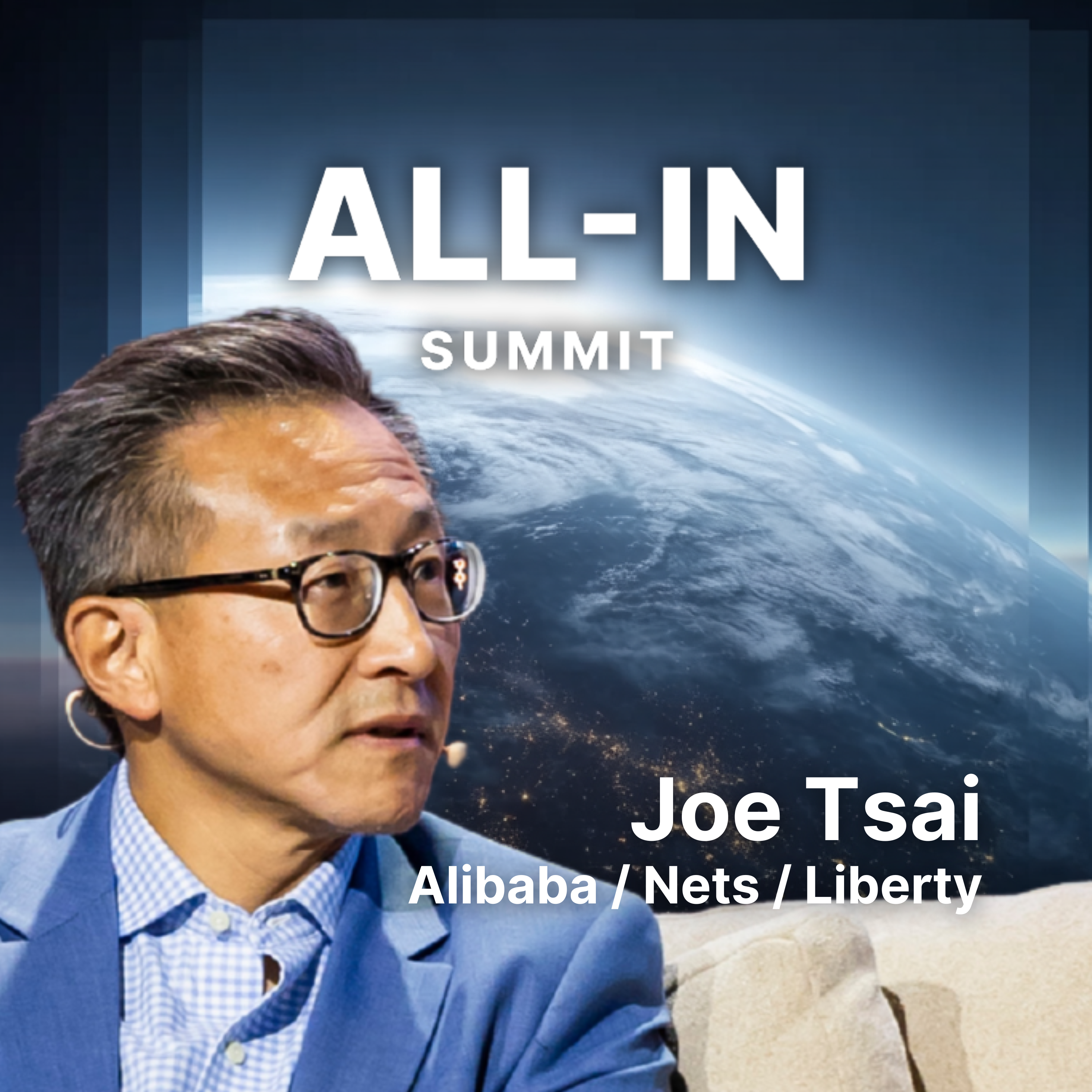
Joe Tsai reframes the US-China 'AI race' as a marathon won by adoption speed, not model size. He notes China’s focus on open source and smaller, specialized models (e.g., for mobile devices) is designed for faster proliferation and practical application. The goal is to diffuse technology throughout the economy quickly, rather than simply building the single most powerful model.
A key strategic difference in the AI race is focus. US tech giants are 'AGI-pilled,' aiming to build a single, god-like general intelligence. In contrast, China's state-driven approach prioritizes deploying narrow AI to boost productivity in manufacturing, agriculture, and healthcare now.

The US and China have divergent AI strategies. The US is pouring capital into massive compute clusters to build dominant global platforms like ChatGPT (aggregation theory). China is focusing its capital on building a self-sufficient, domestic semiconductor and AI supply chain to ensure technological independence.
![Dylan Patel - Inside the Trillion-Dollar AI Buildout - [Invest Like the Best, EP.442] thumbnail](https://megaphone.imgix.net/podcasts/799253cc-9de9-11f0-8661-ab7b8e3cb4c1/image/d41d3a6f422989dc957ef10da7ad4551.jpg?ixlib=rails-4.3.1&max-w=3000&max-h=3000&fit=crop&auto=format,compress)
The US-China tech rivalry spans four arenas: creating technology, applying it, installing infrastructure, and self-sufficiency. While the U.S. excels at creating foundational tech like AI frameworks and semiconductors, China is leading in its practical application (e.g., robotics), installing digital infrastructure globally, and achieving resource independence.

The US is betting on winning the AI race by building the smartest models. However, China has strategically mastered the entire "electric stack"—energy generation, batteries, grids, and manufacturing. Beijing offers the world the 21st-century infrastructure needed to power AI, while Washington focuses on 20th-century energy sources.

While the US focuses on creating the most advanced AI models, China's real strength may be its proven ability to orchestrate society-wide technology adoption. Deep integration and widespread public enthusiasm for AI could ultimately provide a more durable competitive advantage.

While the West may lead in AI models, China's key strategic advantage is its ability to 'embody' AI in hardware. Decades of de-industrialization in the U.S. have left a gap, while China's manufacturing dominance allows it to integrate AI into cars, drones, and robots at a scale the West cannot currently match.

While U.S. firms race towards the abstract goal of Artificial General Intelligence (AGI), China is pursuing a more practical strategy. Its focus on applying AI to robotics for industrial automation could yield more immediate, tangible economic transformations and productivity gains on a mind-boggling scale.
