Get your free personalized podcast brief
We scan new podcasts and send you the top 5 insights daily.
For autonomous robots in hospitals, functional design is not enough. To avoid alarming vulnerable patients, robots must be intentionally designed to appear non-threatening and trustable, using visual cues to acknowledge people and signal benign intent.

Related Insights
A key to human-robot interaction is managing expectations. A robot that suddenly turns is alarming. However, if the robot first looks in the direction it intends to move and then turns, it signals its intent, making the action feel natural and non-threatening to humans.

Figure is intentionally designing its robots to avoid two extremes: menacing appearances and overly friendly looks with "googly eyes." The goal is to position the humanoid as a sophisticated, high-end piece of technology—a tool for humanity—rather than trying to fool users into thinking it's a toy or a person.

To trust an agentic AI, users need to see its work, just as a manager would with a new intern. Design patterns like "stream of thought" (showing the AI reasoning) or "planning mode" (presenting an action plan before executing) make the AI's logic legible and give users a chance to intervene, building crucial trust.

AI safety requires more than just technical controls. "Trust Engineering" is an emerging discipline that pairs human-centered design (e.g., clear visual signals from a self-driving car) with robust security infrastructure. This holistic approach manages user expectations and system behavior simultaneously.

To foster appropriate human-AI interaction, AI systems should be designed for "emotional alignment." This means their outward appearance and expressions should reflect their actual moral status. A likely sentient system should appear so to elicit empathy, while a non-sentient tool should not, preventing user deception and misallocated concern.

To maintain trust, AI in medical communications must be subordinate to human judgment. The ultimate guardrail is remembering that healthcare decisions are made by people, for people. AI should assist, not replace, the human communicator to prevent algorithmic control over healthcare choices.

The public skepticism surrounding Figure AI's humanoid robot demo, despite its impressiveness, highlights a key challenge for the industry. The ambiguity between true autonomy and teleoperation creates a trust deficit. Companies must now go beyond showing capabilities and find ways to verifiably prove their systems are not human-controlled.

People react negatively, often with anger, when they are surprised by an AI interaction. Informing them beforehand that they will be speaking to an AI fundamentally changes their perception and acceptance, making disclosure a key ethical standard.

The most effective AI user experiences are skeuomorphic, emulating real-world human interactions. Design an AI onboarding process like you would hire a personal assistant: start with small tasks, verify their work to build trust, and then grant more autonomy and context over time.
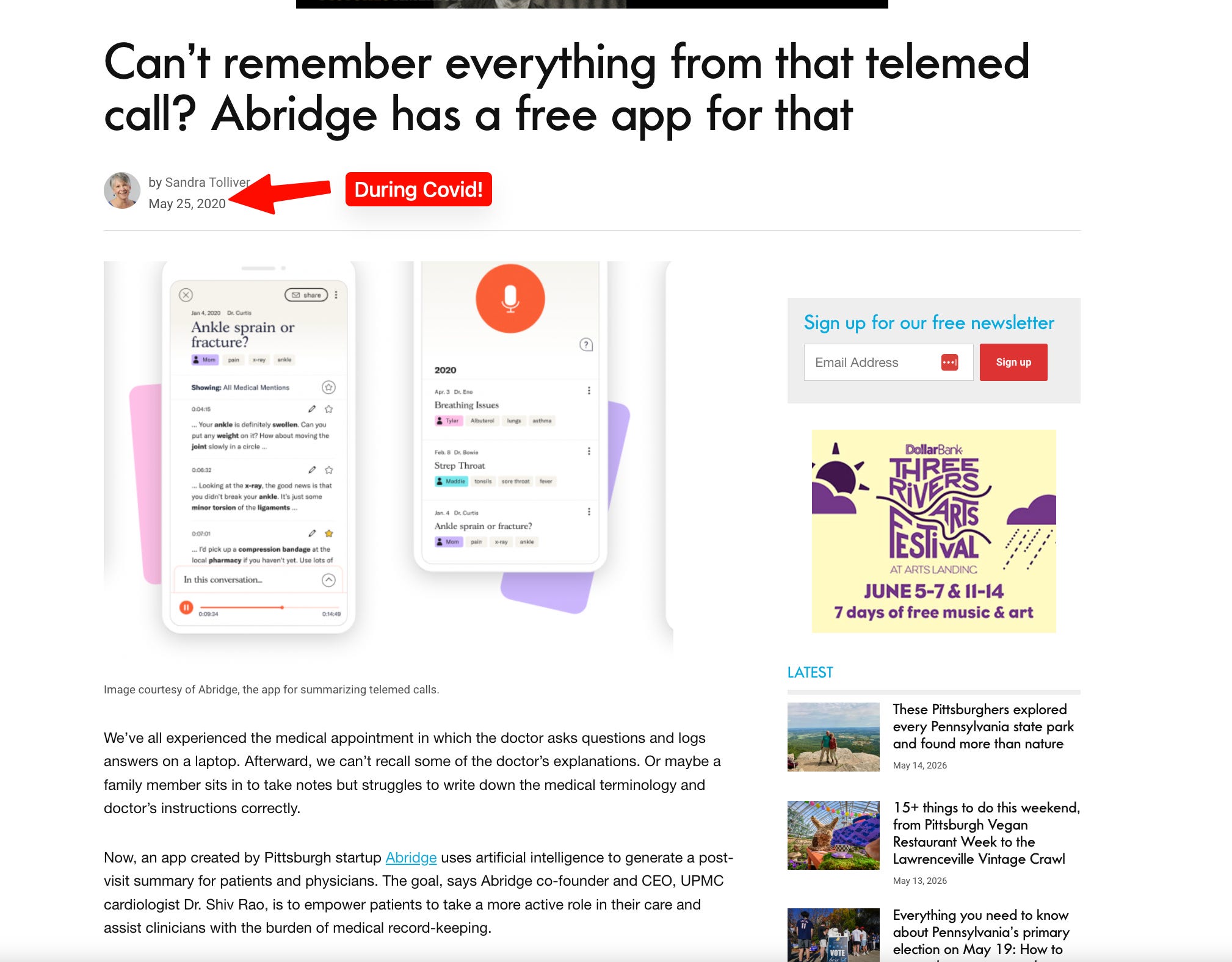
To avoid the "alert fatigue" common in medical software, Abridge's product philosophy is for its AI to be proactive, not reactive. It works seamlessly in the background to prepare clinicians before visits, rather than interrupting them with constant alerts during patient conversations, making the experience helpful but unobtrusive.