Get your free personalized podcast brief
We scan new podcasts and send you the top 5 insights daily.
Data from the SWOG 1826 trial shows that nivolumab+AVD improves progression-free survival across all evaluated subgroups, including by age, disease stage, and risk score. This broad efficacy simplifies clinical decision-making, establishing it as a new standard for advanced-stage disease.
Related Insights
With remission rates for advanced-stage Hodgkin lymphoma now exceeding 90%, the next research focus is on personalizing and reducing treatment intensity. Future trials will use tools like circulating tumor DNA (ctDNA) to identify patients who can receive less chemotherapy or need adapted therapy.
Combining polatuzumab vedotin with bispecific antibodies appears particularly effective for patients with double-hit lymphoma. This is significant because these high-risk patients, who have poor prognoses, were notably excluded from pivotal trials like STAR GLOW, suggesting a potential new standard for this specific subgroup.
Kaplan-Meier curves from the VICTORIA-1 trial show a steep, immediate drop-off for patients on fulvestrant monotherapy, with ~60% progressing quickly. In contrast, the giredestrant combination arms show a much flatter initial curve, visually demonstrating that a primary benefit is protecting the large subset of patients who would otherwise fail therapy very early.

The adoption of nivolumab+AVD in community oncology is streamlined because practitioners are already experienced with managing immune-related adverse events from using checkpoint inhibitors in various solid tumors. This existing familiarity flattens the learning curve for this new lymphoma regimen.
The S1826 study showed nivolumab+AVD is better tolerated than the previous standard, brentuximab vedotin+AVD. It causes less peripheral neuropathy, fewer infections, and reduces the need for growth factors, leading to less bone pain and better patient-reported quality of life.
In the HARMONY A study, Ivanesimab plus chemotherapy significantly improved progression-free survival in EGFR-mutant non-small cell lung cancer patients. This is notable because prior trials showed that adding standard PD-1 inhibitors to chemotherapy was ineffective for this specific patient population.
In the AMPLIFY trial, the acalabrutinib-venetoclax (AV) arm showed superior overall survival. This was heavily influenced by the COVID-19 pandemic, as regimens containing the anti-CD20 antibody obinutuzumab (AVO and chemo) had significantly more fatal COVID cases, making the antibody a liability during that period.

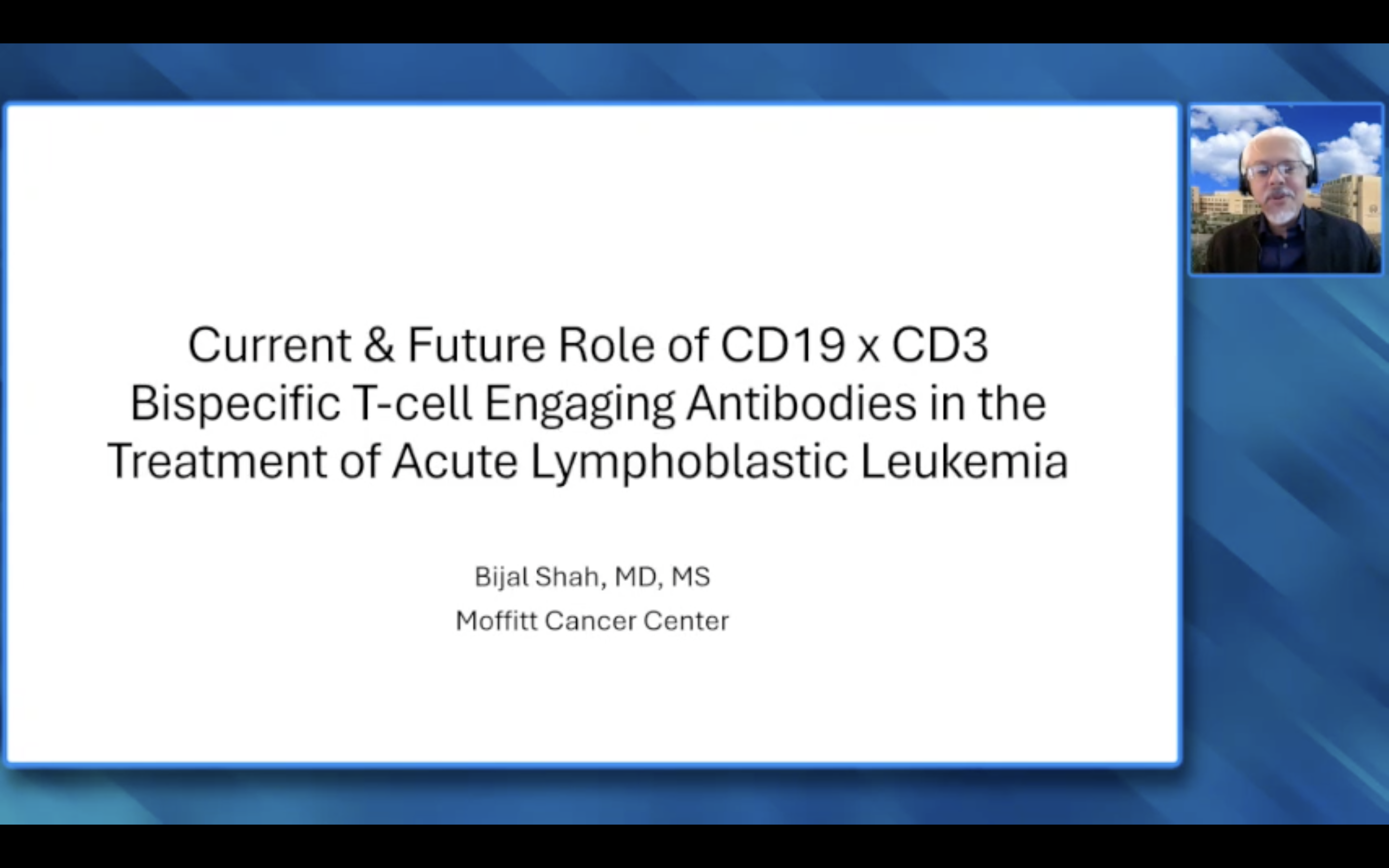
In the pivotal ECOG1910 trial, adding blinatumomab to frontline chemotherapy did more than just prevent relapse. It also improved non-relapse mortality, meaning it was a safer and more tolerable consolidation strategy than the chemotherapy alternative. This dual benefit drove its profound overall survival advantage.
Data shows that patients who permanently stopped ipilimumab due to immune-related side effects still had exceptionally good outcomes. This gives clinicians confidence to manage toxicity by discontinuing the CTLA-4 inhibitor portion of the regimen while continuing nivolumab, without fearing a loss of efficacy.
Emerging data reveals significant synergy when combining antibody-drug conjugates (ADCs) like polatuzumab vedotin with bispecific antibodies like glofitumab. These combinations show impressive results in relapsed/refractory non-Hodgkin lymphoma, signaling a major future direction for developing more potent therapies.