Get your free personalized podcast brief
We scan new podcasts and send you the top 5 insights daily.
With remission rates for advanced-stage Hodgkin lymphoma now exceeding 90%, the next research focus is on personalizing and reducing treatment intensity. Future trials will use tools like circulating tumor DNA (ctDNA) to identify patients who can receive less chemotherapy or need adapted therapy.
Related Insights
Data from the SWOG 1826 trial shows that nivolumab+AVD improves progression-free survival across all evaluated subgroups, including by age, disease stage, and risk score. This broad efficacy simplifies clinical decision-making, establishing it as a new standard for advanced-stage disease.
In neoadjuvant settings, ctDNA monitoring allows for real-time therapy adjustment. Data from the iSpy platform shows 80% of hormone-positive patients clear ctDNA with half the chemotherapy, enabling de-escalation, while the remaining 20% can be identified for escalated treatment.
Experts predict that emerging cell-free DNA (ctDNA) tests for lymphoma will shift treatment from fixed durations to a response-adapted approach. Monitoring minimal residual disease via ctDNA will allow clinicians to tailor the length of therapy based on the quality of response.

The landmark DYNAMIC-2 study showed that using ctDNA to guide adjuvant therapy decisions in Stage II colon cancer cut chemotherapy use by 50% (from 30% to 15% of patients). This de-escalation was achieved without any negative impact on patient outcomes, validating the approach.
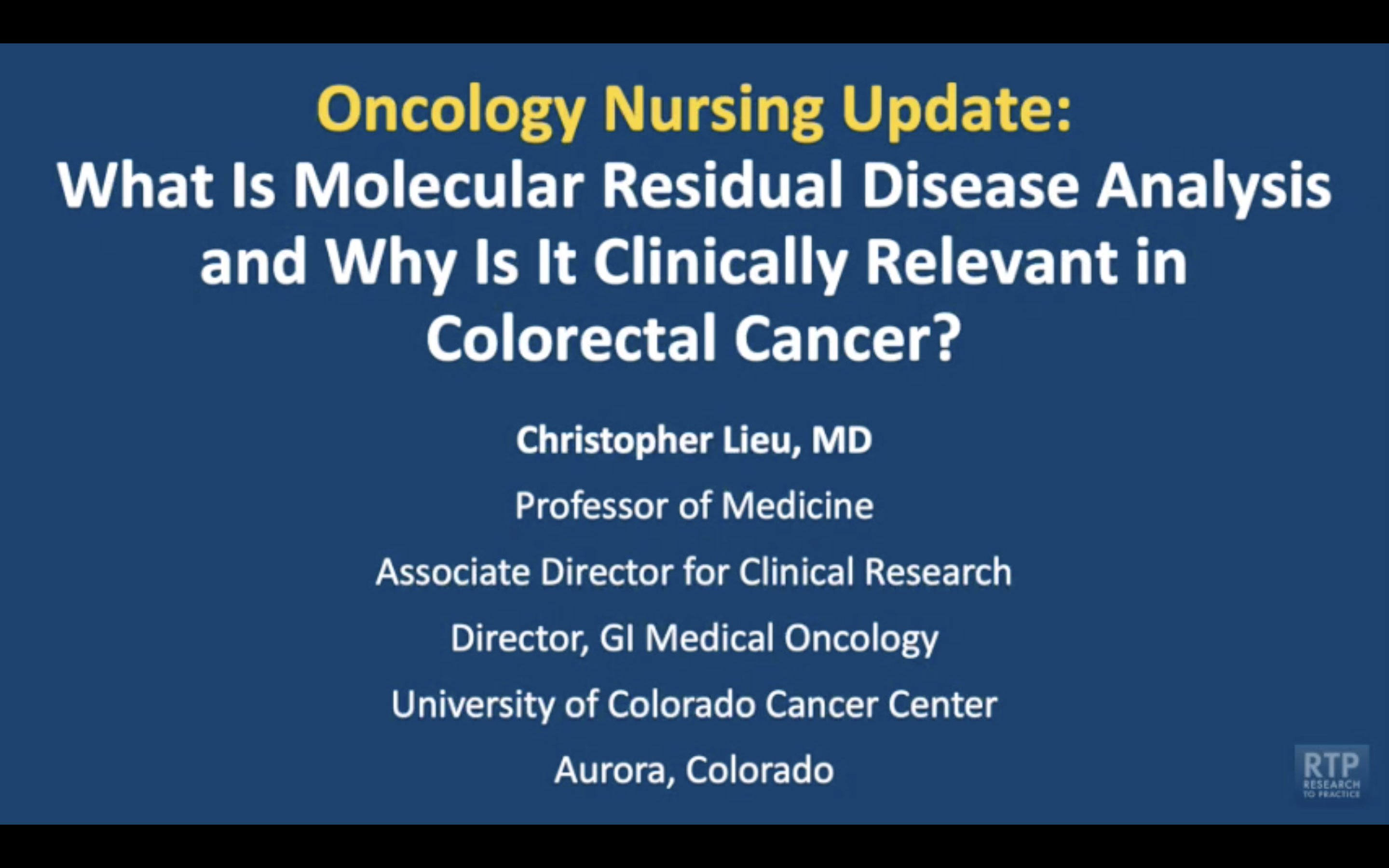
The practice-changing DYNAMIC trial showed that a ctDNA-guided strategy for stage II colorectal cancer reduces adjuvant chemotherapy use by 50%. Despite this significant de-escalation of treatment, patient outcomes and survival rates were identical to the standard-of-care approach.

The next frontier in CSCC isn't just about new drugs, but about optimizing existing ones. A key research area is determining the minimum number of immunotherapy doses required for an optimal response—potentially just one or two—to limit toxicity, reduce treatment burden, and personalize care for high-risk patients.
Despite acknowledging that a one-size-fits-all treatment duration is suboptimal, the expert consensus is to follow the study protocol. This conservative, evidence-based approach prevails due to the absence of validated biomarkers, like ctDNA, to safely guide treatment de-escalation for individual patients.

The next wave of ctDNA research focuses on de-escalation. Trials like SIGNAL ER101 and an Alliance cooperative group study will test withholding intensive adjuvant treatments (like CDK4/6 inhibitors) in high-risk, ctDNA-negative patients, initiating therapy only if they turn positive later. This could spare many from toxicity and cost.

The interpretation of ctDNA is context-dependent. Unlike in the adjuvant setting, in the neoadjuvant setting, remaining ctDNA positive post-treatment signifies that the current therapy has failed. These high-risk patients need a different therapeutic approach, not an extension of the ineffective one.
While circulating tumor DNA (ctDNA) is currently hard to act on for escalating treatment, its most promising near-term application may be in identifying patients who can safely stop or reduce therapy, rather than determining when to start it.
