Get your free personalized podcast brief
We scan new podcasts and send you the top 5 insights daily.
While early sleep is for restoration, the REM-rich cycles in the latter half of the night are dedicated to building new schemas. The brain actively compares new and old information, searching for novel connections. This process of linking disparate ideas is a fundamental source of creativity and insight, happening while you sleep.

Related Insights
The content you consume before sleep influences your subconscious processing. To foster meaning and creativity, read generative material like poetry or psalms instead of information-dense, educational content. This stimulates the right hemisphere of your brain, allowing for deeper, more meaningful rest and insight.

Sleep is not linear. The sleep cycle architecture shifts across the night, with the final hours being disproportionately rich in REM sleep. Cutting 8 hours of sleep down to 6 (a 25% reduction) can result in losing 50-70% of your total REM sleep, which is vital for emotional and creative processing.

Inspired by human sleep, AI models can enter an offline mode. During this 'sleep,' they consolidate new knowledge from fast-updating layers into slow-updating ones via distillation. They also 'dream' by generating synthetic data from recent experiences to form new abstractions and connections.

Studies show that only participants who experienced REM sleep could solve complex logic puzzles (e.g., A > B, B > C). Waking participants or those deprived of REM sleep failed. Sleep isn't just rest; it is a critical cognitive phase for integrating complex, hierarchical information.
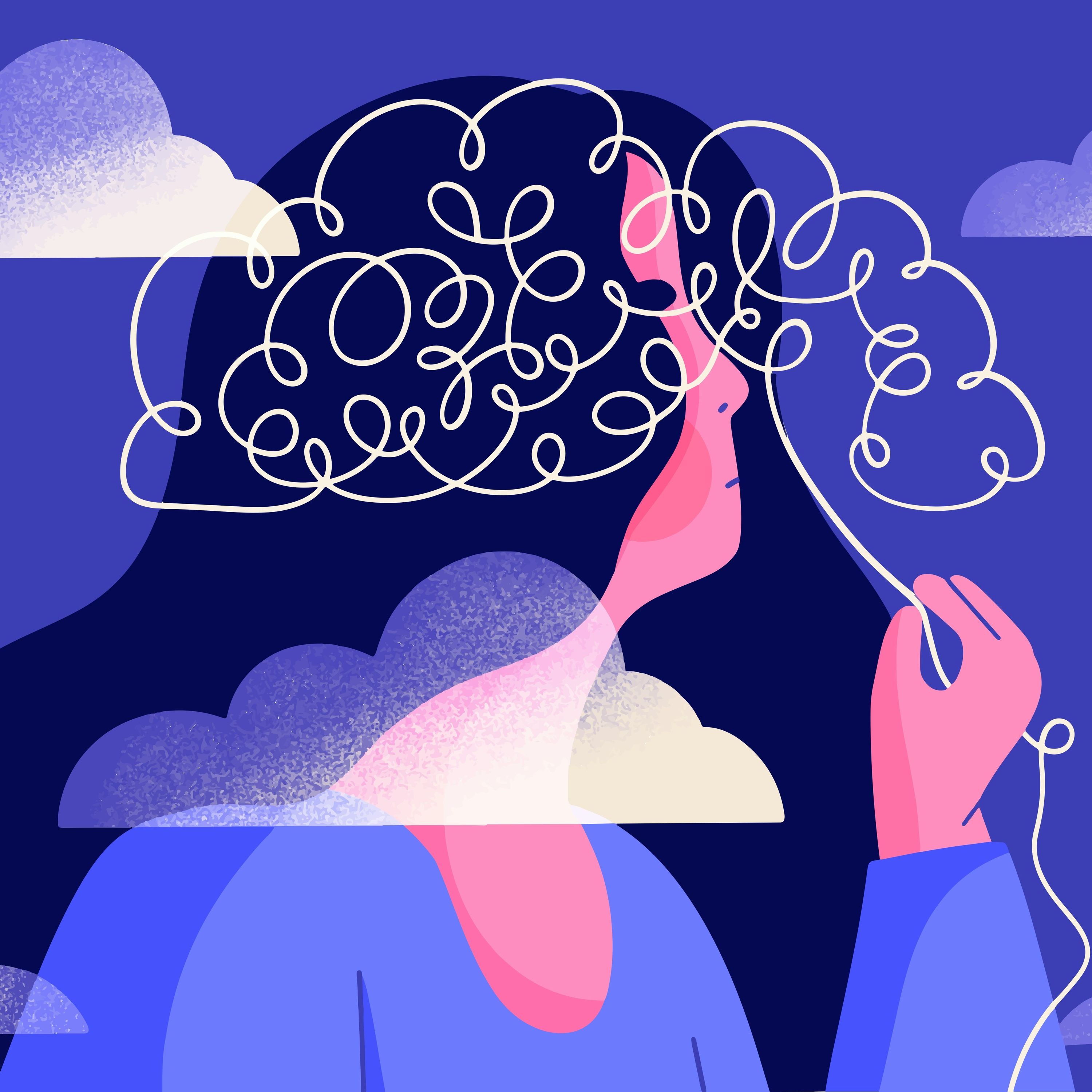
A key function of dreaming is to explore weak associations between new and old memories (a process called NEXTUP). The brain weaves these connections into a narrative, and your emotional reaction within the dream serves as the evaluation mechanism to decide if the new association is valuable and worth strengthening.

The 'dreaming' phase in continual learning isn't just for memory consolidation. It serves to actively find connections between concepts that seem unrelated based on recent experiences. This process allows the model to form new, higher-level abstractions and insights, mirroring a key function of human dreaming.
The best creative solutions often surface when you're not actively working. After absorbing project information, stepping away for days or weeks allows the subconscious to process and connect ideas, leading to stronger, more innovative outcomes than forced brainstorming.

Conscious thought is like a spotlight, precise and focused, good for analytical tasks. Unconscious thought is like a floodlight, with a vast capacity to process enormous amounts of information, make wild associations, and connect disparate ideas, making it more inherently creative.
Society often glorifies early mornings as the key to success, but different schedules suit different types of work. Staying up late can foster greater creativity, whereas waking up early may be better suited for task-oriented productivity. Individuals should align their work schedules with their personal chronotype and goals.

Activities like train rides (J.K. Rowling) or walking are mildly stimulating without demanding full attention. This 'softly fascinating' state occupies the conscious mind just enough to allow the unconscious to wander, make connections, and deliver insights, unlike high-stimulation or deep-focus environments.