Get your free personalized podcast brief
We scan new podcasts and send you the top 5 insights daily.
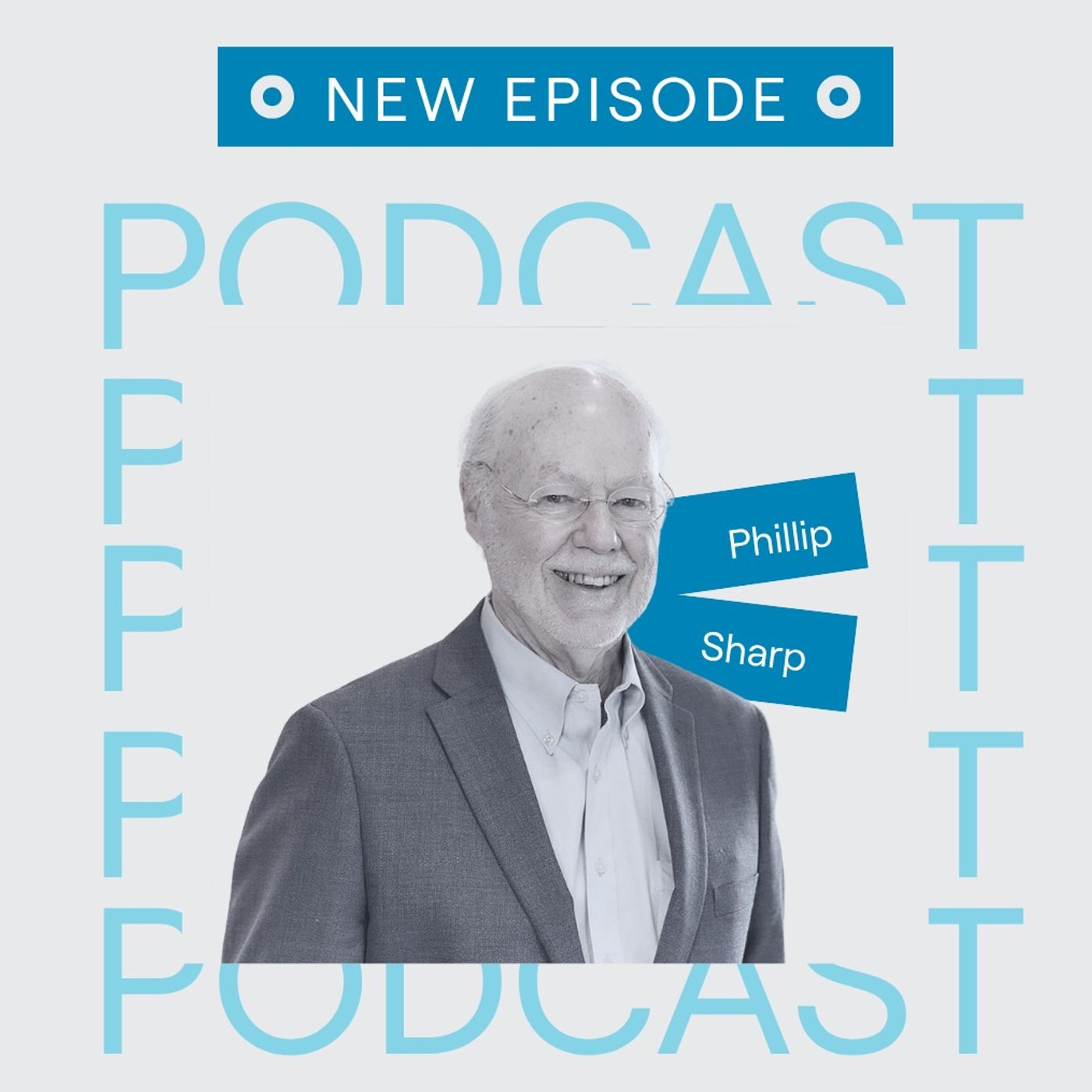
Phillip Sharp recounts that after his lab published their findings on RNA splicing, other scientists re-examined their data and realized they already had evidence for it in their notebooks. This shows that paradigm shifts can come from reinterpreting existing information with a new hypothesis.
Related Insights
The classic scientific model involved devising a theory and then collecting data to test it. The modern paradigm, driven by big data, often reverses this. Progress now frequently comes from analyzing massive datasets first to discover patterns, and only then forming hypotheses to explain them.
Major scientific leaps, such as CRISPR (from bacterial defense) or cancer immunotherapy (from basic T-cell biology), rarely come from direct attempts to solve the problems they ultimately fix. They are "orthogonal" discoveries born from fundamental research into seemingly unrelated questions.

Sinclair highlights AI's revolutionary impact with an anecdote about a teenage intern. Using AI models to analyze terabytes of public data, the intern found a novel epigenetic signature related to aging in just a few weeks, a discovery that expert professors had missed for 10 years using traditional methods.

Future progress in biology requires moving beyond static models. The new paradigm involves an AI that reasons over hypotheses, prioritizes experiments, learns from the empirical outcomes, and updates its internal world model. This creates a scalable, closed-loop system for scientific discovery.

The solution to a high-tech problem like concussions was sparked by observing an old Mark V Navy dive helmet in a restaurant. This shows that innovative concepts don't always come from the cutting edge. They can emerge from re-interpreting the core principles of historical artifacts and applying them to modern challenges.

Landmark discoveries, like EGFR mutations, didn't start in a lab but with astute oncologists noticing patterns in how some patients responded to treatment while others didn't. This highlights that every patient interaction is a research opportunity, offering clues that can lead to the next scientific breakthrough.

Major scientific discoveries don't just solve problems; they empower us to ask deeper, more ambitious questions that were previously inconceivable. Our expanding knowledge creates a larger frontier of ignorance, turning yesterday's breakthroughs into tomorrow's foundational tools for asking what's next.

True scientific advancement happens when researchers refuse to accept 'no' as an answer. When immunotherapy was dismissed for lung cancer, pioneers investigated why it worked in melanoma but not other cancers. This mindset—questioning failures and studying successes—is key to turning scientific impossibilities into standard treatments.
Sharp emphasizes that what appears as a sudden breakthrough is actually the culmination of months or years of dedicated work and preparation. He argues that significant success is built on a foundation of commitment and perseverance, not just isolated moments of inspiration.
Current AIs are trained on the established, consensus-driven scientific literature. The real breakthrough will occur when AI is trained on the 'trash can corpus'—all the ideas and papers that were rejected, laughed at, and dismissed by the orthodoxy. This is where undiscovered alpha lies.
