Get your free personalized podcast brief
We scan new podcasts and send you the top 5 insights daily.
The classic scientific model involved devising a theory and then collecting data to test it. The modern paradigm, driven by big data, often reverses this. Progress now frequently comes from analyzing massive datasets first to discover patterns, and only then forming hypotheses to explain them.
Related Insights
Wet lab experiments are slow and expensive, forcing scientists to pursue safer, incremental hypotheses. AI models can computationally test riskier, 'home run' ideas before committing lab resources. This de-risking makes scientists less hesitant to explore breakthrough concepts that could accelerate the field.

The future of behavioral economics lies in analyzing massive, real-world datasets, a major shift from its origins in small lab experiments. Aspiring professionals in the field must now have strong technical skills, including coding and data science, to manage and interpret the huge datasets that are driving modern research.

Kepler's method of testing numerous, often strange, hypotheses against Tycho Brahe's precise data mirrors how AIs can generate and verify countless ideas. This uncovers empirical regularities that can later fuel deeper theoretical understanding, much like Newton's laws explained Kepler's findings.
Google is moving beyond AI as a mere analysis tool. The concept of an 'AI co-scientist' envisions AI as an active partner that helps sift through information, generate novel hypotheses, and outline ways to test them. This reframes the human-AI collaboration to fundamentally accelerate the scientific method itself.

Historically, generating a good hypothesis was the most prestigious part of science. Now, AI can produce theories at near-zero cost, overwhelming traditional validation systems like peer review. The new grand challenge is developing scalable methods to verify and filter this flood of AI-generated ideas.
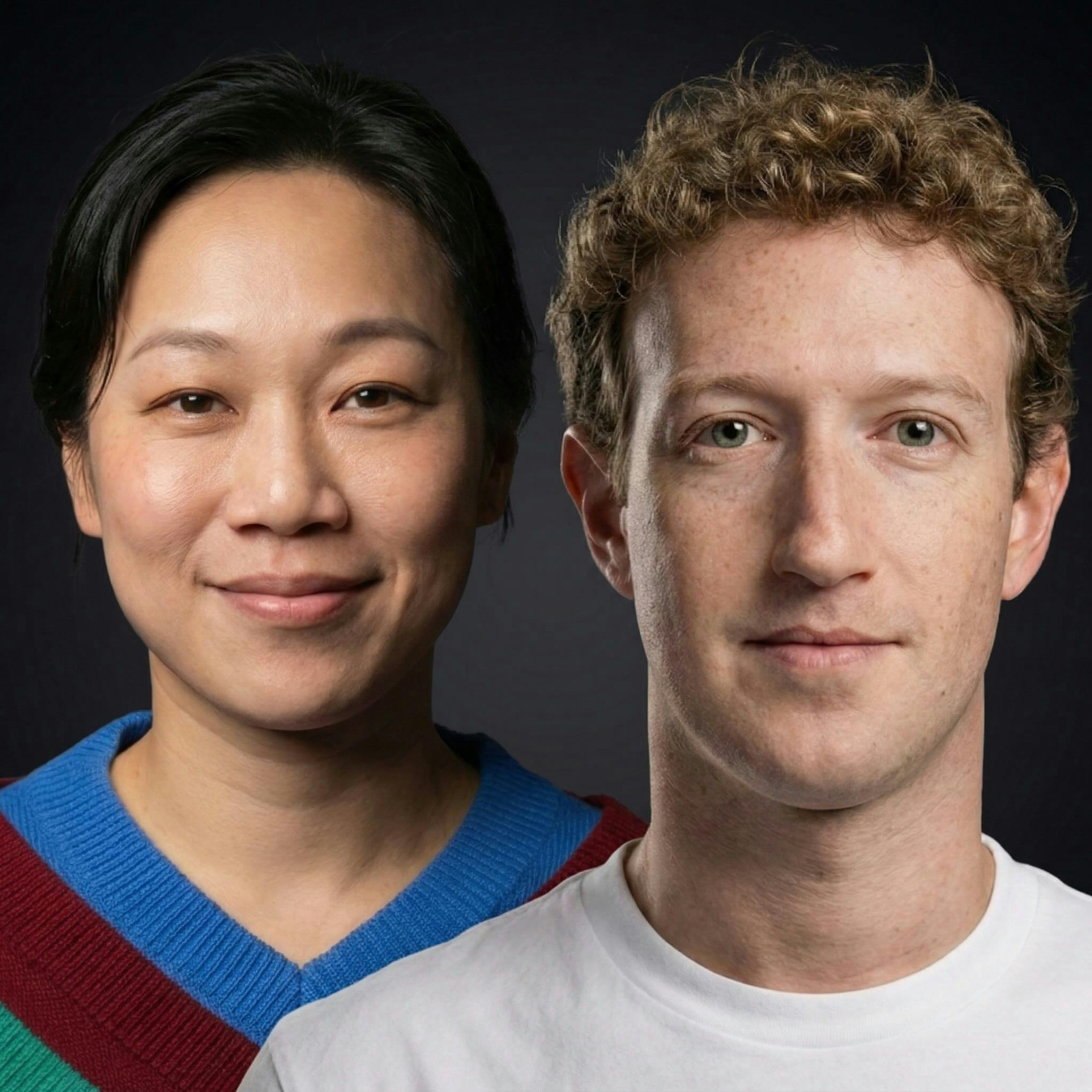
Instead of generating data for human analysis, Mark Zuckerberg advocates a new approach: scientists should prioritize creating novel tools and experiments specifically to generate data that will train and improve AI models. The goal shifts from direct human insight to creating smarter AI that makes novel discoveries.
The ultimate goal isn't just modeling specific systems (like protein folding), but automating the entire scientific method. This involves AI generating hypotheses, choosing experiments, analyzing results, and updating a 'world model' of a domain, creating a continuous loop of discovery.
Current LLMs fail at science because they lack the ability to iterate. True scientific inquiry is a loop: form a hypothesis, conduct an experiment, analyze the result (even if incorrect), and refine. AI needs this same iterative capability with the real world to make genuine discoveries.

Dr. Fei-Fei Li realized AI was stagnating not from flawed algorithms, but a missed scientific hypothesis. The breakthrough insight behind ImageNet was that creating a massive, high-quality dataset was the fundamental problem to solve, shifting the paradigm from being model-centric to data-centric.

AI's key advantage isn't superior intelligence but the ability to brute-force enumerate and then rapidly filter a vast number of hypotheses against existing literature and data. This systematic, high-volume approach uncovers novel insights that intuition-driven human processes might miss.