Get your free personalized podcast brief
We scan new podcasts and send you the top 5 insights daily.
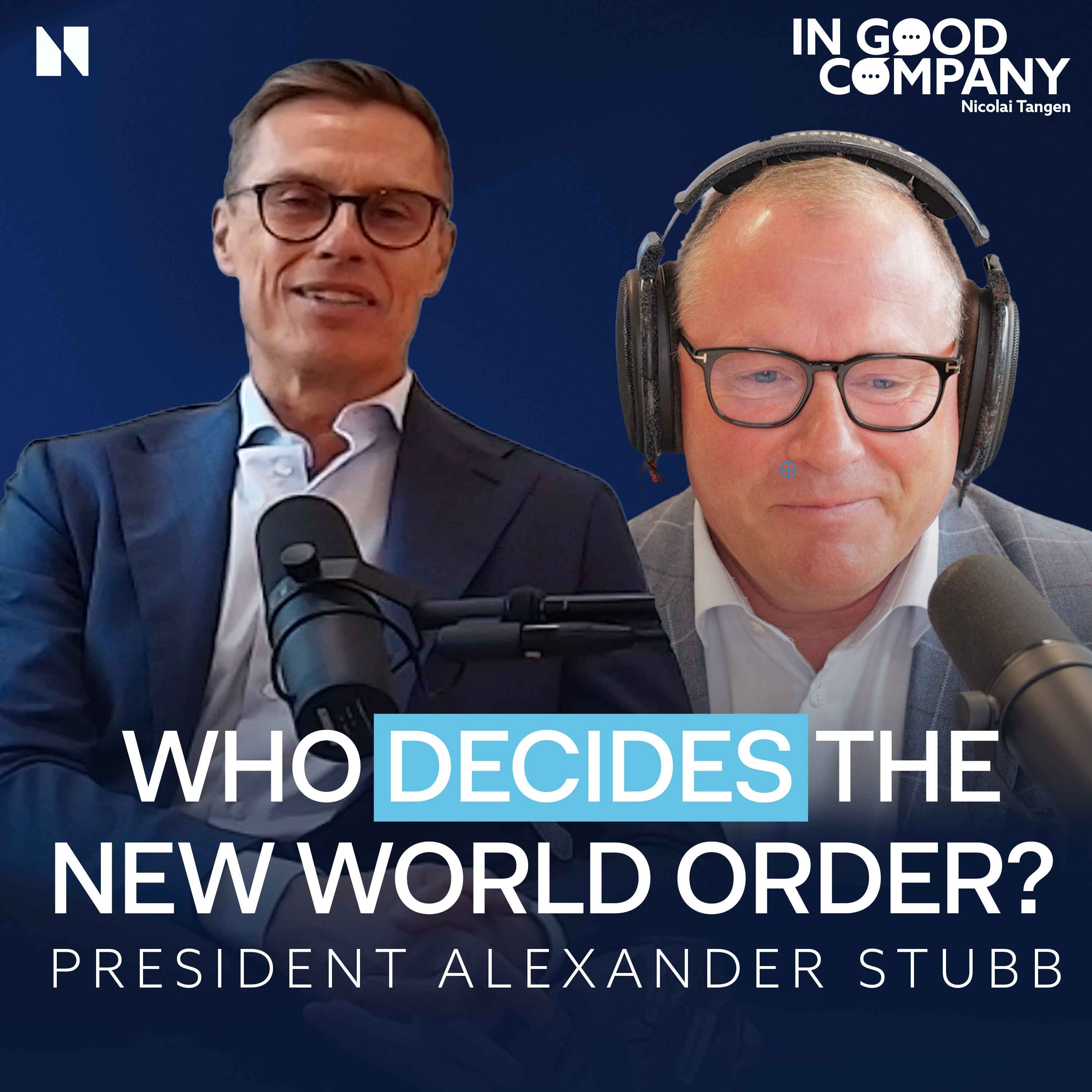
President Stubb posits that the era of Western dominance is over, but the East won't simply replace it. The Global South's collective scale in population, economy, and technology gives it the decisive power to shape the future international system.
Related Insights
To manage global shifts, Alexander Stubb advocates for reforming institutions like the UN Security Council to give rising nations more power. This strategy aims to secure their buy-in for a rules-based system, arguing it's more stable than building separate alliances of middle powers outside of existing frameworks.

The current international system isn't merely a contest between the US and China. Middle and even small powers like Turkey, Brazil, and Singapore are actively pursuing "strategic autonomy" and recrafting foreign policy, creating a more complex, diffuse web of competition across the globe.
China's engagement with the Global South is not about building a parallel, ordered system. It is a strategic preparation for a chaotic, fragmented world. By investing in these rising powers, China hedges against Western influence and positions itself to benefit from global disorder.
Many developing countries view Russia's invasion of Ukraine, while illegal, as an inevitable check on decades of unchecked US power and NATO expansion. Their memory of the "unipolar moment" is one of American imposition, making them quietly support a rebalancing of global power.
The next era of global power will be defined by tech "continents" like Google, Meta, and Amazon, not geographic nations. These entities are so vast they are beginning to take on state-like functions in security, education, and governance, requiring new paradigms to manage them.
China's engagement with the Global South is not just about trade; it's a deliberate strategy to use these 100+ nations as an 'agent' to rewire global institutions and build a new world order that serves its own interests, expanding into the West's geopolitical blind spot.

Alexander Stubb argues the world order isn't breaking but evolving. His confidence stems from the protective power of international institutions like the EU, which can counter threats like tariffs and secure trade deals. This contrasts with more alarmist views that see the current instability as a complete system breakdown.
While China supports institutions like the UN, its primary strategy for global influence is creating new, economically-focused organizations like the BRICS Bank and regional summits (e.g., China-Africa). This approach builds alternative power centers and economic interdependence with the Global South, supplementing rather than directly challenging the post-war Western order.

Dalio predicts the end of the US-led unipolar world. The future will likely be multipolar and regional, with powers like the US and China dominating their respective spheres. A country's strength will depend on its internal health (education, finances) rather than global dominance.

The future world order hinges on the alignment of the Global South. Alexander Stubb argues that Western powers must use "values-based realism" and "dignified foreign policy" to win over key nations like India, Brazil, and South Africa to a rules-based system, as they are the decisive players in the struggle.