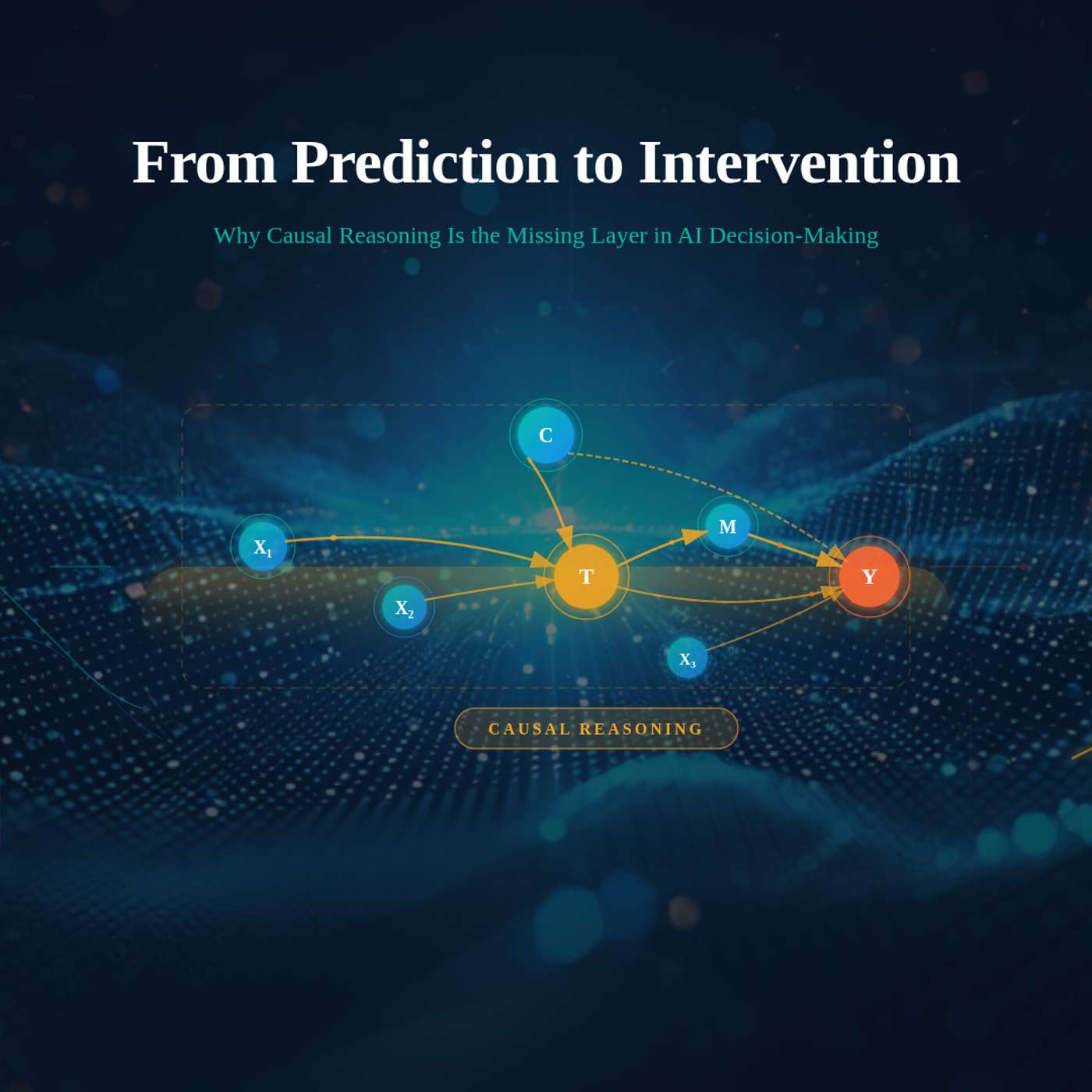
An estimated 80% of companies fail to scale their AI initiatives because they are caught in a 'prediction trap.' Their models produce accurate forecasts but do not support or inform actual business decisions, rendering them commercially ineffective. Causal reasoning is positioned as the solution to bridge this gap from prediction to actionable intelligence.
Predictive models often mistake correlation for causation, leading to poor decisions. For example, a model might link marketing spend to revenue, but causal analysis can reveal that customer seasonality is the true cause of both. This deeper understanding prevents wasteful investments based on misleading correlations.
A primary obstacle for enterprise AI is the 'faithfulness gap' in current LLMs. The justifications these models provide for their outputs often fail to align with the true underlying causes. This discrepancy creates a massive governance and trust issue when using AI for critical, high-stakes decisions.
Causal AI is transforming the analyst's function from passively interpreting model predictions to actively prescribing and validating business interventions. This shift requires new skills, such as communicating causal diagrams and developing 'what if' narratives to guide stakeholder decisions and challenge model assumptions.