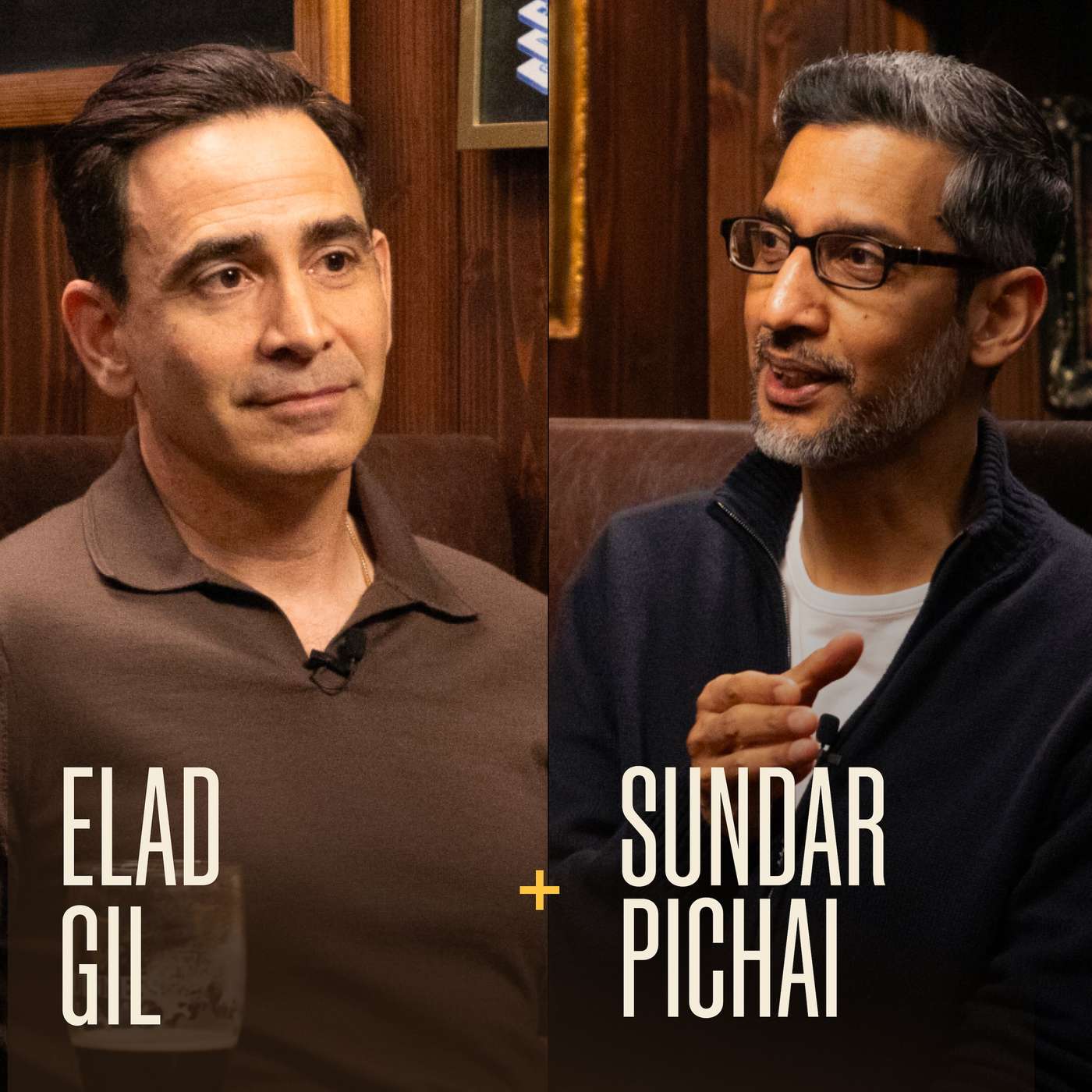
Sundar Pichai explains Google didn't productize Transformers into a chatbot first, not due to a research fumble, but because they immediately saw huge ROI applying it to Search. They also held back an internal version (LaMDA) due to a higher bar for safety and product quality.
Pichai reveals Google's operational tactic for maintaining speed: teams have "latency budgets" in milliseconds. If a feature saves time, they earn a credit they can "spend" on new capabilities, ensuring the user experience remains fast while the product evolves.
Instead of being replaced by AI chatbots or agents, Pichai believes Search will evolve to manage them. Users will run multiple, long-running tasks, and Search will become the interface to orchestrate these agentic flows, expanding its capabilities rather than becoming obsolete.
Pichai attributes past negative investor sentiment to a misunderstanding of AI's market dynamics. He views it as a non-zero-sum game where the entire pie grows, benefiting all of Google's vertically integrated assets—from Search and YouTube to Cloud and Waymo—simultaneously.
Pichai dismisses the narrative that Google's culture is less focused on AGI than competitors. He argues it's a semantic difference, pointing to their massive capital expenditure increase (from ~$30B to ~$180B) and deep history with top AI researchers as undeniable proof of their commitment to the AI curve.
To stay connected with user experience, Sundar Pichai goes beyond typical dogfooding. He now uses an internal AI agent to query and summarize public sentiment about product launches, asking it for the "worst five things" and "best five things" people are saying.
Sundar Pichai identifies the critical, non-obvious constraints slowing AI's physical buildout. Beyond chips, the primary bottlenecks are fundamental wafer starts, the slow pace of regulatory permitting for new data centers, and a significant short-term shortage of high-bandwidth memory.
The podcast suggests that since all major AI labs face the same supply chain bottlenecks (compute, memory), it creates a de facto ceiling on progress. This pro-rata scaling prevents any single player from gaining an insurmountable lead, potentially enforcing a stable oligopoly. Sundar Pichai views this as a reasonable framework.
To solve long-term constraints like land and power, Google CEO Sundar Pichai revealed the company is exploring a new moonshot project: data centers in space. While in the very early stages, it represents the kind of thinking required to sustain AI's growth over a multi-decade horizon.
Sundar Pichai notes an ironic consequence of the AI boom: the scarcity of TPUs forces a more disciplined capital allocation process. Since all major projects, including Waymo, now compete for the same limited compute resources, the trade-offs are more explicit and front-of-mind than ever before.
When deciding whether to continue funding long-term bets like Waymo, Google focuses less on immediate commercial viability and more on the progress of the core technology. As long as key metrics on the underlying tech curve (e.g., the Waymo driver's safety) are improving, they maintain their commitment.
Sundar Pichai forecasts that 2027 will be a "big year" where agentic AI workflows move beyond engineering and profoundly shift core business functions like financial forecasting. He envisions a crossover point where the AI-generated process becomes the default, with humans moving into a verification role.