Get your free personalized podcast brief
We scan new podcasts and send you the top 5 insights daily.
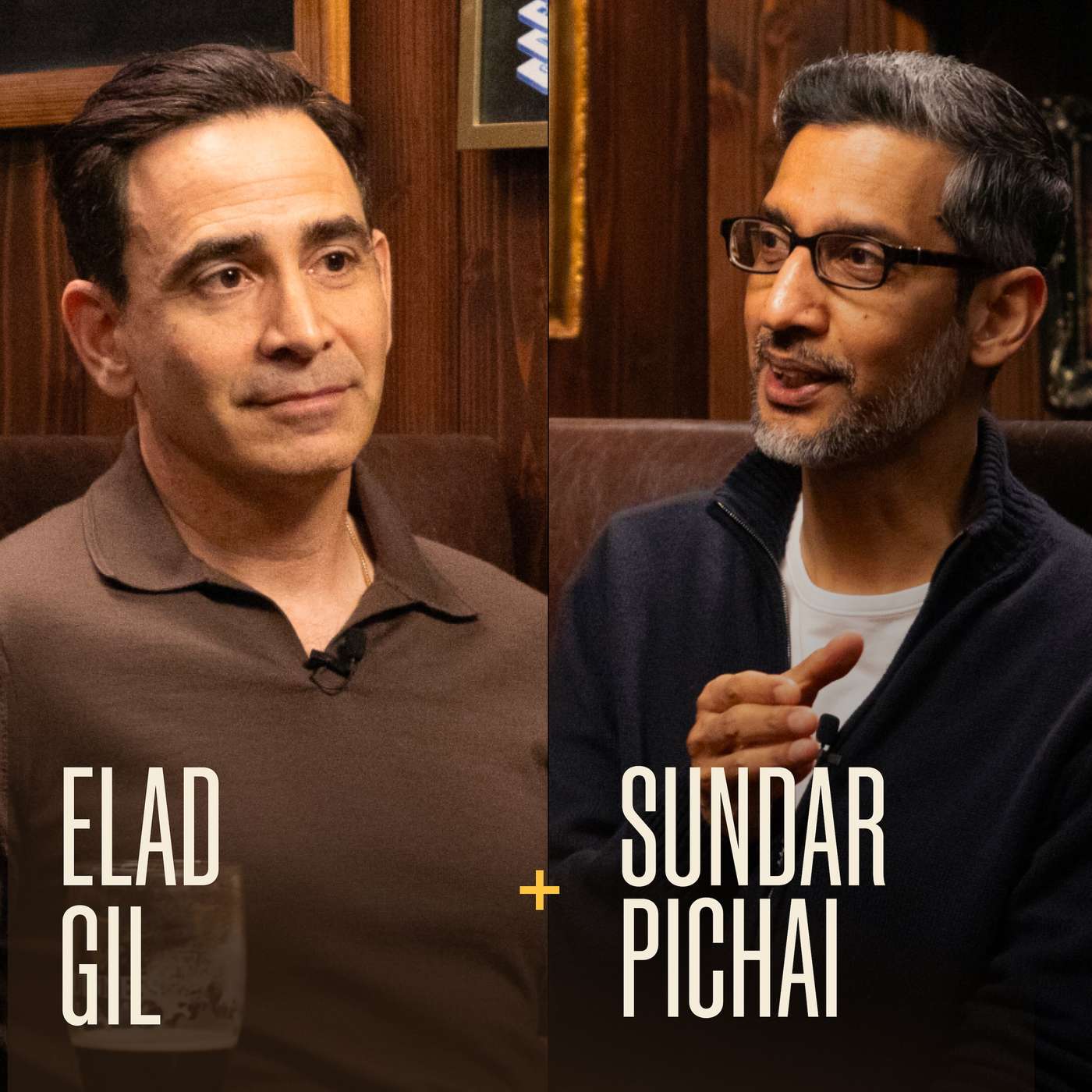
Sundar Pichai explains Google didn't productize Transformers into a chatbot first, not due to a research fumble, but because they immediately saw huge ROI applying it to Search. They also held back an internal version (LaMDA) due to a higher bar for safety and product quality.
Related Insights
Just as Microsoft's Internet Explorer crushed first-mover Netscape, Google's Gemini is poised to overtake ChatGPT. Gemini's access to Google's vast proprietary data from Search and YouTube gives it an insurmountable advantage, making its eventual dominance over OpenAI seem inevitable.

Anthropic chose not to release its first model, Claude 1, before ChatGPT despite seeing its power. They worried it would trigger a dangerous "arms race" and decided the commercial cost of waiting was worth the potential safety benefit for the world.

Google initially withheld its chatbot prototypes, fearing reputational damage from AI hallucinations. The viral success of ChatGPT demonstrated that the public was surprisingly willing to engage with imperfect AI. This shifted Google's risk calculus, forcing them to release their own models faster than planned.

Google could surpass ChatGPT in usage overnight by replacing its traditional search interface with Gemini. However, its reluctance to do so stems from a fear of cannibalizing its core, highly profitable search ad business, creating an opening for competitors despite its superior distribution.

While ChatGPT is still the leader with 600-700 million monthly active users, Google's Gemini has quickly scaled to 400 million. This rapid adoption signals that the AI landscape is not a monopoly and that user preference is diversifying quickly between major platforms.

OpenAI is now reacting to Google's advancements with Gemini 3, a complete reversal from three years ago. Google's strengths in infrastructure, proprietary chips, data, and financial stability are giving it a significant competitive edge, forcing OpenAI to delay initiatives and refocus on its core ChatGPT product.
Instead of being replaced by AI chatbots or agents, Pichai believes Search will evolve to manage them. Users will run multiple, long-running tasks, and Search will become the interface to orchestrate these agentic flows, expanding its capabilities rather than becoming obsolete.
Initially, AI chatbots were seen as a threat to Google's search dominance. Instead, Google leveraged its existing ecosystem (Chrome, Android) and distribution power to make its AI, Gemini, the default on major platforms, turning a potential disruptor into another layer of its fortress.
Gemini is converting daily ChatGPT users not just with model capabilities, but with superior UX like better response sizing and perceived speed. Crucially, the trust in the Google brand for search is transferring to its AI, making users more confident in its reliability, even with less complex reasoning.

Google's AI, Gemini, is positioned to win the AI race against first-mover ChatGPT. Similar to how Internet Explorer leveraged Microsoft's ecosystem to beat Netscape, Gemini's integration with Google's vast search and YouTube data gives it an insurmountable long-term competitive advantage.