Get your free personalized podcast brief
We scan new podcasts and send you the top 5 insights daily.
In AI video generation, the quality of the final product depends as much on the "harness"—the surrounding UI, editing tools, and workflow logic—as it does on the power of the underlying generative model.

Related Insights
Advanced generative media workflows are not simple text-to-video prompts. Top customers chain an average of 14 different models for tasks like image generation, upscaling, and image-to-video transitions. This multi-model complexity is a key reason developers prefer open-source for its granular control over each step.

The perceived intelligence of video generation models is often an illusion. The heavy lifting is done by a large language model that rewrites simple user prompts into highly detailed scenes. The video diffusion model itself is less intelligent, simply executing these detailed instructions literally.
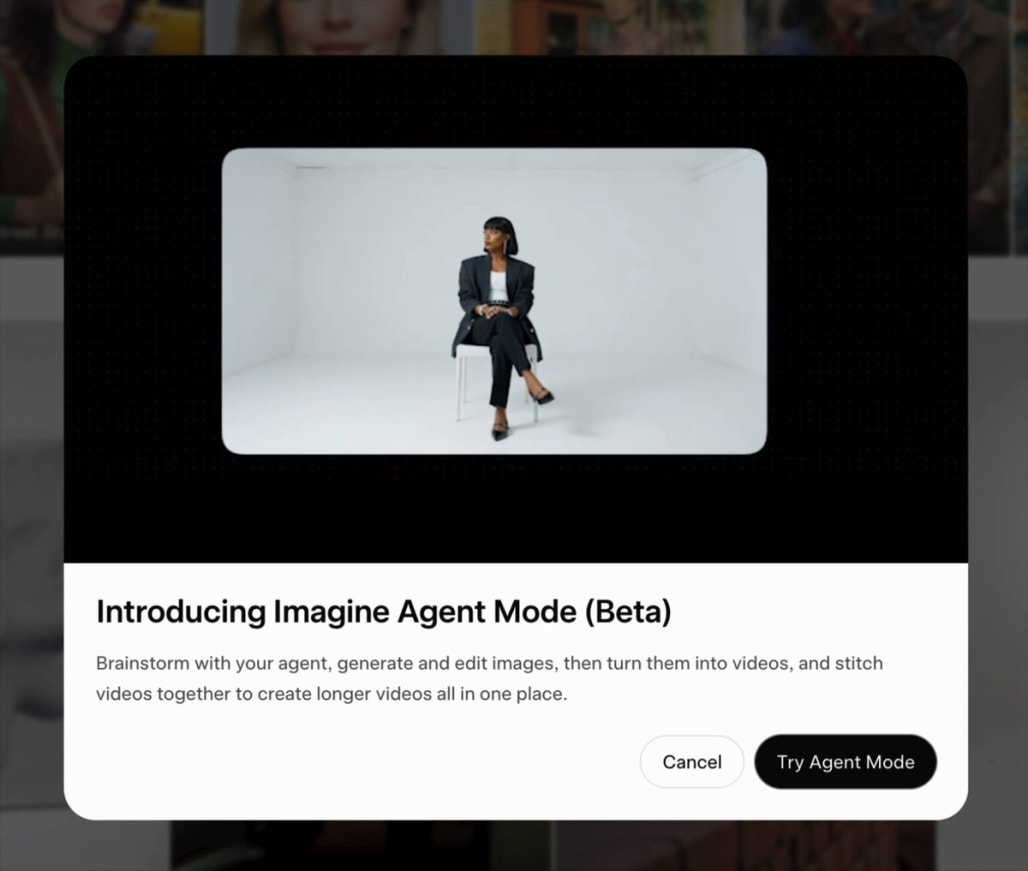
AI models are already incredibly powerful, but their creative potential is limited by simple text prompts. The next breakthrough will be the development of sophisticated user interfaces that allow creators to edit scenes, control characters, and direct AI with precision, unlocking widespread adoption.
Most generative AI tools get users 80% of the way to their goal, but refining the final 20% is difficult without starting over. The key innovation of tools like AI video animator Waffer is allowing iterative, precise edits via text commands (e.g., "zoom in at 1.5 seconds"). This level of control is the next major step for creative AI tools.

Tools like Google Flow are more than just video renderers. They function as a creative partner, assisting with brainstorming, storyboarding, and framing scenes. This shifts the user's role from a hands-on creator to a director collaborating with an AI producer, democratizing complex creative work.
AI models are revolutionizing the initial creation of assets, much like smartphones did for capturing photos. However, the need for professional post-production tools like Adobe persists for editing, refining, and achieving high-fidelity control. AI becomes the first step in the creative workflow, not the entire process.

The next leap in video generation won't come from monolithic models but from AI agents. These LLM-driven agents will use a suite of tools—including diffusion models, video editors like FFmpeg, and image editors—to iteratively create and refine complex, long-form videos.
Exceptional AI content comes not from mastering one tool, but from orchestrating a workflow of specialized models for research, image generation, voice synthesis, and video creation. AI agent platforms automate this complex process, yielding results far beyond what a single tool can achieve.
Don't accept the false choice between AI generation and professional editing tools. The best workflows integrate both, allowing for high-level generation and fine-grained manual adjustments without giving up critical creative control.

Google's Omni video model was initially dismissed for not being a leap in generation quality. However, its true innovation lies in fine-grained editing and control ("steerability"). The market consistently overestimates the importance of base model upgrades while underestimating the value unlocked by precise user control over outputs.
