Get your free personalized podcast brief
We scan new podcasts and send you the top 5 insights daily.
Tools like Google Flow are more than just video renderers. They function as a creative partner, assisting with brainstorming, storyboarding, and framing scenes. This shifts the user's role from a hands-on creator to a director collaborating with an AI producer, democratizing complex creative work.
Related Insights
While solo creators can wear all hats, scaling professional AI video production requires specialization. The most effective agencies use dedicated writers, directors, and a distinct role of "AI cinematographer" to focus on generating and refining the visual assets based on the director's treatment.

Don't view generative AI video as just a way to make traditional films more efficiently. Ben Horowitz sees it as a fundamentally new creative medium, much like movies were to theater. It enables entirely new forms of storytelling by making visuals that once required massive budgets accessible to anyone.

Google's NotebookLM now generates "cinematic video overviews," a leap beyond simple slideshows. By orchestrating its Gemini models to act as a "creative director" for narrative and style, Google is strategically demonstrating its leadership in multimodal AI with a practical, high-value application that differentiates it from competitors.

The immediate impact of generative AI in filmmaking isn't replacing final production but revolutionizing pre-production. Tools like ComfyUI enable rapid visualization of complex scenes, allowing creative teams to iterate and make on-set decisions in minutes rather than weeks.

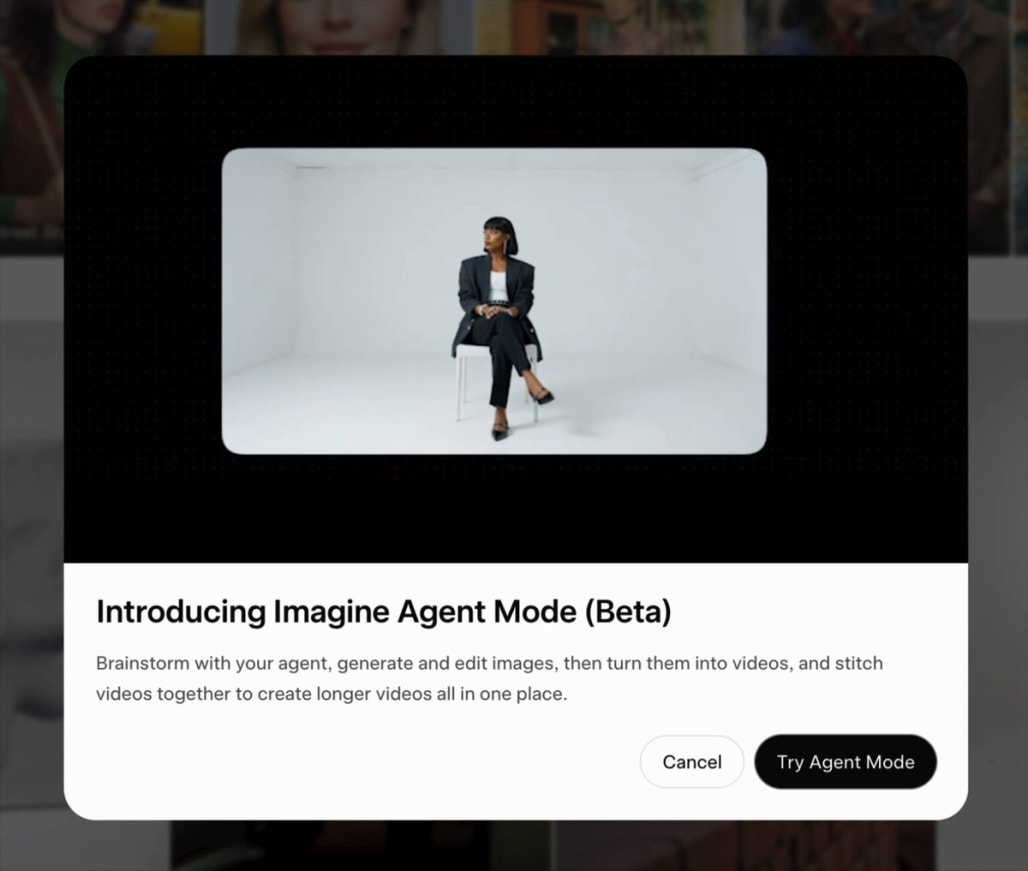
The next leap in video generation won't come from monolithic models but from AI agents. These LLM-driven agents will use a suite of tools—including diffusion models, video editors like FFmpeg, and image editors—to iteratively create and refine complex, long-form videos.
The OpenAI team believes generative video won't just create traditional feature films more easily. It will give rise to entirely new mediums and creator classes, much like the film camera created cinema, a medium distinct from the recorded stage plays it was first used for.

Don't accept the false choice between AI generation and professional editing tools. The best workflows integrate both, allowing for high-level generation and fine-grained manual adjustments without giving up critical creative control.

AI tools fundamentally change the creative workflow. Instead of spending extensive time on mockups and presentations to sell an idea internally, creative directors can now generate the actual asset from day one, accelerating the process from concept to creation.

Products like video generator Flow and research tool NotebookLM are not built in a vacuum. Google Labs actively seeks input from creatives like filmmakers and authors to shape experimental AI tools, ensuring they solve real-world problems for non-technical users from the start.
AI creation platforms are breaking down the silos between specialized creative functions. A single person, such as a writer, can now execute storyboarding, set design, and directorial choices, effectively merging multiple roles into one. This empowers individuals to realize a more complete creative vision single-handedly.