Get your free personalized podcast brief
We scan new podcasts and send you the top 5 insights daily.
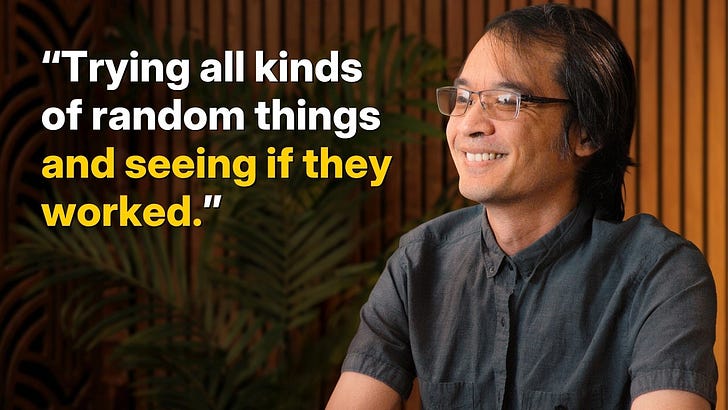
Terence Tao argues against hyper-optimizing one's time. Serendipitous interactions—like bumping into someone in a hallway or browsing a physical journal—spark new ideas. Over-scheduling and efficiency tools eliminate these random encounters, potentially stifling the unexpected connections that lead to breakthroughs.
Related Insights
Artist Michelle Rial finds her creativity dries up when she focuses too hard on producing work. Her best ideas emerge from living life, observing the world, and processing her experiences. Creativity requires input from real life, not just scheduled output.
Breakthroughs often occur in routine environments like the shower or during a walk. These activities promote what psychologists call "divergent thinking," where the relaxed mind makes novel connections. This scientific process can be intentionally triggered to solve complex problems and foster creativity.
Creativity isn't born from constant activity; it stems from boredom, curiosity, and the mental space to think. Over-scheduled and under-resourced marketing teams are deprived of this crucial "nothingness," forcing them to recycle old ideas instead of innovating.

Constant productivity keeps the brain in a high-frequency "beta" state, which stifles creativity. To solve complex problems, you must intentionally shift to a slower "alpha" state by disconnecting. This is achieved through simple, non-distracting activities like walking in nature without your phone.
Countering the push for AI-driven efficiency, some executives argue that low-intensity 'busywork' like filing expenses provides necessary mental downtime. They claim these tasks put the brain on 'autopilot,' creating space for unexpected creative breakthroughs, similar to having an idea in the shower.

Instead of constantly seeking the next project, trust that when the time is right, the opportunity will appear organically. By focusing on executing your current commitments, you create the space for the next idea to find you through a conversation, an article, or a chance encounter, rather than forcing it.

Top creators don't wait for inspiration; they engineer it through structured rest. Activities like taking multiple showers (Sorkin), aimless boating (Einstein), or problem-solving walks (Darwin) look unproductive but are crucial for high-quality creative output. This contrasts with the modern tendency to brute-force solutions at a desk.

The best creative solutions often surface when you're not actively working. After absorbing project information, stepping away for days or weeks allows the subconscious to process and connect ideas, leading to stronger, more innovative outcomes than forced brainstorming.
The most crucial part of creativity is letting ideas "simmer" in the unconscious. After gathering information, step away from the problem completely. Engage in unrelated activities. This allows your mind to make novel connections you can't force through active thought.

Businesses prioritize maximum output, speed, and low risk, which stifles creativity. True creativity requires time, safety for risk-taking, and tolerance for failure—conditions that are antithetical to typical business operations.
