Get your free personalized podcast brief
We scan new podcasts and send you the top 5 insights daily.
To find exceptional investments, ask if the industry leader has a direct, comparable competitor (a 'Pepsi' to its 'Coke'). Companies like Google Search in its prime, which lack a true number-two rival, often possess near-monopolistic power and represent rare, high-quality investment opportunities.

Related Insights
Many investors focus on the current size of a company's competitive advantage. A better indicator of future success is the direction of that moat—is it growing or shrinking? Focusing on the trajectory helps avoid value traps like Nokia in 2007, which had a wide but deteriorating moat.
![[REPLAY] Paul Black - Gratitude, Fun, and Growth Stocks (Capital Allocators, EP.51) thumbnail](https://static.libsyn.com/p/assets/f/b/7/6/fb76e1c8bfb69e8dd959afa2a1bf1c87/CA_Square_logo_light_background_6.26.24.jpg)
Contrary to the belief that number two players can be viable, most tech markets are winner-take-all. The market leader captures the vast majority of economic value, making investments in second or third-place companies extremely risky.
![David George - Building a16z Growth, Investing Across the AI Stack, and Why Markets Misprice Growth - [Invest Like the Best, EP.450] thumbnail](https://megaphone.imgix.net/podcasts/8da7dbd8-ceeb-11f0-941c-ef83bcdd4c9f/image/d44107bc94719f78fbe91befb141073e.jpg?ixlib=rails-4.3.1&max-w=3000&max-h=3000&fit=crop&auto=format,compress)
The fundamental goal is to become a "better competitive alternative" for a specific customer—being so superior that they bypass competitors to choose you. Achieving this state is the business equivalent of the house advantage in a casino (“the house vig”) and the only reliable way to build a lasting enterprise.

Palantir commands a massive valuation premium because it is both well-run and unique, with no clear alternatives. This lack of competition dramatically reduces churn risk and increases the durability of future cash flows, justifying a higher multiple than other software companies that operate in more crowded markets.

A sustainable competitive advantage is often rooted in a company's culture. When core values are directly aligned with what gives a company its market edge (e.g., Costco's employee focus driving superior retail service), the moat becomes incredibly difficult for competitors to replicate.
The most effective investment strategy is to first identify a growing consumer category with strong tailwinds (e.g., Mediterranean food). Only then should you invest in or build the company with the potential to become the dominant player, capitalizing on the winner-take-all dynamics of the industry.
Wilson advised against trying to perfectly time the peak of a successful company's dominance. Competition will eventually emerge, but anticipating its impact is futile and often leads to premature selling. He believed you can make a fortune by riding a winner for years before the problems become acute.
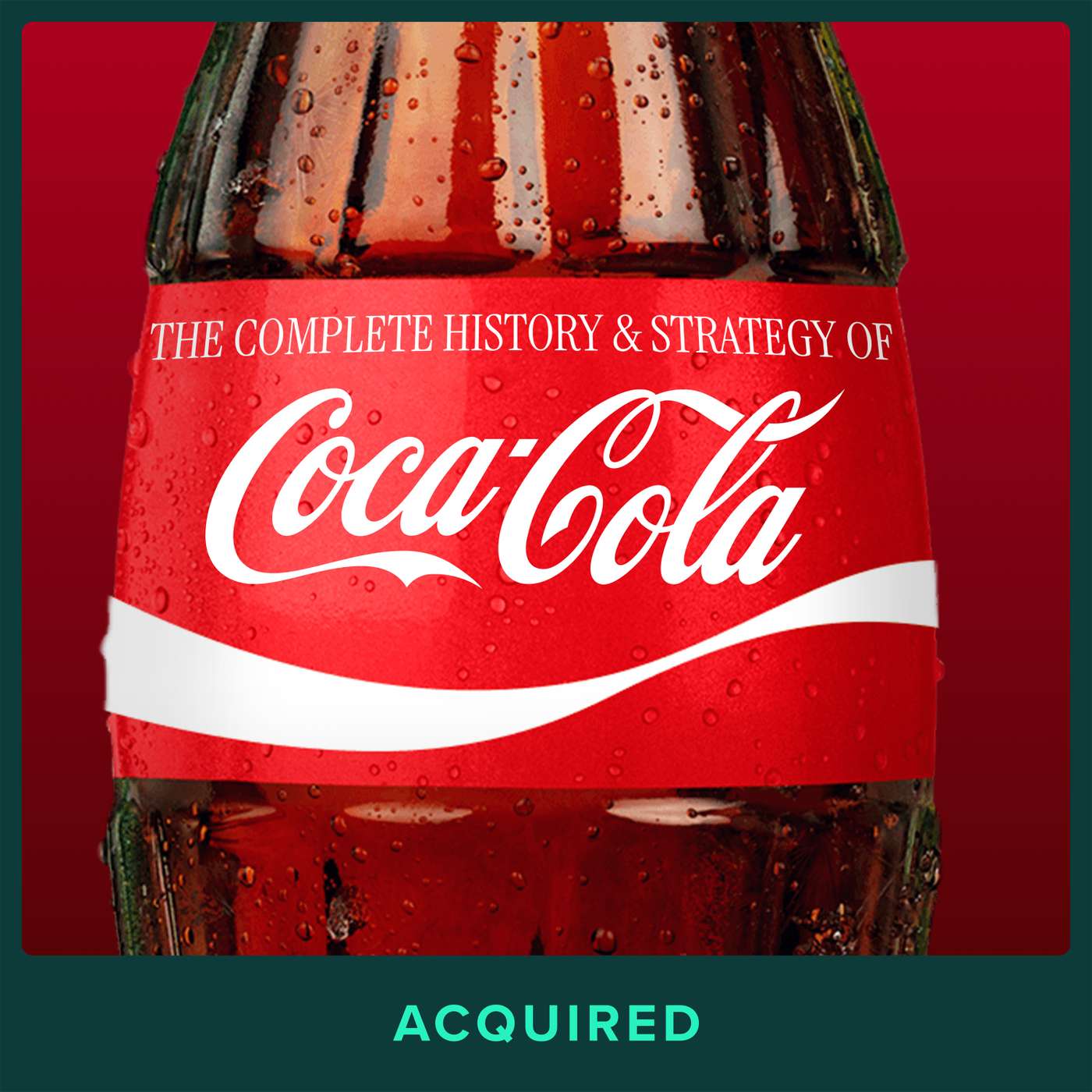
The podcast argues that Coca-Cola's "secret formula" holds little value today; a competitor couldn't replicate the brand or distribution even if they had it. The true cornered resource is the global network of exclusive, loyal, and efficient bottling partners—a proprietary distribution system that is nearly impossible to replicate.
While OpenAI leads in AI buzz, Google's true advantage is its established ecosystem of Chrome, Search, Android, and Cloud. Newcomers like OpenAI aspire to build this integrated powerhouse, but Google already is one, making its business far more resilient even if its own AI stumbles.

Top compounders intentionally target and dominate small, slow-growing niche markets. These markets are unattractive to large private equity firms, allowing the compounder to build a durable competitive advantage and pricing power with little interference from deep-pocketed rivals.