Get your free personalized podcast brief
We scan new podcasts and send you the top 5 insights daily.
The downside of Vanguard's at-cost structure is a lack of excess profits to reinvest. This has led to subpar technology and customer service, creating a significant vulnerability that profit-driven competitors like Fidelity exploit by offering superior user experiences.
Related Insights
For nearly two decades, Vanguard's revolutionary low-cost index funds did not generate enough revenue to sustain the company. Ironically, the firm's survival depended on the profits from its traditional, actively managed funds, which performed exceptionally well and kept the lights on.
Most institutional investor boards are composed of finance professionals and constituent representatives, but not technologists. This leads them to view technology as an operational cost or an 'IT toolkit' rather than a strategic asset that can fundamentally enhance returns by improving portfolio knowledge and navigation.
![[REPLAY] Ashby Monk – Investor Identity, Navigation, and Resilience (Capital Allocators, EP.312) thumbnail](https://static.libsyn.com/p/assets/f/b/7/6/fb76e1c8bfb69e8dd959afa2a1bf1c87/CA_Square_logo_light_background_6.26.24.jpg)
Unlike most firms that separate strategy (portfolio managers) from execution (traders), Vanguard combines them. This unified role enables instantaneous, informed trade-offs between tracking error and value-add opportunities, creating a key operational advantage in indexing.
Vanguard's first index fund had a ~2% expense ratio (180 bps), far from today's near-zero fees. This historical fact shows that for innovative financial products, low costs are an outcome of achieving massive scale, not a viable starting point. Early fees must be high enough to build a sustainable business.

Founder Jack Bogle noted Vanguard's investor-owned structure was never copied because "there's no money in it" for external shareholders. The model's core competitive advantage is its inherent unprofitability for anyone but the end customer, making it unattractive for competitors.

IBKR's low-cost, tech-first model is strategically counter-positioned against high-touch incumbents like Charles Schwab. Adopting IBKR's model would require competitors to cannibalize their profitable existing business models, creating a powerful competitive moat based on the innovator's dilemma.
Legacy credit card companies can't simply match Robinhood's 3% offer due to their massive headcounts and marketing spend. Adopting a tech-first, low-cost model would require painful restructuring that cannibalizes their existing, profitable business—a classic innovator's dilemma.

Vanguard's marketing became crucial when the company transitioned from a market disruptor to an incumbent being copied. The initial disruption created its own buzz, but as a market leader, Vanguard had to actively invest in marketing to differentiate its message.
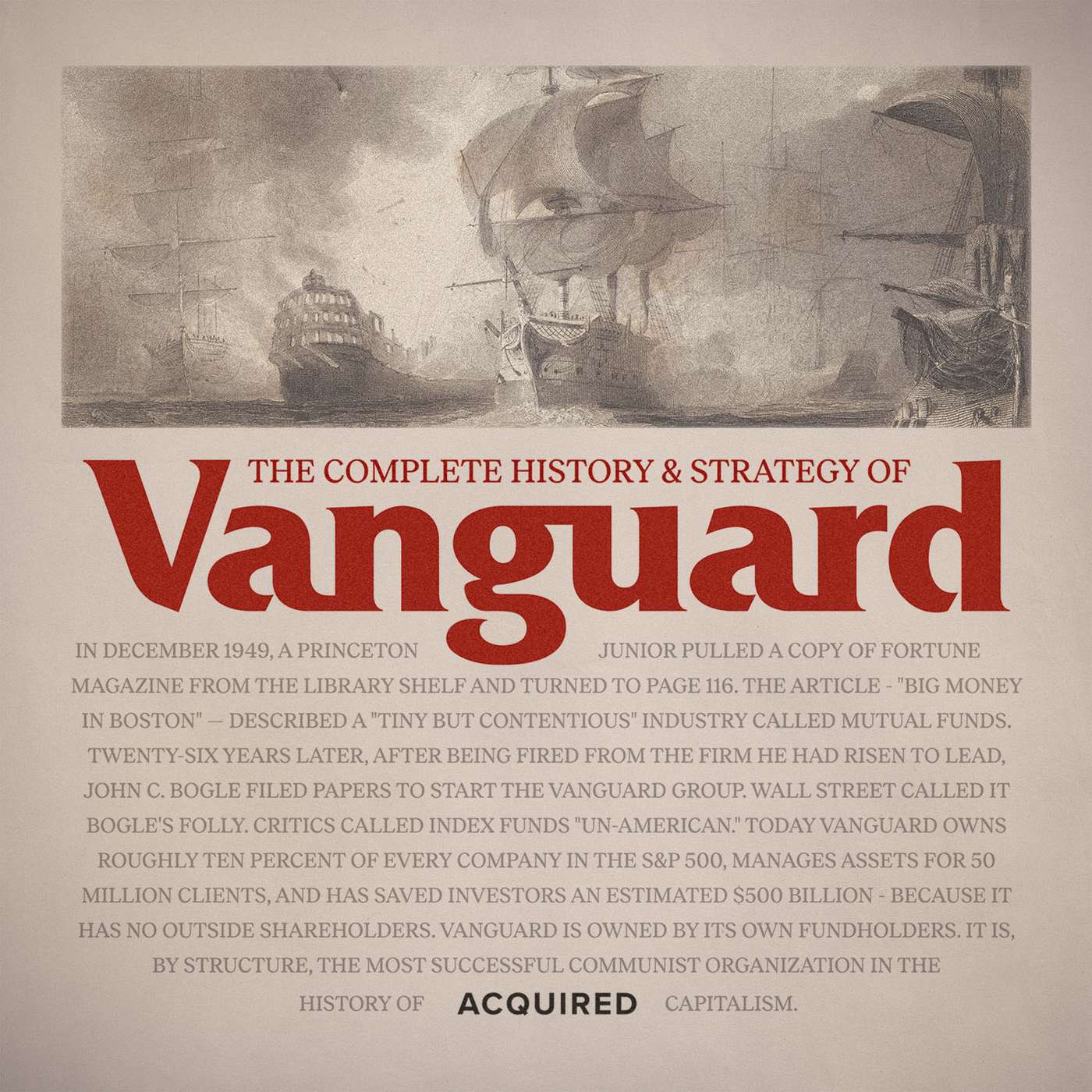
Vanguard's low-cost strategy is a direct result of its unique corporate structure. Since the company is owned by its fund investors, there's no incentive to generate profits for outside shareholders. Excess earnings are returned to customers via lower fees, a concept Jack Bogle called "strategy follows structure."
Companies enjoying high profit margins are often under-investing in their product. This creates an opening for well-funded, product-focused competitors to capture market share by delivering more value, eventually stalling the incumbent's growth.
