Get your free personalized podcast brief
We scan new podcasts and send you the top 5 insights daily.
Entering AI does not require complete technical mastery before starting. Practitioners can overcome hesitation by spending a few hours testing no-code builders and comparing outputs across different model sizes, such as Claude Haiku versus larger models. Simply observing how different tiers handle the same prompt builds an intuitive, practical understanding of AI capabilities without requiring coding experience or premature judgment.

Related Insights
The fastest way for smaller tech companies to leverage AI is not by building complex proprietary models, but by training employees to master existing consumer-grade tools like Claude and ChatGPT. This treats AI adoption as a skill to be developed through practice and experimentation, yielding immediate productivity gains.

A powerful mindset for non-technical users is to treat the AI model not just as a tool, but as an infinitely patient expert programmer. This framing grants 'permission' to ask fundamental or 'silly' questions repeatedly until core engineering concepts are fully understood, without judgment.

To make AI less intimidating for non-coders, AI engineer Parth Patil compares it to a "steam engine for knowledge work" that is operated via natural language. This powerful metaphor reframes AI proficiency as a skill in conversation and clear communication, not complex programming, making it more accessible to everyone.

For product managers not yet working on AI, the best way to gain experience is to build simple AI tools for personal use cases, like a parenting advisor or a board game timer. Using no-code prototyping tools, they can learn the entire development lifecycle—from ideation to prompting and user feedback—without needing an official AI project at work.
For those without a technical background, the path to AI proficiency isn't coding but conversation. By treating models like a mentor, advisor, or strategic partner and experimenting with personal use cases, users can quickly develop an intuitive understanding of prompting and AI capabilities.
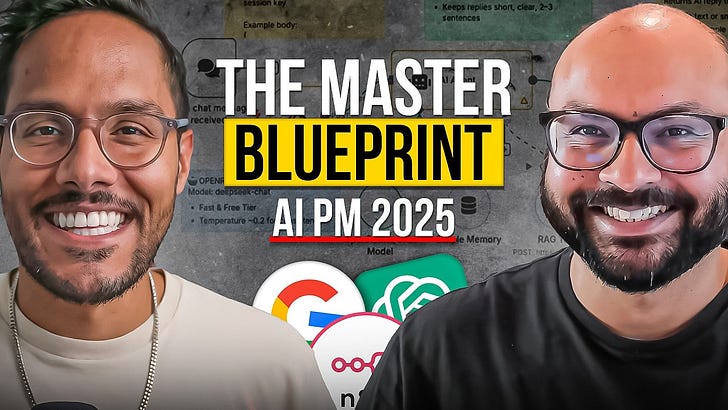
Prototyping and even shipping complex AI applications is now possible without writing code. By combining a no-code front-end (Lovable), a workflow automation back-end (N8N), and LLM APIs, non-technical builders can create functional AI products quickly.
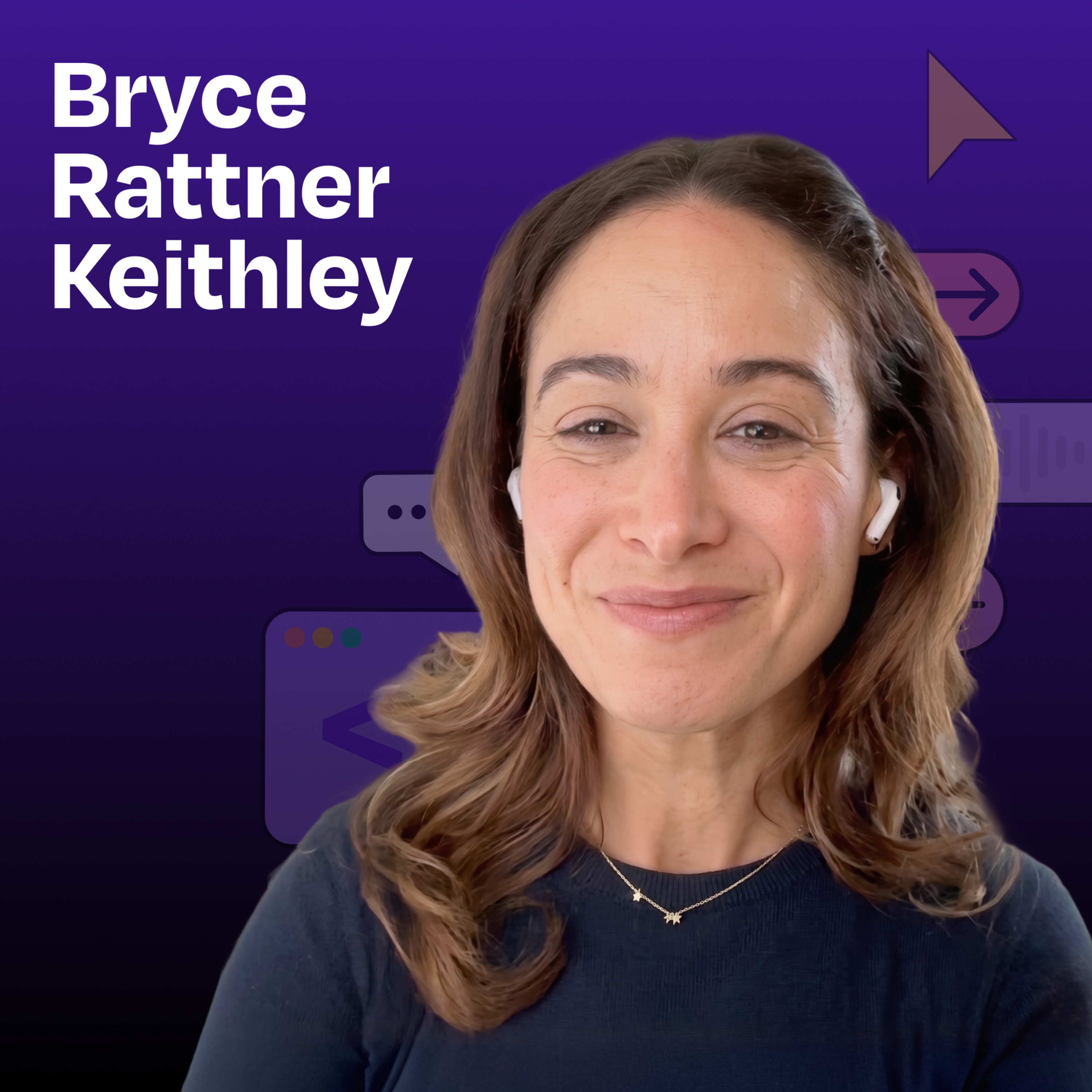
By embracing what she didn't know, Bryce Keithley could ask AI tools for ambitious outcomes without being constrained by traditional development limitations. This approach allows non-technical builders to discover novel solutions and push further than experts who already 'know the boundaries of things.'
Theoretical knowledge from articles is insufficient for understanding AI models. True intuition is built through intensive, practical experimentation, such as feeding a model an entire codebase or extensive documentation. Pushing the AI to its limits is the fastest way to learn.

The learning curve for traditional workflow automation tools like N8N is steep for non-coders. A more accessible starting point is "vibe coding"—using natural language prompts to build applications in environments like Anthropic's Claude. This lowers the barrier for marketers to create valuable, custom tools without deep technical expertise.

To encourage designers and PMs to code with AI, Notion built a simplified, isolated codebase or "playground." This lowered the barrier to entry and fear of the terminal, allowing them to feel the AI and prototype effectively without breaking production code.